Monash University logo

Monash Art, Design and Architecture Student Exhibition 2022

Meiyao(Beatrice) Wang

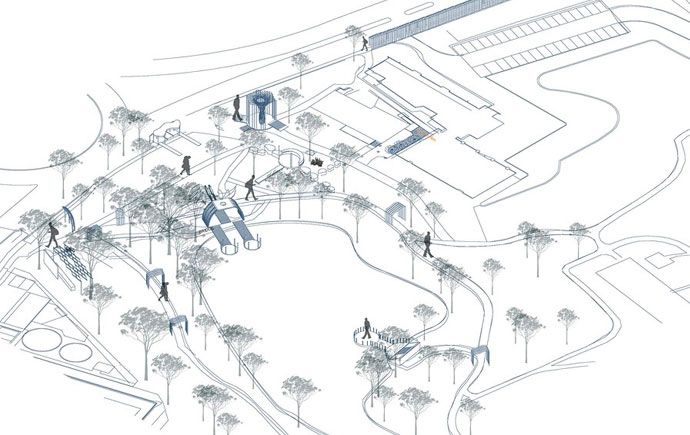
Banksia ( Banksia aemula ) Dreaming is about the recovery of lost land. First Nations people believe that "Country" is not only humans and cities, but also includes the sky, water, plants, and animals, which are of equal importance. I have also considered symbols from my own Chinese culture and their correlation with First Nations stories and symbols. By combining the five elements of traditional Chinese culture, gold, wood, water, fire, and earth, four different shapes of nodes and access tunnels were designed. They guide visitors into the native gardens to better respect and learn about the native plants and First Nations culture.

Banksia(Banksia aemula) Dreaming

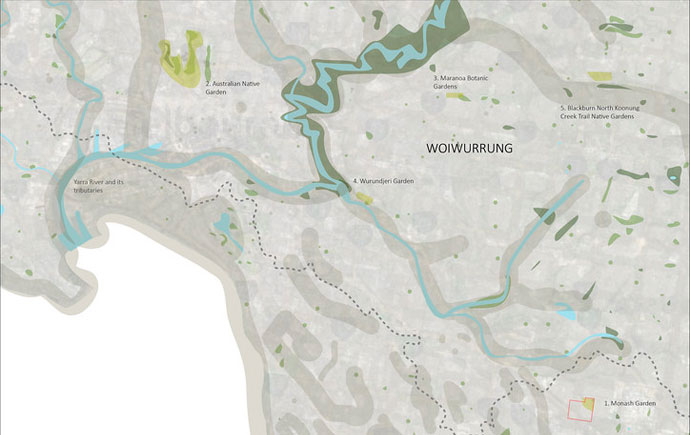
The Garden at Monash Clayton Campus was created by ethnobotanist Dr. Beth Gott in 1985 to showcase the plants and trees originally used for food, medicine, fiber, and tools by the Aboriginal people of south-eastern and eastern Australia (Teschendorff, 2022). A macro site analysis of the garden area using the five Chinese elements to better demonstrate First Nations culture.

Banksia ( Banksia aemula ) Dreaming

Recyclable PVC pipes are used for the reflective node design. The long life cycle material -- PVC allows for better structural stability. The envelope gives a visual impact and a reflective atmosphere. The surrounding spines mimic the upward growth of the banksia.

Banksia ( Banksia aemula ) Dreaming

The five Chinese elements of gold and fire are displayed here. The element of gold is used in the design of the material for the reflective guide wall. The wall will lead visitors from the new station to the entrance of the garden. The wall will be engraved with Dr. Beth Gott's contribution to land management etc.
The element of fire is used in the design of the gathering space. The wooden structure utilizes the First Nations and Chinese culture of mortise and tenon construction. Fallen leaves from the eucalyptus trees in the garden in different seasons will be used on the roof. Visitors will be able to experience the changing seasons of the garden.

Banksia ( Banksia aemula ) Dreaming

The wood and water elements of the five Chinese elements are presented here. The reflective stop where the wood element is displayed will be designed in front of the scarred tree. The story of First Nation culture will be displayed on the ground by projection through lamps at night to provoke visitors to think.
The water element is integrated into the analysis of the keyline system and the highest point is chosen where floods cannot easily reach. Repeating blocks allow for better stitching and combination. The observation platform promotes the growth of wetland plants.

Banksia ( Banksia aemula ) Dreaming

The last and most important element is the earth. Using biomimetic technology, it simulates the growth of the native plant Banksia. Inspired by D'harawal Inspired by DREAMING STORIES (Bodkin &Bodkin-Andrews 2001), several nodes in different locations will be set up to connect the garden's exits to the JMR. The different sizes of design will require different atmospheric experiences for visitors. Some require crawling, and others are narrow enough to allow only one person to pass. Inside, the banksia seeds act as countless eyes to alert visitors to remember the history.

Banksia ( Banksia aemula ) Dreaming
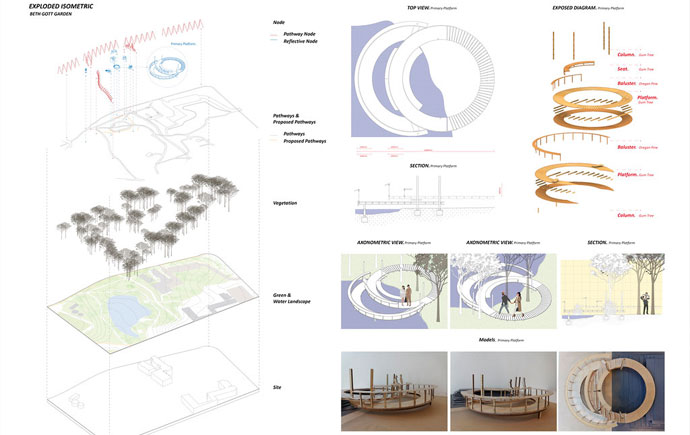
The design of Banksia Dreaming is also well integrated into its environment. With time changing, the structure will be surrounded by native plants and become a wildlife corridor. It will attract Carnabys Black-Cockatoo coming to find food and nest on the spines.

Explore more

View all

Other years

Back to top