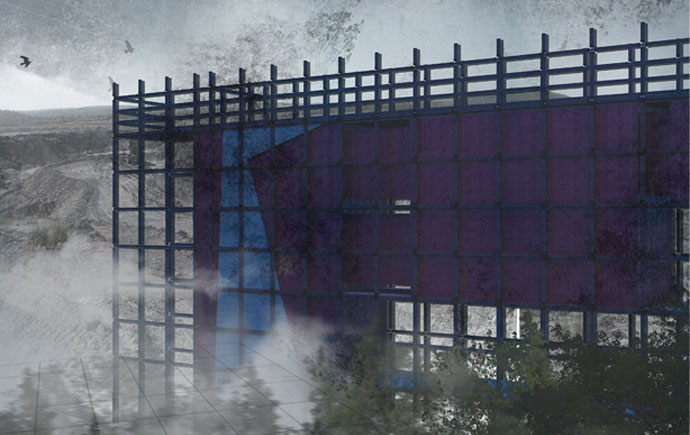
Heavily influenced by the impacts of the extractive nature of the mining industry, Binowee Springs proposes a re-programming of the existing infrastructure once the Yallourn Power Plants are decommissioned. With the aim of providing relief for the existing natural water sources and rehabilitating native flora and fauna, the project makes a statement, demanding attention and reclaiming the land to how it once was.
Supporting Research
The Latrobe River and Gippsland region water catchment have been a critical landmark and water source since its formation about 96 million years ago, shaping how people occupy the region throughout the ages. The river course provided the outline boundaries for each indigenous clan’s territory before colonisation, as well as established an everlasting connection to the country through the river and water system. Currently, the Gippsland catchment provides water for the surrounding towns, Powerplants and irrigators operated by local farmers.
Retrofitting Approach
Working within the existing conditions, Binowee Springs retrofits the cooling towers, which provide an ideal opportunity for the collection of water due to its unique shape.
Site Master Plan
Operating within the cooling towers located at Yallourn Power station, the initial retrofitting serves as a testing ground for the concept with an overarching goal of implementing the project on the other Power Plants located within the region
Section through the project
Removal of segments of the shell while preserving the existing internal ribbing ensures enough structure is sustained while providing more exposure to sunlight and air circulation. Most of the lower panels are kept ensuring the vegetation has a surface to climb and attach to. The internal spiral circulation connects via a mesh walkway featuring four platforms that look out to the deprived landscape, with an emphasis on the extraction mine sites and the Latrobe River.
In the spirit of reconciliation Monash University acknowledges the Traditional Custodians of country throughout Australia and their connections to land, sea and community. We pay our respect to their elders past and present and extend that respect to all Aboriginal and Torres Strait Islander peoples today.