Monash Art, Design and Architecture Student Exhibition 2022
Monash Art, Design and Architecture Student Exhibition 2022
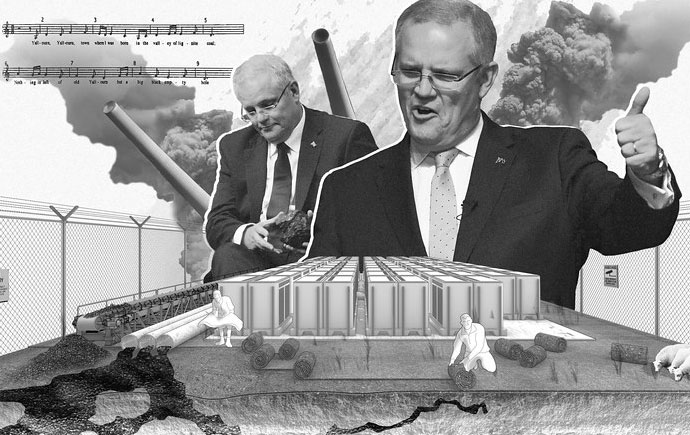
In February 1921, the State Electricity Commission of Victoria (SES) began the construction of Yallourn — today, Australia’s most polluting power station. Shortly after, the SES started building an adjacent company town, which, also called Yallourn, was designed to house the station’s employees and their families. The township encapsulated the progressive ideas of the time: work, health, leisure, education, and purpose defined a strong community working for the common good. Yet, by the early 1980s, Yallourn became “just a big hole in the ground,” following the town’s staged demolition to extract the vast coal deposits lying underneath. This astonishing history has been well documented. Starting with Mary Wilton’s film Born to Die, Yallourn’s rise and fall is also the subject of Meredith Fletcher’s book Digging People Up for Coal. The ABC’s podcast Hindsight also revisited this peculiar episode in Australia’s history, and websites like virtualyallourn.com preserve the memory of the now disappeared settlement. Nonetheless, none of these projects situate Yallourn’s history in the discussion on climate change. As this history arguably encapsulates the entanglement of economic interests, social tensions, and political conflicts undermining Australia’s appalling record on climate action, this studio asked students to revisit it as a means to develop an architectural design project that can potentially stimulate climate action. A two-day visit to the Latrobe Valley exposed students to the sheer scale of Victoria’s fossil fuel-based energy production industry, prompting questions and associations regarding topics of their personal interest and concern. Students were asked to come up with their own design briefs, leading to the development of projects that contribute to unpacking the multifarious and multiscalar complexities embedded in resource extraction.