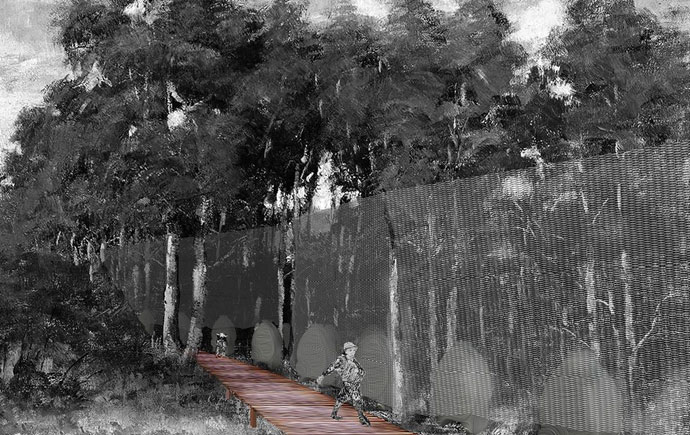
A program for the growing and making of minimal intervention wine interacts with the change in landscape that occurs across varying periods of time. The site is a farm in Buckland, at the foot of Mount Buffalo. The architecture intervention sits in an excavation pit. The pit – a result of previous gold mining activities – exists as the only area on site cut into the land forming a dip in the ground. Physically it has become overgrown with blackberries, and conceptually it is a history of politicised power and racial struggles. The architecture seeks to explore the idea of capturing time in motion. How can we begin to reveal the hidden layers of history that exist in our landscape?
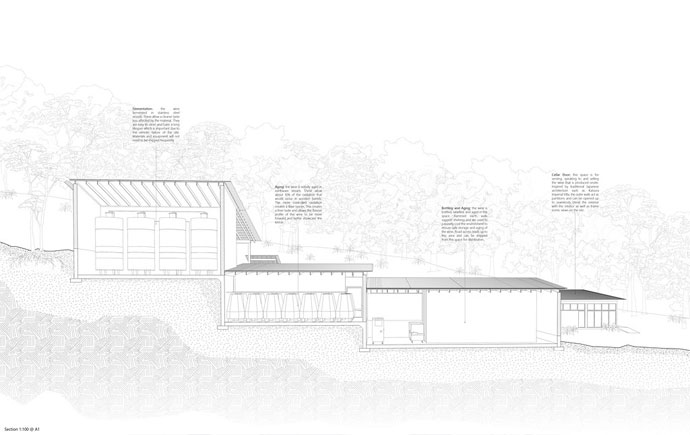
Section
The interventions for the making of wine is a layered approach governed by the spatial and conceptual layering of history. It is representative of the temporal scale that wine travels through in its making process and the embedded layers of history in the landscape. Each step of the wine making process requires the workers to move further down into the pit.
Plan
The plan drawing shows the fragmented functions of the winery connected to one another via pedestrian paths/ bridges and a void in the storing space of the wine - framing and sitting in dialogue with parts of the landscape.
Cellar Door
The cellar door takes ideas from the existing open shed on site that exposes and activates the built form with the surrounding environment using minimal materials. The cellar door extends this form by adding an element of material layering representing another moment in time.
Office
The office/ staff area includes operable walls that essentially function as solid curtains in the absence of windows creating a direct exposure of the senses to the external environment, and at the scale of a day or week the workers are directly interacting with the changes to the surrounding landscape.
Conceptual Model
Elements of fragmentation comes through in the concept model by layering cardboard and wrap paper within concrete poured over two stages. Characteristics of the model explored in architectural elements are how the cardboard started to become enveloped by the concrete but never completely; how pieces of cardboard and paper always seemed to maintain connection through the disruption of the concrete; and how despite some pieces of cardboard and card being completely surrounded/ hidden by the concrete, their presence is evident from the textural changes and absence of concrete in certain areas.
In the spirit of reconciliation Monash University acknowledges the Traditional Custodians of country throughout Australia and their connections to land, sea and community. We pay our respect to their elders past and present and extend that respect to all Aboriginal and Torres Strait Islander peoples today.