Monash University logo

Monash Art, Design and Architecture Graduate Exhibition 2023

My project explores how a prison transition centre can facilitate key relationships between incarcerated mothers’, their children, and the community. The women who make up the user group for this project are aged between 18 and 35, have committed minor offences, are either pregnant or new mothers, and are participating in the “Living with Mum” program run by Corrections Victoria.
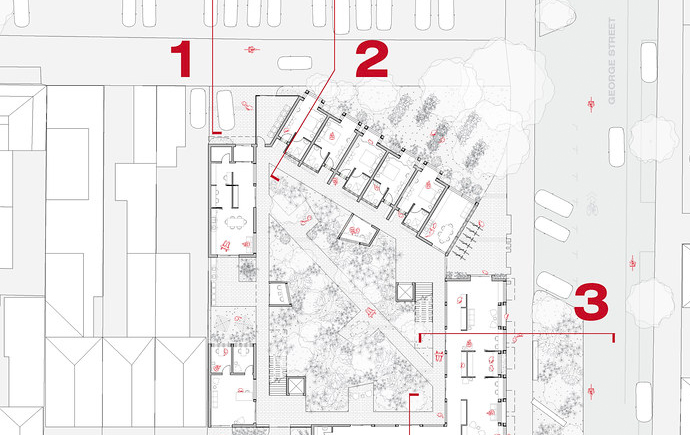
The project is located at 151 Victoria Parade Fitzroy. This site was chosen as it is a very well connected site with 3 tram lines and 13 bus routes running down Victoria Parade alone. It also sits adjacent to the East Melbourne Hospital precinct which is home to many women’s medical specialists.

Short Section

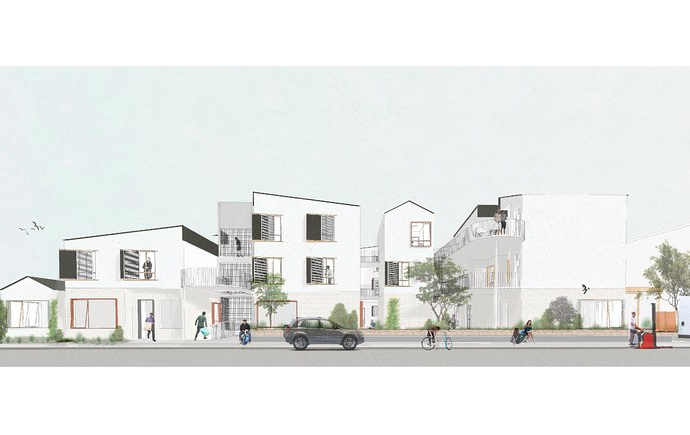
The whole project is framed around relationships and facilitating the many different relationships between community, mother, and child. This section, taken across the northern pavilion and into the internal courtyard, captures these three key components as they take place across the different parts of the building

Key Statistics and Quotes

Women currently represent 7% of the prison population in Australia. One in two imprisoned women are mothers, and 5-10% of them are pregnant. A survey done by the Australian Institute of Health and Welfare in 2020 showed that 114 women were pregnant when they entered prison, 25 women gave birth while in custody, and 69 children were living with their mothers in custody through programs such as the Victorian Government’s “Living With Mum” program.

Site Strategy

Women participating in such programs in Australia have consistently expressed frustrations at the lack of responsibility and autonomy they are able to take on, finding a lack of support, and difficulty navigating the channels of communication hindering their ability to get the help that they need. This has led me to these six key words and diagrams: Relationships, Privacy, Community, Journey, Protection, and Integration, these form the base of my site strategy, with Relationships being the central strategy to consolidate these fundamental ideas.

Child

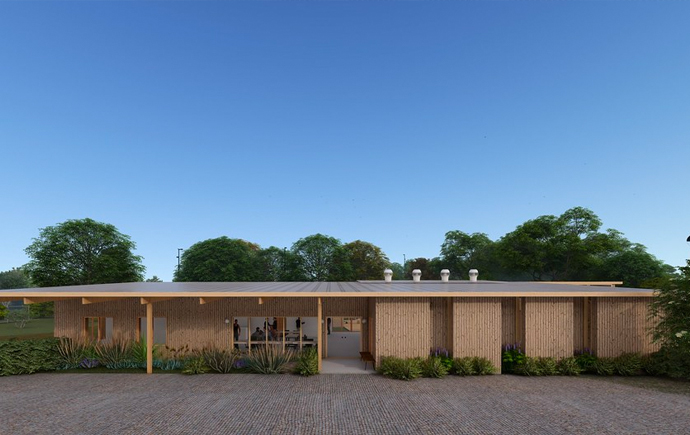
The project provides a kindergarten on site to provide support to the mothers and allow them time to work on their rehabilitation away from their children. The kindergarten opens up and spills out into the central courtyard, which is visible from all communal spaces across the building. This allows mothers to watch over their children and build trust with the kindergarten staff. It also gives the children the opportunity to develop with as little disruption as possible, and provides them with facilities which enable them to be children without the burden of the consequences of their mother’s sentences over them.

Community

Communal spaces are scattered across the project as kitchens, consulting rooms, laundries, exercise spaces, and learning spaces. On each of the residential floors, communal kitchens are the only full kitchens available, obligating the women to negotiate and communicate between each other in order to successfully manage and use the space as a group. Building up trust and communication skills as a community within the project encourages and supports the women to feel more confidence in building the same relationships once they are released

Mother

The dual key apartments in this project provide privacy without isolation. Limiting the apartments to two mother child pairs per unit reduces the amount of noise and perceived surveillance of their own private space. They also give women the opportunity to navigate a close living-relationship with their housemate. Similar to the communal spaces, the shared living in the apartments requires communication and trust to successfully live in the space, while also encouraging stronger one-on-one relationships and nuanced support systems among the women.

Explore more

View all

Back to top