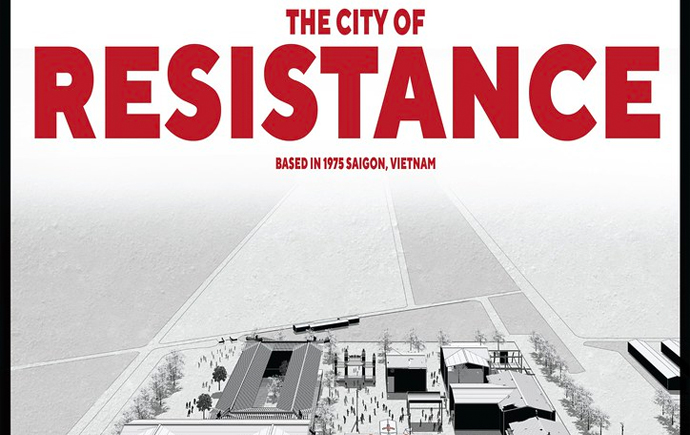
Monash Art, Design and Architecture Graduate Exhibition 2023

Architecture’s engagement with social and climate justice often manifests as the design of so-called ‘community,’ ‘sustainable,’ and ‘socially focused’ buildings. However, even if crucial, this kind of engagement is only partial and often insufficient to produce real, substantial change. Unlike most creative practices (e.g., film, music, literature, art, and performance), architecture is still struggling to contribute to the new narratives necessary to create an inclusive, post-carbon future. To do so, our discipline must escape its self-imposed limitations and find new ways to engage with the volatile conditions that define the contemporary world. In Fugitivity, students have had the opportunity to engage with such a process, finding alternatives to our discipline’s own bias, impositions, and limitations. Focused on the design of self-driven, narrative-based projects, students learnt notions, instruments, and methods expanding architecture’s scope and influence. This process incorporated two stages: first, the analysis of the formal, spatial, material, and performative implications of a series of public events and, second, the design of a self-driven, narrative-based architectural project based on that analysis.
Studio Leader: Eduardo Kairuz