This project is a long time in the making; it started with the beating to death of an Aboriginal 16-year-old boy in a remote Western Australian police station in 1983. This was fueled further by the well-known events at Don Dale in 2014, where Ethan Austral and 5 other boys, who were all still in their cells, were tear-gassed in the behavioural management unit after already being in isolation for up to 17 days. This event, while understood now to be torture, was first published by many media sources as being a riot of many kids, which sparked the Northern Territory governments to crack down with more force on youth offenders.
Chapter 3-4
A Four Corners news report released in 2016 showing footage of children in Don Dale brought Australia’s shame to all of our lounge rooms. This caused protests all around Australia, explicitly resulting in a Vigil at the gates of Don Dale, crying out for the protection of our youth.
This is where we stand today, with continuous stories published of Banksia Hill detention centre in Perth only allowing kids to be out of their cell for only 2-3 hours a day and the kids at Don Dale moved to the old asbestos-filled Berrima adults prison.
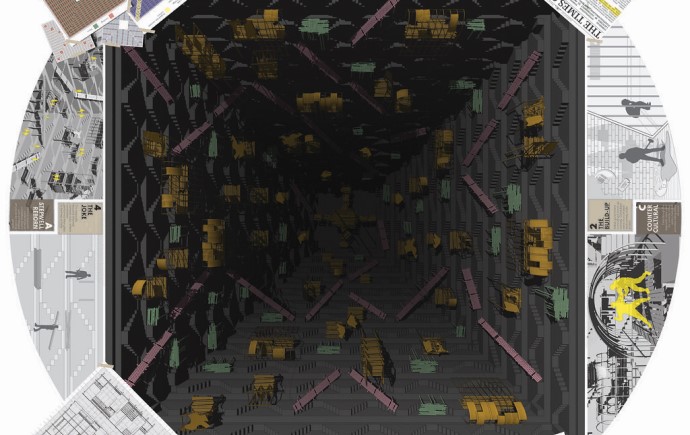
In a hypothetical world, we use Don Dale as a symbol of change, breaking down its walls and reshaping the shadows that occupy the building.
Chapter 5-6
What if some of those kids from Don Dale had the strength to band together, drive back in that car they escaped in and find solace remembering their friends who were broken there mentally or physically and, in some cases, took their own lives. Using a poem, the architecture becomes an anthem for these kids to find a way forward and reoccupy Don Dale for themselves.
From this point, it becomes obvious that reoccupying Don Dale is not enough. It needs to become something new not only for these kids to heal fully but also to become an example for detention centres across Australia.
Chapter 7-8
The project, therefore, becomes a set of ideals: 1. A vision of a better future using installations and collective determination 2. A safe place amongst the horrors where the scars can heal and set people free 3. A learning space where kids regain the education they are removed from 4. A reclaiming place of culture and self to reconnect back to the world 5. And a place of community building
At what age are we okay with our children going to an Australian youth detention and being handed out punishment for any misdemeanours being used as a UFC fighter’s practice bag? Is it 10, a raised 14, or is there even an age at which this is okay? How do we look at our children and decide this?
In the spirit of reconciliation Monash University acknowledges the Traditional Custodians of country throughout Australia and their connections to land, sea and community. We pay our respect to their elders past and present and extend that respect to all Aboriginal and Torres Strait Islander peoples today.