Osman is a student of Architecture with a multidisciplinary approach throughout his studios. Informed by a background interest in urban studies, fine art and design theory, Osman weaves narratives of architecture and its interactions with the city throughout his work.
In a world where convention restricts the free expression of ideas, Osman's practice aspires to engage with experimental modes of representation and research. This semester, he explored narrative artwork as research, where the design is in the process and storytelling- not the product. Through his work, Osman is able to demonstrate the ability for speculative architecture to perform as a vehicle for critique and dialogue.
Metamorphosis
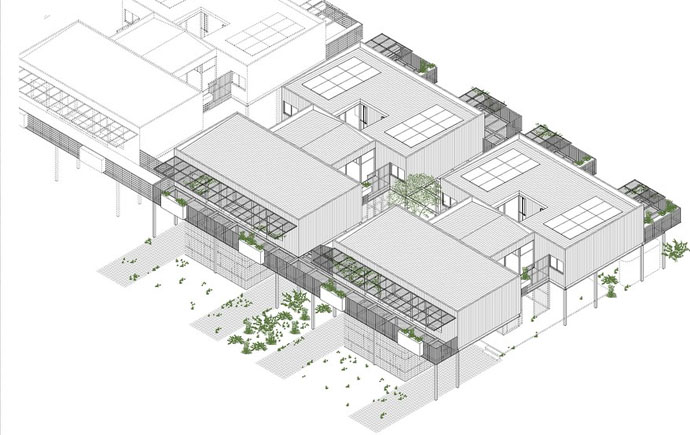
The home is split into four, where the narrative shifts from abandoned homes that are then occupied through makeshift reconstruction, through which a culture of repair establishes itself. Finally, the home returns to its state of abandonment, ready for its next occupant. In a time of ecological collapse, the resident is untethered. Driven by necessity, the resident as a climate refugee is unable to afford themselves the choices we able to make today. Living smaller is the only option.
Afterstructure: Squatting the ruins of suburbia
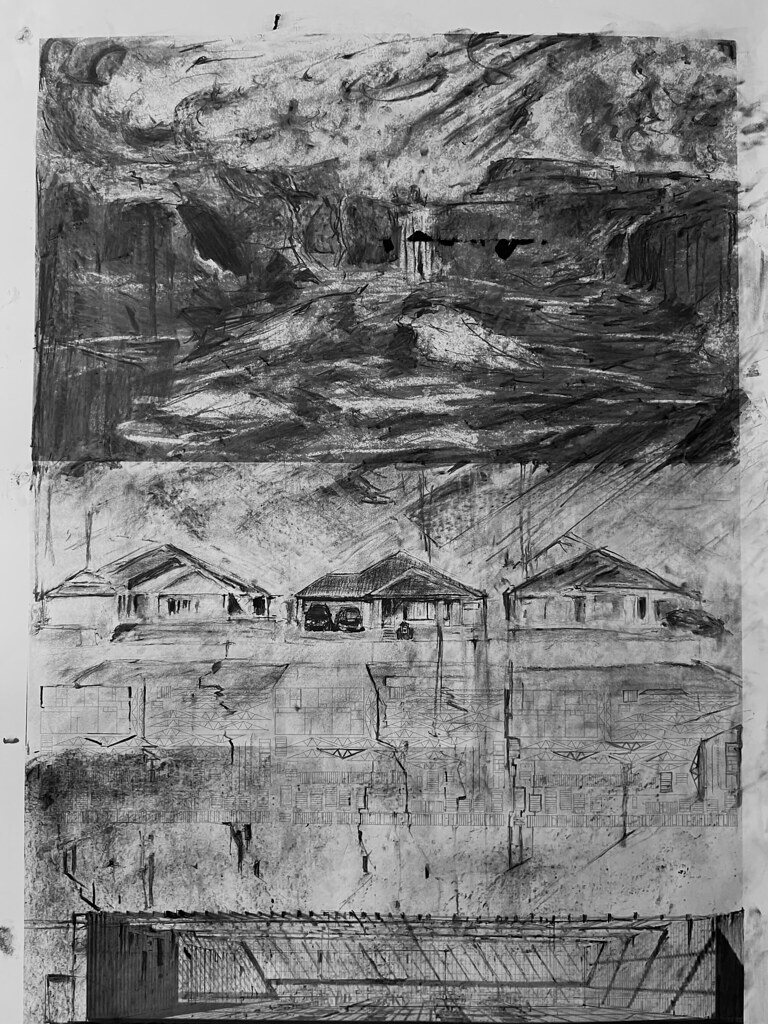
Can one 'green' building save us from looming ecological collapse? Afterstructure is a speculative project that explores the impact of inevitable ecological collapse on suburbia. This narrative drawing is transposed on top of the key actors of the site, the Royal Botanic Gardens Cranbourne.
Reconnection with Ecology: Sectional Representation of Narrative
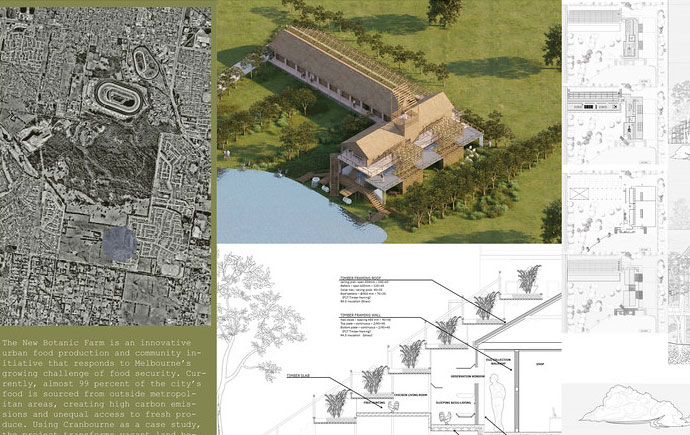
The role of the narrative drawing as informing the architectural outcome is demonstrated in the sectional drawing above, where through exploring the process of reconstruction after ecological collapse in the narrative drawing, the sectional drawing is a representation of the tangible products of this process.
Domestic Archetype, 1:50
To deconstruct the suburb, it must first be constructed. To land my narrative, I made two models of a simplified peri-urban residential typology. One will remain as is, and the other will be fragmented into moments that visualise the architectural outcome of the narrative drawing.
Metamorphosis
The home is split into four, where the narrative shifts from abandoned homes that are then occupied through makeshift reconstruction, through which a culture of repair establishes itself. Finally, the home returns to its state of abandonment, ready for its next occupant. In a time of ecological collapse, the resident is untethered. Driven by necessity, the resident as a climate refugee is unable to afford themselves the choices we able to make today. Living smaller is the only option.
Detail of Narrative Drawing
The artwork begins with the Boonwurrung story of the filling of the Nairm (Port Phillip Bay), narrated by Professor Aunty N'arweet Carolyn Briggs AM. Through the chaos of the event, the story calls for a return to care for Country. Juxtaposed with the peri-urban development of Botanic Ridge that threatens the habitat of the Southern Brown Bandicoot, the question of whether we need catastrophe to change behaviour is apparent.
Detail of Narrative Artwork
This section of the drawing explores the regrowth of ecology through the debris of the ecological collapse of Botanic Ridge. Inspired by the tectonic landscapes of Lebbeus Woods, the work seeks to express ideas of rebirth through cycles of change and chaos.
Hudayfa Osman, Metamorphosis
Hudayfa Osman, Afterstructure: Squatting the ruins of suburbia
Hudayfa Osman, Reconnection with Ecology: Sectional Representation of Narrative
In the spirit of reconciliation Monash University acknowledges the Traditional Custodians of country throughout Australia and their connections to land, sea and community. We pay our respect to their elders past and present and extend that respect to all Aboriginal and Torres Strait Islander peoples today.