
From Student Teams to Industry Prototypes: Hashani’s Journey with Gelteq at MiLabs
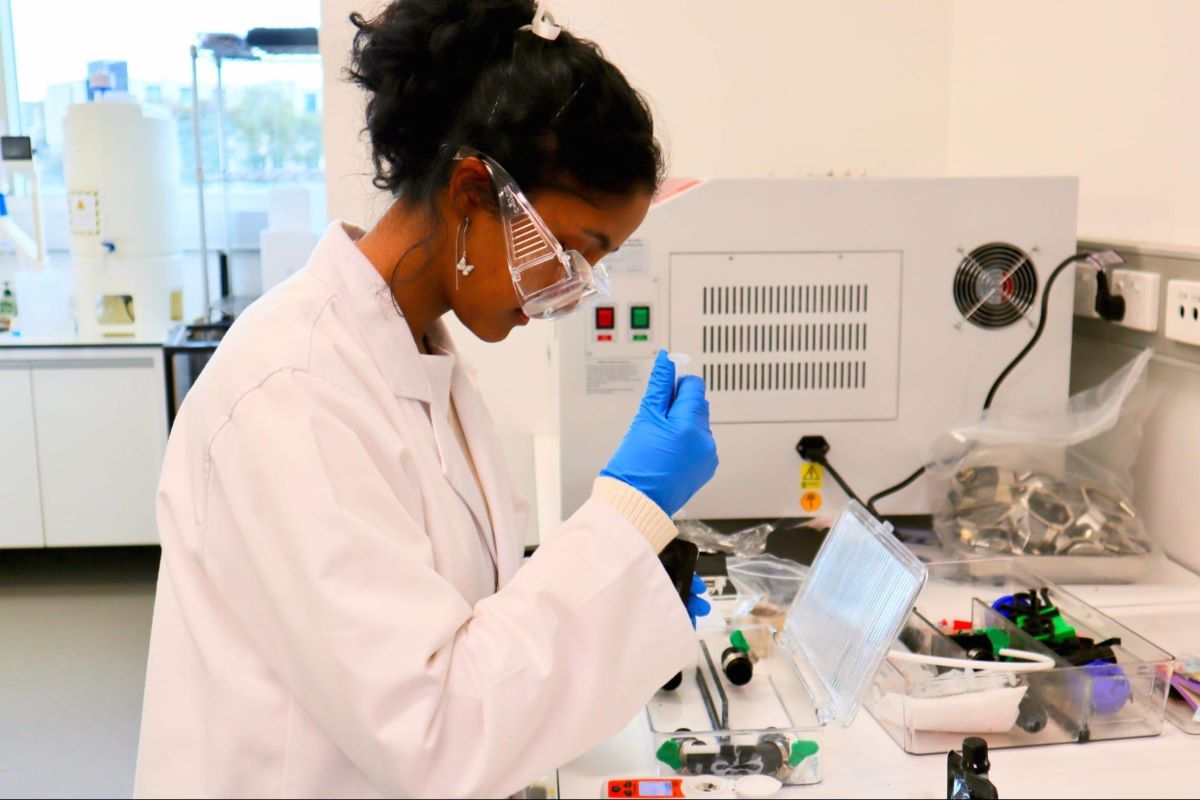
At Monash Innovation Labs, collaboration between students, researchers, and industry partners creates opportunities to turn ideas into industry impact.
One example is Hashani, a fifth-year engineering and biomedical science student, who joined Gelteq through the Industry Innovation Program (IIP). Her project is all about building a prototype “model gut” system, a way to test how gel-based medicines (and really, any substance) behave as they move through the digestive system.
What makes it powerful is that it provides an alternative to animal testing, letting researchers see how drugs are absorbed step by step, without the noise of other processes like metabolism or excretion.
In this conversation, she shares her journey from student teams to industry collaboration and how MiLabs shaped the experience.
Q: To start, could you introduce yourself and your background?
Hashani: I’m in my fifth year of a double degree in Mechanical Engineering and Biomedical Science. I’m completing my Final Year Project this year as part of the Industry Innovation Program (IIP) with Gelteq, a Monash Innovation Labs member.
Before this, I was part of Heart Hack, a project under the medtech team MYMI (Monash Young Medtech Innovators), where we built a mock circulatory loop to test a total artificial heart. That experience sparked my passion for biotech, the intersection of engineering and biomedical science.
Q: How did you first hear about the IIP opportunity?
Hashani: The Faculty of Engineering advertised the IIP roles and mentioned some could count towards Final Year Projects. I’d already done an internship through the co-op program and knew how well it was run, so this immediately caught my attention.
I’d been looking for something that connected engineering and biomedical science, and this project with Gelteq was exactly that. It aligned perfectly with my interests, so I was really hoping I’d be selected.
Q: What was the project brief when you first joined?
Hashani: In my interview with Paul and Nathan from Gelteq, they explained their vision: to create a physical model of the gastrointestinal system to test gel-based products.
Traditional testing relies on animal models or dissolution equipment designed for tablets and capsules. But gels behave differently - they don’t “dissolve” in a predictable way - so those methods don’t give useful results.
The brief was simple but ambitious: build a system that mimics the gut, allows samples to be taken, and makes results easy to measure and demonstrate.
Q: Can you describe what you’ve been building?
Hashani: At its simplest, it’s “fake guts in a box.”
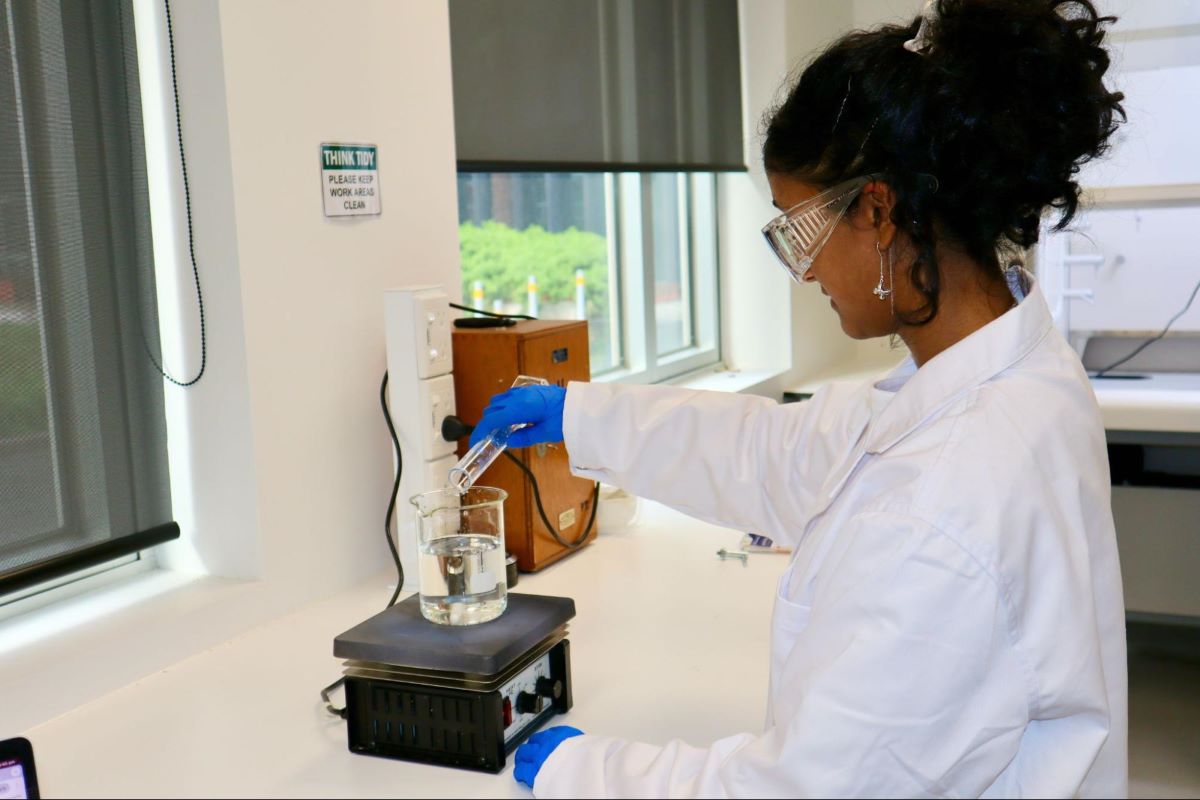
The system uses dialysis tubing to mimic the small intestine, since it’s semipermeable and allows molecules to pass through. We input gels or pharmaceuticals, then track how they move, break down, and absorb. Samples can be taken at different points to measure changes over time.
We’re also adding features that mimic intestinal movement, plus controls for temperature, pH, and enzymes to replicate biological conditions.
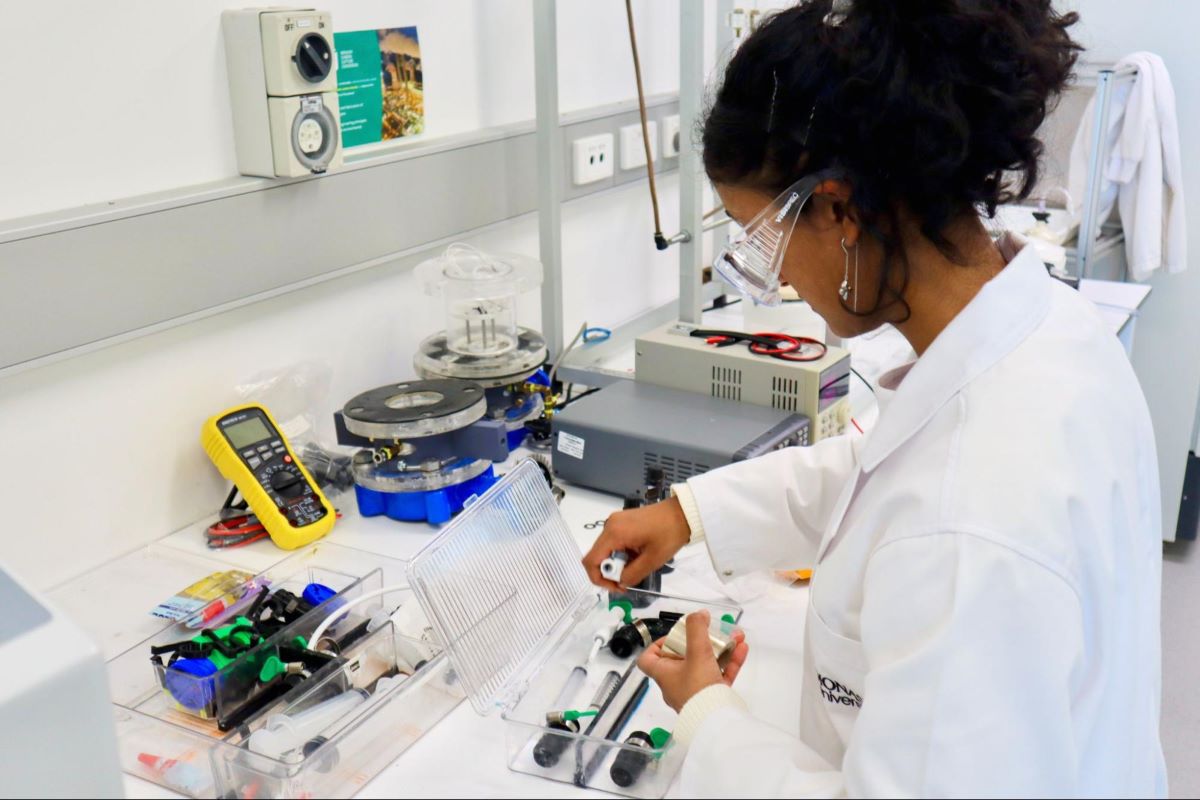
The design is modular and adaptable; it can be scaled, linked in sections, or adjusted to simulate different environments. Even in its early stages, it’s proving far more effective for gels than traditional methods.
Q: You’ve also mentioned working with MiLabs facilities and people. What has that looked like?
Hashani: Having the facilities and expertise at MiLabs has been central to the project.
I’ve worked closely with Dr Keenan Grandland in the Smart Manufacturing Lab, who helped me turn ideas into real prototypes, from refining CAD models to selecting materials that withstand chemical exposure.
I also accessed facilities like the MakerSpace, Design & Build Studios, and the SAMPLE Lab, using tools from 3D printing to analytical equipment. Having all of these resources under one roof made it possible to rapidly test and improve designs.
Q: What’s been the most valuable learning for you personally?
Hashani: Once refined, the prototype will let Gelteq directly test its formulations under controlled conditions. They’ll be able to adjust variables like pH, enzymes, and temperature, and sample results over time.
It gives them a flexible, scalable tool that matches their innovative approach to drug delivery and nutrition — without the limitations of traditional methods.
Q: Looking ahead, what’s next for you and the project?
Hashani: What we’ve developed is very much a first iteration, but it has huge potential. There are opportunities to expand the system, make it more autonomous, broaden simulations, and refine the design for easier replication.
Whether I continue with it or another student takes over, I’d love to see the project evolve further. It could make a real impact in biotech research and industry.
Q: Finally, what advice would you give other students thinking about the IIP or working with the MiLabs community?
Hashani: Go for it. These opportunities let you apply your skills in an industry context and grow in ways you can’t in the classroom.
MiLabs is such a unique environment, with researchers, startups, industry, and students all collaborating. That energy is what makes projects like this possible. For me, it’s been one of the most rewarding experiences of my degree.
At Monash Innovation Labs, stories like Hashani’s highlight why our model matters. By bringing students, researchers, and industry together under one roof, we create pathways for talent to thrive and ideas to take shape. It’s this ecosystem approach that turns individual projects into lasting impact for communities and industries alike.
Learn more about our talent programs here: https://www.monash.edu/monash-innovation-labs/talent-programs.