
Smart Spaces at Monash Innovation Labs
Where Research, Talent, and Technology Meet
At Monash Innovation Labs (MiLabs), you’ll find students collaborating with researchers, startups testing new technologies, and industry partners turning challenges into prototypes. Our three embedded Smart Labs: Monash Smart Processing Lab, Monash Smart Infrastructure Lab, and Monash Smart Manufacturing Lab , are key enablers of these relationships.
These labs aren't just spaces with specialist equipment. They're environments where multidisciplinary teams test, iterate, and learn together. To bring you closer to this energy, we spoke with the researchers who run them. Here's what they had to say.
Smart Processing: Turning Ideas into Action
Interview with Dr Joanne Tanner, Director of the SAMPLE Lab
What’s your role and focus at MiLabs?
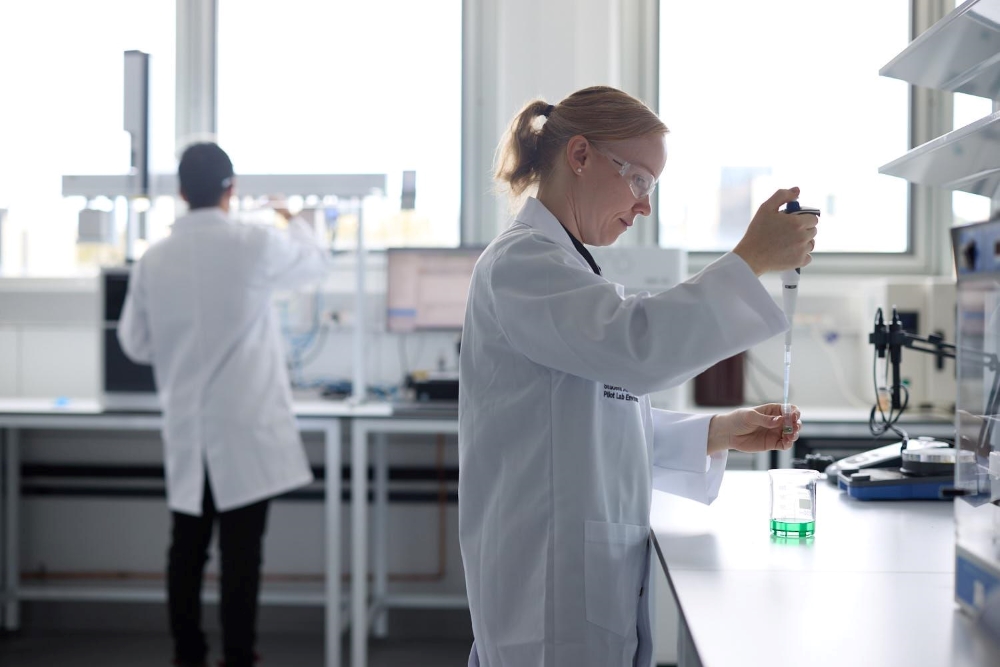
I'm a Senior Lecturer in the Department of Chemical and Biological Engineering, with a background in process control, automation and process design. At MiLabs, I direct the SAMPLE Lab, the Student Analytical Makerspace and Pilot Lab Environment.
What happens in the SAMPLE Lab?
Everything from brewing beer to testing membranes for wastewater treatment. It's a flexible wet lab environment where students and researchers work on real-world problems. Projects include developing carbon capture technologies, artificial hearts, and even mushroom-based leather alternatives.
Who uses the space?
Mostly students, undergrads, research students, and student teams. We also have industry partners like Gelteq, Woodside, NematiQ, and Gippsland Regional Organics collaborating with us. Some industry users drop in to access our analytical equipment on demand.
Any standout projects?
One of my favourites was a student-led final-year project using graphene oxide membranes developed by Monash spinout Cleanteq. We recycled greywater from Monash campus buildings. The project demonstrated a full-circle moment: a Monash innovation used to treat Monash's own waste. It'll be showcased at Open Day.
How does MiLabs enable your work?
There’s no other place at Monash like it. The SAMPLE Lab offers both the equipment and the culture to support experimental learning. It's a one-of-a-kind space where students can build and refine their own processes, with real industry applications, and industry partners can work with our students to develop their workforce and realise their commercial goals.
Making Sense of Complex Spaces with Monash Smart Infrastructure Lab
Interview with Matthew Willaton, Lab Manager
What do you do at the Smart Infrastructure Lab?
I manage the lab and support students and companies using the space. Additionally, I work on development and testing myself. The lab focuses on utilising sensors, computer vision, and machine learning to make built environments smarter.
What kind of technologies do you work with?
Everything from LiDAR and environmental sensors to high-end cameras and object tracking software. We're developing real-time systems that understand how people move through buildings and interact with objects. One student project is even developing fire evacuation plans based on real-time crowd and hazard detection.
How do you support businesses?
We collaborate with companies like Civil Design and others through project scoping and hands-on student support. I help connect them with the right students, tools, and solutions. I also work with internal Monash researchers across departments who want to incorporate advanced sensing or vision into their projects.
What are some recent applications?
We mounted a camera on a car and drove through the Monash City Council to monitor construction site compliance. It’s expanded into detecting issues like graffiti, overhanging vegetation, and infrastructure faults. Other projects include developing AR-guided indoor navigation for new visitors and vision-based systems for safety monitoring in industrial settings.
Why is being at MiLabs important to this work?
Because I can connect people to the right knowledge and tools. Whether it’s a student with a good grasp of LiDAR or a researcher who needs environmental data, MiLabs helps bring all of that together under one roof. It speeds up collaboration and makes things happen.
How can people get involved?
Start with a conversation. If you're interested in smart infrastructure, we can help scope projects and link you with students and researchers who can support the work.

Driving Next-Gen Automation with Monash Smart Manufacturing Lab
Interview with Dr Keenan Granland, Lab Manager
What does the Smart Manufacturing Lab focus on?
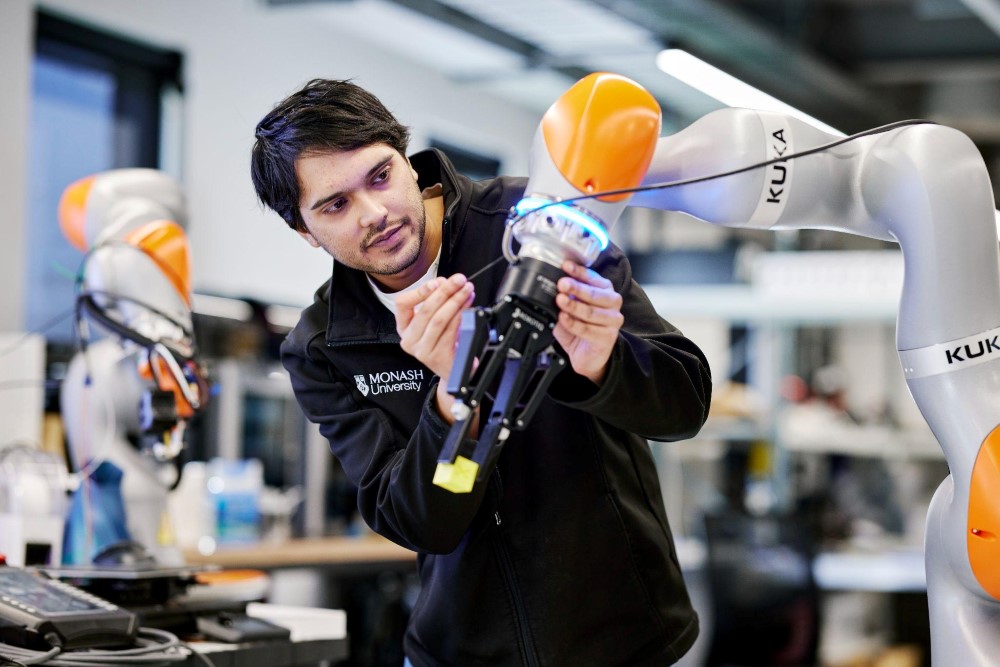
Our work centres around robotics, AI, machine vision, and industrial automation. We support both student and industry projects that use these technologies to solve real manufacturing challenges.
What kind of projects happen in the lab?
We work with everything from 3D printers to robotic arms. A major project was with InfraBuild, where we developed a computer vision system to monitor their steel rebar bending process. Another with Hilton Foods helped assess meat product lines in real time using QA imaging systems.
Who do you typically collaborate with?
Startups, student teams, and large industrial partners. We scope practical projects that can show proof-of-concept and scale from there. Students are involved through Monash programs like the Industry Innovation Program and the Co-operative Education Program.
What role do students play?
A huge one. Many of the problems we solve are proposed by industry and solved by students. They get real experience, and industry gets real outcomes. It’s a win-win.
What’s something you’re especially proud of?
Setting up the full lab network so all devices - robots, cameras, Raspberry Pis - can talk to each other. That level of integration is rare in a university setting, and it makes the lab incredibly adaptive.
Why is MiLabs a good fit for this kind of work?
It’s the only place where we can quickly test, validate, and deploy industrial tools in a semi-controlled environment. The proximity to other labs, talent, and research teams means we can move fast.
What’s the best way to connect?
If you're curious about automation, robotics, or deploying vision systems in manufacturing, just reach out. We're always looking for practical problems to solve.
A Living Innovation Ecosystem
The community at MiLabs is a community built on collaboration, with the Smart Labs exemplifying this ethos: each is different in its domain, but united in their approach to solving problems hands-on, in real-time, with real people.
If you are a business with a technical problem or a student interested in working in our labs, you can find more information here.
Whether you're a student looking for experience, a business with a challenge, or a researcher with an idea, there’s a place for you in the MiLabs ecosystem.