
Vale Emeritus Professor Arthur Colvin Lindesay Clark AM
Vale Emeritus Professor Arthur Colvin Lindesay Clark AM
18 April 1928 - 30 July 2024
Tribute
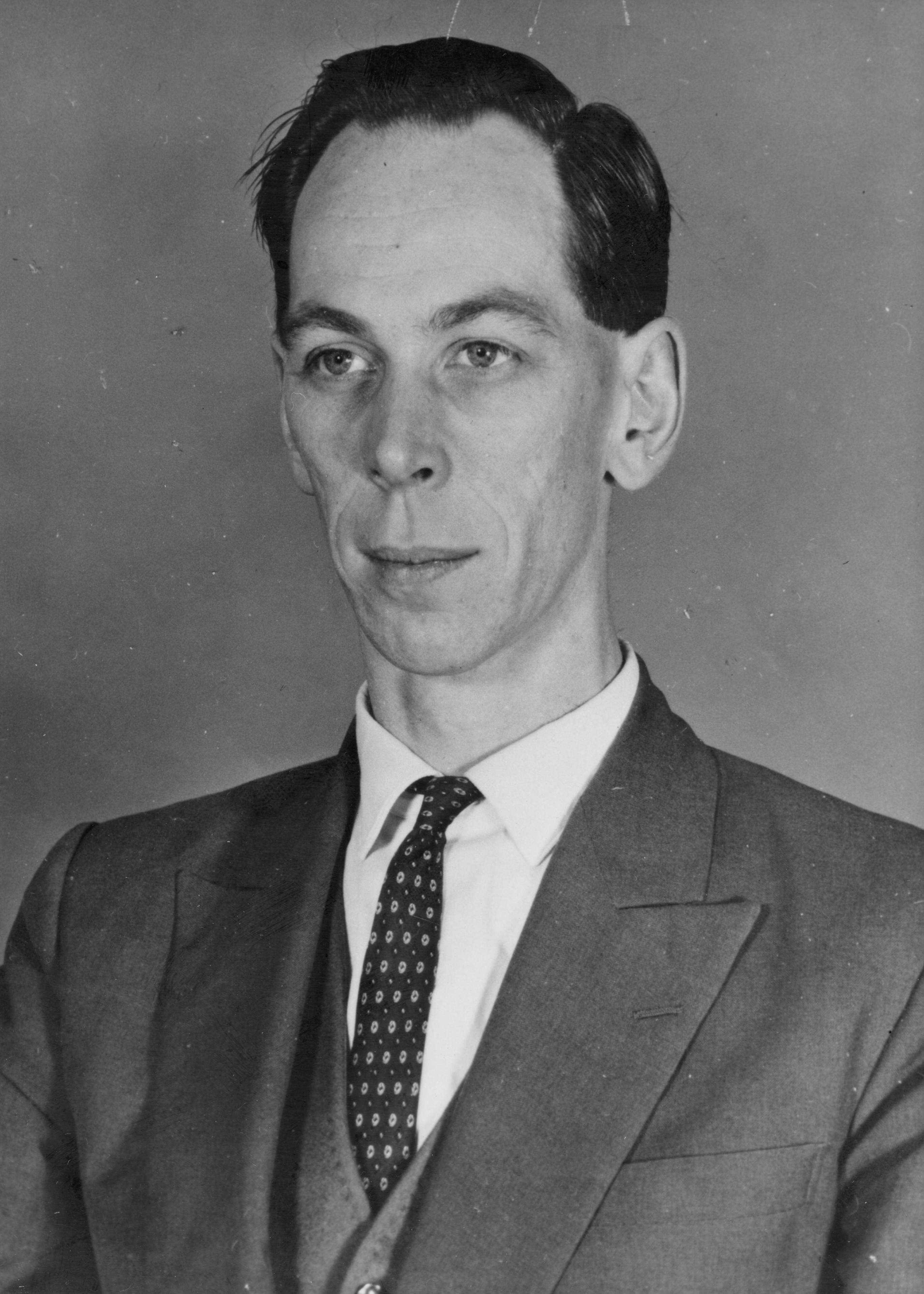
Emeritus Professor Arthur Clark, 1965. Image courtesy of Monash University Archives.
The eminent paediatrician, Professor Arthur Clark, who has died aged 96 years, planted the seeds for the Monash Children’s Hospital early in his career, and tackled many hurdles in a bid to bring it to fruition.
Professor Clark was the Foundation Professor of Paediatrics, and a highly influential figure in developing world-class children’s services. He will also be remembered for his pioneering work as the principal investigator of an Australia-wide clinical trial that tested treatments of acute leukaemia in children, which led to a drastic reduction in mortality rates. As well, he made an enormous contribution to the training of several generations of paediatricians, many of whom have established important roles throughout the world.
Professor Clark was appointed Foundation Professor of Paediatrics at Monash in 1965. He felt that the discipline had to a certain degree lost contact with other branches of medicine and saw his new role as an opportunity to make it more collaborative. He set about employing a team of much-needed specialists in this area, and established a paediatrics department within the city’s Queen Victoria Hospital, which at the time was one of only three hospitals in the world founded, managed and staffed by women.
Throughout the years Clark and his team not only pioneered research in neonatal breathing, but started a newborn intensive care unit, developed a humanist ethos around visiting hours and paediatric care, and founded the Centre for Early Human Development.
In 1987 the Queen Victoria Hospital merged with Prince Henry’s Hospital and Moorabbin Hospital to form the Monash Medical Centre. However, it was not until 2017 that the Monash Children’s Hospital finally opened its doors, fulfilling Clark’s long-held ambition, 24 years after his retirement. He was a very special guest of the hospital in July of that year where many staff and senior clinicians stopped him to pay their respects and reminisce, with one describing him as ahead of his time in putting the child at the centre of care.
Arthur Colvin Lindesay Clark was born on 18 April 1928 in Hobart, Tasmania, the son of the renowned mining engineer, Sir Gordon Colvin Lindesay Clark and Barbara Jane Crosby Walch. Despite being raised in a family of engineers, he could not tolerate maths so decided to study medicine instead. He graduated with an MBBS from the University of Melbourne (1951), and became junior resident medical officer at the Royal Melbourne Hospital. He later served as medical officer and pathology registrar at the Royal Children’s Hospital (1954-1955), where he developed an interest in haematology. He found he liked treating children because their problems were generally “less complex” than adults.
In 1956 he was awarded the degree of Doctor of Medicine and the David Grant Medal for his distinguished performance in the doctoral examination and a Membership of the Royal Australasian College of Physicians.
Drawn by a desire to explore the practice of medicine in other countries and to learn more from the history of foreign places, Clark left Australia in 1957 (having met and married his wife, Elaine, three years earlier) and travelled to Newcastle-upon-Tyne, England, to work as a paediatric registrar at the Royal Victoria Infirmary & Babies Hospital which at the time was a leading department in medicine with a particular interest in the social aspect of paediatrics.
In 1958 he spent six months at London’s Hospital for Sick Children in Great Ormond Street and later pursued research studies in the Department of Medicine at Cambridge University. Hoping to see more of the world before returning to Melbourne, in 1959 Clark took up another post as clinical research fellow at the Children’s Hospital Medical Centre in Boston, Massachusetts, where he specialised in children’s oncology, particularly in leukaemia and paediatric haematology.
While in Boston, he became involved in a cutting-edge research trial on the remission of childhood leukaemia. On returning to Melbourne, Clark was engaged as a principal investigator of an Australia-wide clinical trial sponsored by the Australian Cancer Society (now Cancer Council Australia) that tested treatments of acute leukaemia in children. These studies were part of a global effort that by 1993 had reduced leukaemia-related childhood mortality rates by 80 per cent.
Colleagues thought Arthur had “lost his marbles” when he decided to join Monash University which was still in its infancy and without its own hospital or paediatrics department. Clark merely rolled up his sleeves and set about remedying the situation, identifying the Queen Victoria Hospital, which specialised in gynaecology and obstetrics, as a good place to build such a department.
As he knew “nothing” about neonatology, he set about researching it. He noticed that academics around the world were using sheep to study newborns (the foetal lamb is very similar to the human foetus) and decided he needed a sheep department. To his amazement, no objection was raised when he asked for lab space and an animal house close to the hospital. One of the specialists Clark invited to join the team was Professor Michael (Mick) Adamson, an expert in neonatal care and experienced researcher, who recalled how puzzled patients would recount hearing sheep baaing during the night, unaware that they were housed in a small building behind the laundry. The sheep also inspired Arthur to develop more humane visiting hours for parents of sick children and newborn babies. “Our sheep actually had rooming-in and they could have visitors; you certainly couldn’t room-in if you were a mother and a child at the old Queen Vic…so the animals were ahead.”
Once the team and the laboratory were established, the paediatric department at Monash flourished. “It was the happiest department I’ve worked with”, recalled Adamson. “Every Friday night we’d try and sort out problems with sherry and whisky. It was a department of humour and fun. There was no friction.”
In addition to his academic post, Clark served as a member of the National Health and Medical Research Council Ethics Committee, and as Censor in Chief (1980-1984) and President (1988-1990) of the Royal Australasian College of Physicians. He was appointed a Member in the General Division of the Order of Australia (AM) in 1992 for his service to paediatric education, and was awarded the title of Emeritus Professor upon his retirement from Monash University in 1993.
In his later years, Arthur continued undergraduate teaching at the Royal Children’s Hospital and other children’s units in Melbourne, and played an important role at the Australian Medical Council, where he became Chief Examiner. He was an active patron of the SIDS Foundation and the Malcolm Sargent Cancer Fund for Children (now Red Kite). He and Elaine had four children; three daughters and a son, and he enjoyed spending time with his grandchildren, one of which followed his footsteps into medicine.
Tall, gracious, and courtly, Clark’s politeness and ability to stay calm were his hallmarks in a field fraught with challenges and often intense, emotional pain. He was slow to anger, realising that it rarely solved issues, reflecting that over the course of his career: “the bad times have been when there were conflicts between parents over their wish to continue or not to continue with treatment, and worse still, when the conflict was between parent and child.”
There are no words in any language which explain what it is like to lose a child; to bear the ache that exists in the spaces they were meant to live year upon year. As a paediatrician, Clark knew this more than most. And yet, his life’s work taught him the wisdom of being able to let go. “If I were to do things differently, I would make greater efforts to respect the autonomy of the child; even quite young children know when they have had enough.”