
Vale Emeritus Professor John Murtagh AO
3 July 1936 – 18 October 2025
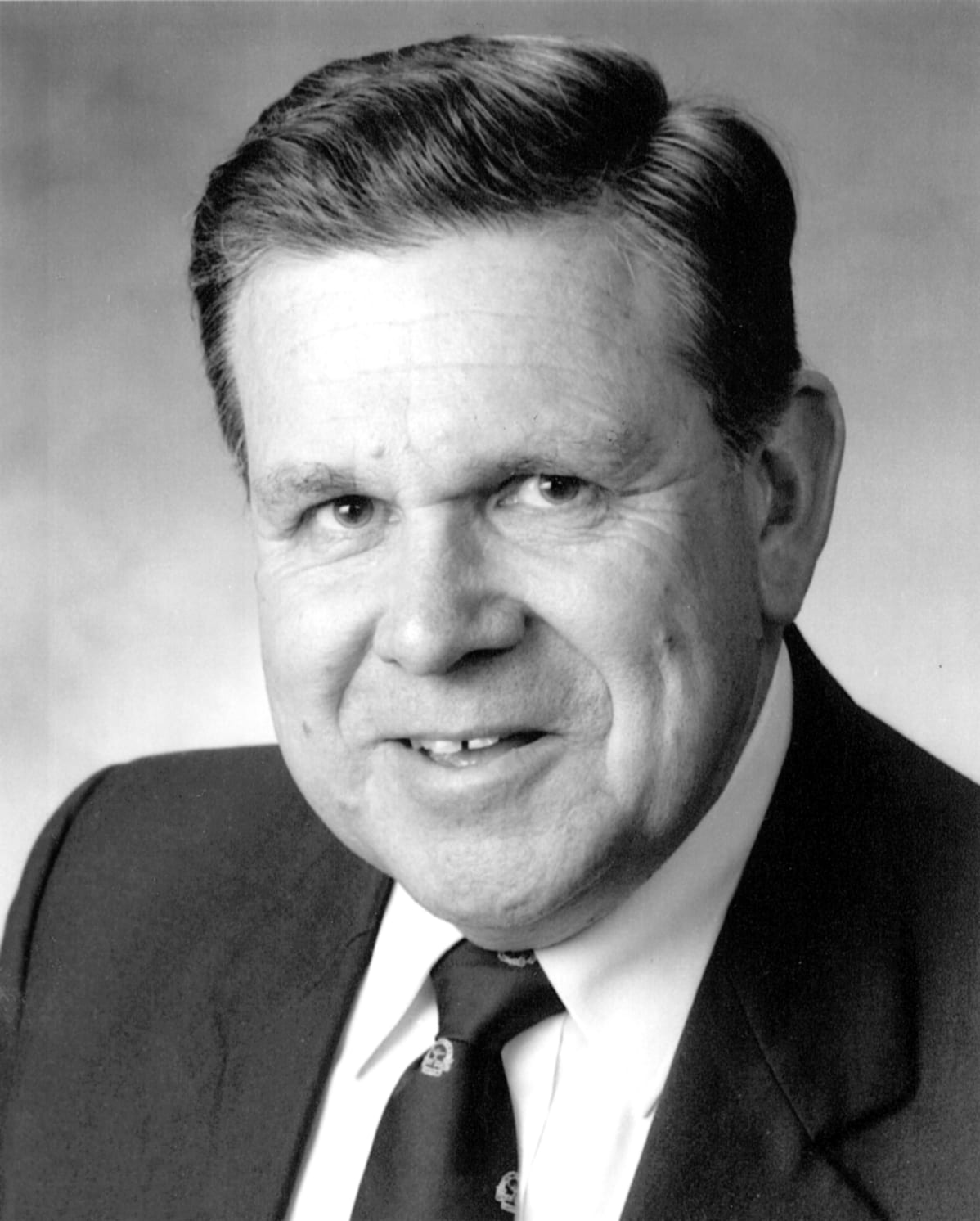
Professor John Murtagh, who has died peacefully aged 89, was the GP’s hero, the pioneering academic with the human touch, the country doctor who combined a fierce intellect with the listening skills that only the bush can teach.
Internationally recognised for his services to medicine and medical education, his impact resonates far beyond the walls of Monash, where he helped shape the future of general practice, channelling a trajectory based on his intuitive understanding of the profession’s unique requirements.
Professor Murtagh began his stellar career as a high school teacher, switching to medicine after experiencing what he described as a calling. He was particularly drawn to general practice because he liked every aspect of medicine, from the mundane to the complex. In his best-selling textbook, Practice Tips, he shared his knowledge on an abundant array of conditions acquired through years of managing a rural practice, including the removal of insects from the ears or how to treat jellyfish stings. As one colleague put it, “he managed to produce knowledge not found in traditional textbooks”.
John was Professor of General Practice and Head of the Department of Community Medicine and General Practice in the 1990s but his long association with Monash began more than 50 years ago when, in 1966, he was amongst the first batch of students to graduate from a medical school that encouraged lateral-thinking and challenged entrenched concepts and practice.
Having gained prizes in surgery, he was initially discouraged from pursuing a career in general practice. However, he deeply valued relationships and had a great interest in people. On graduating, he spent close to 10 years working with his wife in rural Victoria at their practice in Neerim South, where human issues broke down artificial barriers and allowed him to experience what he considered the true nature of medicine through continuity of care.
In 1976 he was recruited as a General Practice senior lecturer at his alma mater while running a country practice in West Gippsland, combining his twin passions of teaching and medicine. At a time when General Practice was still finding its place in medical education, he played a pivotal role in embedding it within the academic curriculum. With tireless dedication, he helped establish one of Australia’s most respected GP training programs, always guided by his belief that primary care is the foundation of a healthy society.
As a lecturer, he was well-liked and highly-regarded by students for his remarkable ability to remember everyone’s name and was a competent, unflurried administrator.
In 1988 he joined the department of community medicine at Box Hill Hospital and subsequently became chair of the extended department and Professor of General Practice (1993-2000). He headed the Department of Community Medicine and General Practice (1993-1998) and worked in a professorial capacity until his retirement from the University in 2010, upon which he was appointed Emeritus Professor. The Department of General Practice John Murtagh Annual Update Course is named in honour of his extraordinary contribution to family medicine.
In later life he was a member of the Monash Pioneers’ Committee – an alumni group of staff and students who attended the University during its first five years – and as such was involved in commissioning projects to enhance the University’s heritage, such as the Sir John Monash statue.
John Murtagh was born in Coleraine, Victoria, in 1936. His parents were business people who made trips around the bush delivering services to local people and the young John would often accompany them. At high school, he loved mathematics and set his sights on becoming a maths teacher. However, his plans were thwarted at Melbourne University, where he was forced to major in biomedical sciences rather than maths.
In 1962 after three years teaching science, he applied to join the first intake of Monash’s new medical course. Fellow students delighted in the mature student’s irreverence and lack of deference towards the lecturers. Even at this stage he had, it was noted, more respect for generalists than specialists, whom he felt could become trapped by their tunnel vision.
John began dating Jill Rosenblatt, a medical student at the University of Melbourne who was the daughter of a Lutheran minister and shared his strong religious beliefs. On graduating and after marrying, the pair moved to the small farming community of Neerim South in the foothills of the Great Dividing Range where together they ran a bush nursing hospital, providing an almost complete service to the community based on their complementary skills of surgery, anaesthetics, obstetrics, paediatrics and emergency medicine.
John’s faith underpinned his medical practice. There were things he wouldn’t do; for instance, he was against euthanasia and in later years was a vocal opponent of assisted dying legislation. But his Christian background meant that he perceived medical care as a service that included caring, availability and advocacy. His legendary diagnostic skills were matched by a deep respect for the patient experience, and a conviction that listening is medicine’s most powerful tool. Together he and Jill embraced psychosocial health, holding talks on depression, first aid and how to recognise suicidal behaviour.
John was also a prolific writer and a natural storyteller, fondly known as the J.K. Rowling of general practice due to his magic touch in getting medical textbooks to sell so well. After guest appearances at conferences, it was not uncommon for him to be mobbed by medics seeking autographed copies.
His magnum opus, John Murtagh’s General Practice, first published in 1994, was one of the world’s most widely used and respected medical textbooks. Unique in that it was based on symptoms rather than diseases, it tackled common problems such as dandruff, hangovers and bad breath. It was the first general practice text to be translated for general recommended usage in China, a country new to the field of general practice. Practice Tips, its companion publication, was named as the British Medical Association's Best Primary Care Book Award in 2005.
He was enlisted to edit Australian Family Physician (AFP), introducing many popular new features which eventually became books in their own right. Marketing types would call Murtagh a brand, but for trainee doctors he was the avuncular, do-it-all GP of yesteryear who had time to listen to his patients’ stories, make sense of their symptoms and pass the knowledge on.
His love of a good yarn was evident in his book, Cautionary Tales, which showed him to be a keen observer, not just of the individual patient but of the human condition. The book, which details 336 case studies, was lavishly praised for its frankness in acknowledging mistakes and its sympathetic understanding of the patient’s perspective and needs.
During his time as a rural GP, John undertook a research project on aspects of morbidity and mortality patterns, which culminated in the thesis, The Anatomy of a Rural Practice, which was awarded the Francis Hardy Scholarship for Research in General Practice in 1980. In 1989 he was awarded a Doctor of Medicine, his thesis being the study of back pain in general practice, a condition from which he suffered in childhood due to poliomyelitis. He was initially told to learn to live with the pain, but was cured by a sports physiotherapist who used spinal manipulation to relieve his symptoms. John went on to teach over 3,000 doctors the skills of spinal mobilisation.
John received the Monash University Distinguished Alumni Award in 1996 and in 2005 was named the inaugural recipient of the David de Kretser Medal for outstanding contribution to the faculty’s overall operation. In 2013 he was awarded a Monash Fellowship. Other plaudits include the RACGP Rose-Hunt Award (2003), the NZ RCGP Eric Elder Medal (1999) and the AMA Victoria Gold Medal for services to medicine in 2007. John was appointed a Member of the Order of Australia (AM) in 1995 for services to medicine, education, research and publishing, which was upgraded to an Officer of the Order of Australia (AO) in 2019. The RACGP library is named after him.
In retirement, John was in much demand as a roving elder statesman of general practice in his role as Patron of General Practice Registrars Australia (GPRA). He held a Professorial Fellowship appointment at the University of Melbourne, was an adjunct clinical professor at the University of Notre Dame and an Honorary Professor at Peking University Health Science Centre.
John and Jill, a former adjunct senior lecturer in general practice at Monash, had five children, Paul, Julie, Caroline, Luke and Clare, 10 grandchildren and one great grandchild. A keen footballer and tennis player, in later years he was an armchair sports enthusiast and Hawthorn supporter. He also wrote stage plays for the local theatre.
He had just finished working on the ninth edition of Murtagh’s General Practice when he suffered a fall from which he could not recover.
A man of great humility, he lived by his own motto “share and care”. Physician, healer, mentor, and friend to many, he was, according to colleagues, “truly one of a kind”.