
Vale Professor Leo West
23 May 1941 – 18 December 2025
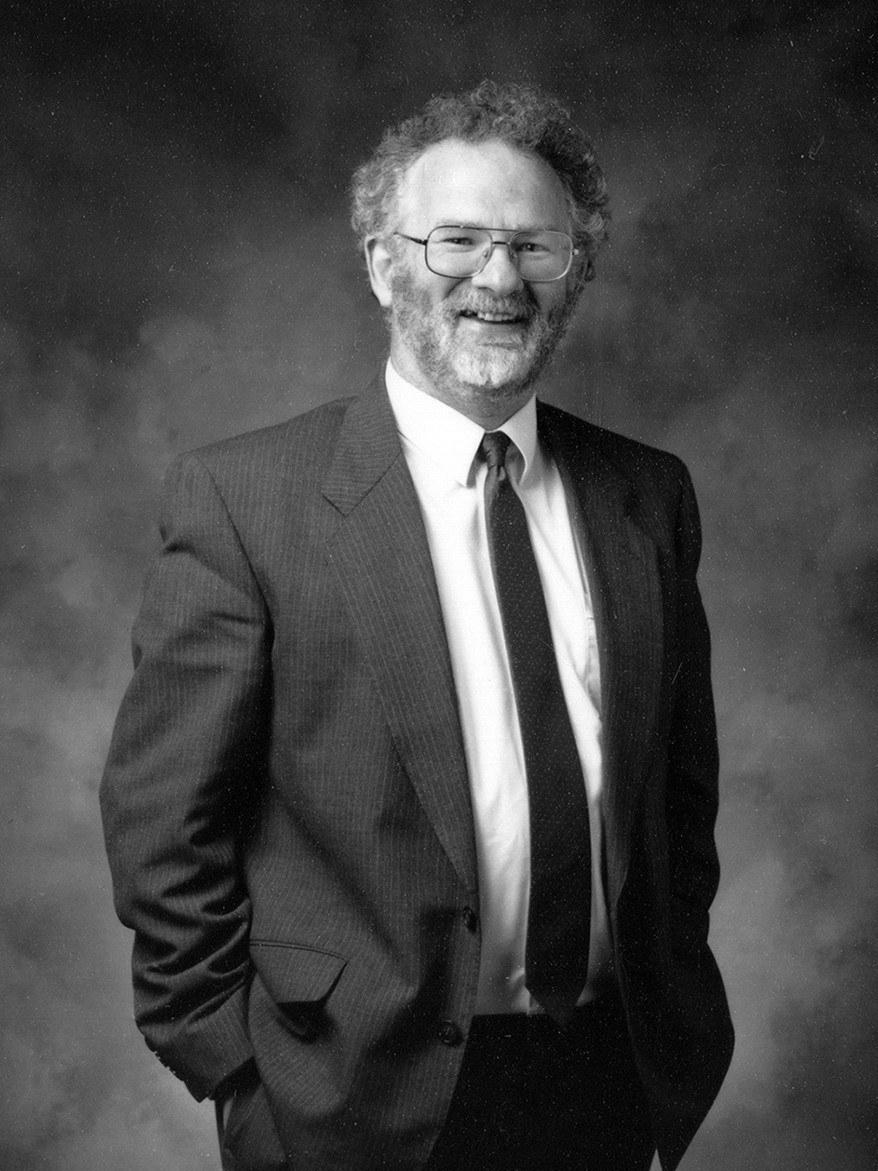
The late Professor Leo West, circa 1992. Image courtesy of Monash University Archives.
Leo West started out as a grassroots chemist before turning to academia. He focused his research on how students learn science before turning his attention more broadly to the research of higher education, with a particular focus on teaching – quickly achieving a level of distinction into what was then a relatively new field of research. His reputation was established by the energy with which he investigated both these areas of research, and the quality of his insights.
Following his academic research career, Leo went on to become a part of Monash history as he was appointed as the University’s first Pro Vice-Chancellor (International) – becoming one of the first academic leaders to hold an international portfolio at any Australian university.
Leo Henry Thomas West was born in Melbourne in May 1941. He acquired a Diploma of Applied Chemistry from the Swinburne University of Technology in 1964, a Teachers Certificate from the State College of Victoria in 1966, and a Bachelor of Science (First Class Honours) in chemistry, specialising in statistical thermodynamics, from Monash in 1971. He began his career in the 1960s as a research assistant with the CSIRO and as an industrial chemist at Mason & Cox Pty Ltd, as well as stints teaching at Coburg Technical School and Essendon Grammar School.
Upon completing his degree, he joined Monash as a part-time tutor and demonstrator in the chemistry department. He became a lecturer in 1975, the same year he gained his PhD from the Faculty of Education.
In 1977 he was promoted to senior lecturer, then becoming Associate Professor in the Higher Education Advisory and Research Unit (HEARU) in 1989. That same year, he was appointed advisor to the then Vice-Chancellor, the late Emeritus Professor Mal Logan AC, with whom he shared a passion for emerging international networks and opportunities. Leo was generally regarded as an “outstanding acquisition” to the Vice-Chancellery. His capacity to respond constructively and imaginatively to the wide range of academic and administrative problems that came to his attention impressed all those around him. His personable style encouraged open and respectful communication and discussion on particularly complex issues.
For many years, Leo also served as a member and Chair of the Halls of Residence Management Committee – now Monash University Accommodation – where he enjoyed great respect from Halls management and residents alike.
In 1992 Leo was appointed Pro Vice-Chancellor (International) at Monash. For the next four years he was responsible for consolidating the University’s capabilities in its international endeavours, establishing an integrated international student recruitment function and for developing its educational strategies abroad. He was also influential in establishing the education standards for international student enrolments, including the benchmark of English language competency, laying the groundwork that would enable Monash to become a pioneering institution in Australia for transnational education.
The administration of international programs was eventually restructured as a corporation, Monash International Pty Ltd, of which he was one of the founding directors. The company was the main face outside Australia, particularly in East and Southeast Asia, however Leo’s work ensured that the company’s impact was more than just commercial. In May 1995, he received a letter from an American student full of praise for the efforts of the company after she was injured on an excursion and needed special help.
Leo was instrumental in diversifying Monash’s international student cohort from Asia and made many visits to Asian countries as part of his work. He developed a strong affinity for the region over the years by immersing himself in the communities and places he visited – opting for staff accommodation over hotels and eating at staff dining facilities and local street food stalls rather than restaurants. His love for local fare was supported by a “cast-iron stomach”, as it was alleged that he never fell ill from any of his adventurous dining experiences.
From the beginning of his academic career, Leo took a strong interest in science education. Much of his research arose from this, leading to a sustained series of publications in the field. A major focus of his work was the investigation of the effects of prior knowledge on concept modification and acquisition, an important topic which previously had been very much neglected. As such, Leo made a significant contribution to the understanding of this subject, highlighting awareness of the implications it had for improving the quality of teaching and learning. He became one of the leading figures in this area and in science education generally both in Australia and internationally.
In the relatively new field of higher education research, he completed a wide variety of studies, especially concerning mature age students, as well as problems associated with the general selection process. His contributions to both of these areas were well-respected within the research community.
Leo was highly regarded amongst many different groups for his ability to present his ideas and findings with clarity and force, highlighting their implications for policymakers and practitioners. He could offer constructive criticism and insightful comments and was known for his acute attention to detail. His influence extended beyond his peer group and partly contributed to his notable success in obtaining outside research funds.
Leo was a visiting research fellow in the Department of Education at Cornell University, the University of Maine and the University of Gothenburg, Sweden. He chaired Cognitive Studies, the special interest group within the American Education Research Association and was in demand both nationally and internationally as a consultant, leader and evaluator.
Leo was married to Anne, with whom he had three children.