Flanagan Lab research
Collaborations | Student research projects | Publications
About Dr Dustin Flanagan
Dustin has a long-standing interest in stem cell biology and obtained his PhD at the University of Melbourne under the mentorship of Professor Elizabeth Vincan. After completing his PhD, Dustin joined Professor Owen Sansom’s lab at the Cancer Research UK (CRUK) Beatson Institute in Glasgow. Here he leveraged his training as a stem cell biologist and amassed expertise in clinically relevant mouse models of colon, stomach and liver cancer to study the behaviour of cancer stem cell populations. During this time Dustin described the early molecular events of tumour initiation in the gut that allow mutant cells to outcompete surrounding cells and form tumours. Dustin discovered important niche signals corrupted by tumour cells that are therapeutically tractable, opening additional treatment avenues for patients.
Dustin was awarded a NHMRC Investigator Grant to start his lab at the Monash Biomedicine Discovery Institute in 2022. Dustin and his team continue to investigate stem cell regulation using animal and 3D-organoid models to uncover novel cellular and molecular interactions that influence stem cell fate and how this impacts diseases of the gastrointestinal tract.
Our research
Our lab studies the mechanisms that control stem cell identity and fate, and how this converges on adult tissue homeostasis and the early steps of tumorigenesis – a stage where adult stem cells acquire the first tumour-associated mutation(s) allowing them to outcompete their neighbours for growth. Using a combination of genetics tools, in vivo and in vitro models, and imaging techniques, we aim to understand how the surrounding ‘niche’ supports stem cell identity and clonal competition and how these interactions can be targeted to reduce gastrointestinal disease.
Current projects
1. Stem cell dynamics and cell competition
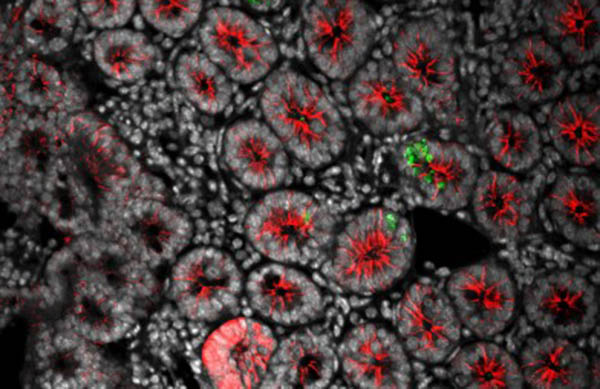
Cells continually survey their surroundings and monitor the ‘fitness’ of their neighbours. If a cell is deemed ‘faulty or defective’, it is eliminated from the tissue to ensure defective traits are not inherited by progeny and tissue homeostasis remains unaffected. This process is termed cell competition and drives cell selection based on ‘cellular fitness’ to determine cell fate, growth and survival. In diseases like cancer and chronic inflammation, cells acquire mutations which can provide advantages (growth/survival) to mutant cells allowing them to outcompete and eliminate non-mutant cells from the tissue. Using a combination of organoid and animal models, we seek to understand the cell and molecular details of cell competition in the stomach and apply our findings towards developing new therapies for gastrointestinal disease.
2. Clonal fate and metastatic potential
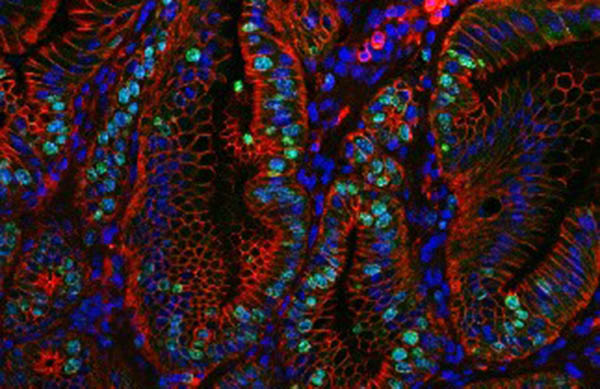
Tumours are composed of clones with differing capabilities, meaning some clones expand, while others may remain stable or retract. Interestingly, only a small subset of clones has the capacity to initiate tumour growth and of those, an even smaller subset are capable of disseminating and establishing secondary tumours at distant sites. However, our understanding of the intrinsic and extrinsic features that bestow clones with malignant and metastatic potential remain poorly defined. We aim to unravel this complexity by using our animal models of metastatic cancer with innovative cellular barcoding technology to map the clonal fate and molecular signature of cells that initiate and promote cancer.
3. Tumour-stroma crosstalk
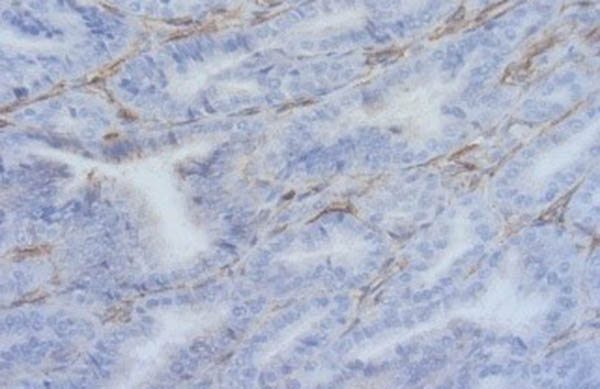
Cancer cells can acquire stromal or developmental-like phenotypes allowing them to masquerade as other cell types, making the challenge of therapeutic targeting problematic. While targeting cancer stem cells (CSCs) induces striking tumour regression in colorectal and stomach cancers, these effects are short lived, evidenced by the replenishment of CSCs. Therefore, tumour cells with access to niche factors are more likely to assume the role of CSCs, and propel tumour growth. Cancer associated fibroblasts (CAFs) comprise a significant portion of the tumour niche and secrete a variety of extracellular matrix proteins, cytokines (TGF, IL-6) and growth factors (HGF, Wnt5a) that remodel the tumour microenvironment to bestow tumour cells with mesenchymal/stem-like features. This stresses a need to study cell-cell communication networks and how this leads to cell plasticity and therapy resistance, which this project aims to address.
Visit Dr Flanagan's Supervisor Connect profile to see a full listing of current projects.
Research activities
Our lab is interested in the underlying mechanisms that regulate stem cells and the early steps of tumorigenesis in the stomach. Using a combination of genetics tools, in vivo and in vitro models, and imaging techniques, we seek to understand and characterise the ‘niche’ cells that provide essential signals to regulate stomach stem cell function during homeostasis and diseases such as chronic infection and cancer. By discovering novel constituents of the stem cell niche, we aim to leverage this information towards developing new therapeutic targets that minimise ‘off-target’ toxicity, overcome drug resistance and improve patient outcomes.
Techniques/expertise
- Genetically-engineered-mouse-models
- 3D organoid culture
- RNA sequencing
- FACS
- Wholemount tissue clearing and imaging
- CRISPR-Cas9 gene editing
Disease models
- Mouse models of stomach cancer
- Helicobacter pylori infection
- Tumour organoid (orthotopic) transplantation.
Collaborations
We collaborate with many scientists and research organisations around the world. Some of our more significant national and international collaborators are listed below. Click on the map to see the details for each of these collaborators (dive into specific publications and outputs by clicking on the dots).
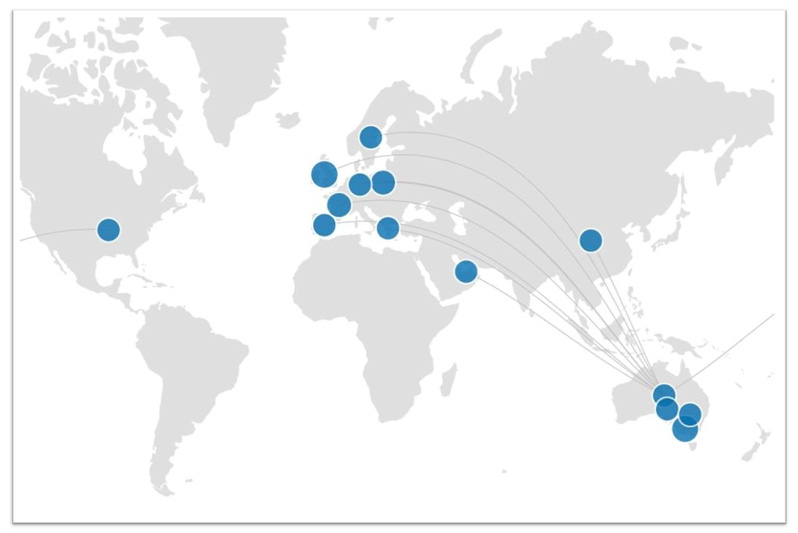
Monash University
- Professor Roger Daly – Biochemistry, Monash Biomedicine Discovery Institute
- Professor Alex Boussioutas – Monash Central Clinical School
- Dr Terry Kwok-Schuelein – Biochemistry, Monash Biomedicine Discovery Institute
- A/Prof Sefi Rosenbluh – Biochemistry, Monash Biomedicine Discovery Institute
- Dr Adam Rose – Biochemistry, Monash Biomedicine Discovery Institute
- Dr Sarah Lockie – Physiology, Monash Biomedicine Discovery Institute
- Dr Thierry Jarde – Anatomy & Developmental Biology, Monash Biomedicine Discovery Institute
National
- Professor Elizabeth Vincan – University of Melbourne
- A/Prof Susan Woods – SAHMRI, Adelaide
- Professor John Mariadason – ONJCRI, Melbourne
International
- Professor Owen Sansom – CRUK Beatson Institute, UK
- Professor Nick Barker – A*STAR Institute, Singapore
- A/Prof Philip Dunne – Queens University, Belfast
- Professor Simon Leedham – University of Oxford, UK
- Professor Jacco van Rheenen – Netherlands Cancer Institute, NL
Student research projects
The Flanagan Lab offers a variety of Honours, Masters and PhD projects for students interested in joining our group. There are also a number of short-term research opportunities available.
For students planning to join our lab, the article How to pick a Graduate Advisor - a 'Must-Read' before you apply.
Please visit Supervisor Connect to explore projects currently available in our Lab.