Formosa Group research
Collaborations | Student research projects | Publications
About Dr Luke Formosa
Dr Luke Formosa is a Group Leader and NHMRC Emerging Leader Fellow at the Monash Biomedical Discovery Institute. He received his PhD in 2016 from La Trobe University, which focussed on understanding the assembly of mitochondrial complex I with a particular interest in the role of proteins known as assembly factors and how defects in this process lead to Mitochondrial Disease. For his work in discovering and functionalizing several mitochondrial proteins, Dr Formosa was awarded two Mito Foundation Publication Prizes (2015, 2021), an AussieMit Yong Investigator Award (2016) and a Robin Anders Young Investigators Award at the Lorne Protein Structure and Function Conference (2019).
Our research
Dr Formosa‘s group has a keen interest in understanding how mitochondria work at a fundamental level, by uncovering how mitochondria build their complex machineries and move molecules across their membranes. We do this by integrating gene editing tools with state-of-the-art proteomics together with biochemical and functional techniques to understand how mitochondrial proteins work and how mutations in the genes encoding these proteins may lead to different diseases.
Current projects
- Understanding the co-translational insertion of proteins into the mitochondrial inner membrane
- Discovery of new proteins involved in the assembly of the respiratory chain
- Identifying metabolite transporters in mitochondria
- Investigating the metabolic changes due to mitochondrial dysfunction
Visit Dr Formosa's Monash research profile to see a full listing of current projects.
Research activities
1.Understanding the co-translational insertion of proteins into the mitochondrial inner membrane
Mitochondria contain their own genome known as mitochondrial DNA, or mtDNA for short, which encodes only 13 proteins that are all critical for the assembly and activity of the energy-producing enzymes which are known as the oxidative phosphorylation (OXPHOS) system. In this project, we are interested in understanding the very early stages of how these proteins are made inside mitochondria and how newly translated proteins are inserted into the mitochondrial membrane to assemble into their functional enzymes by identifying the proteins that play a role in this process.
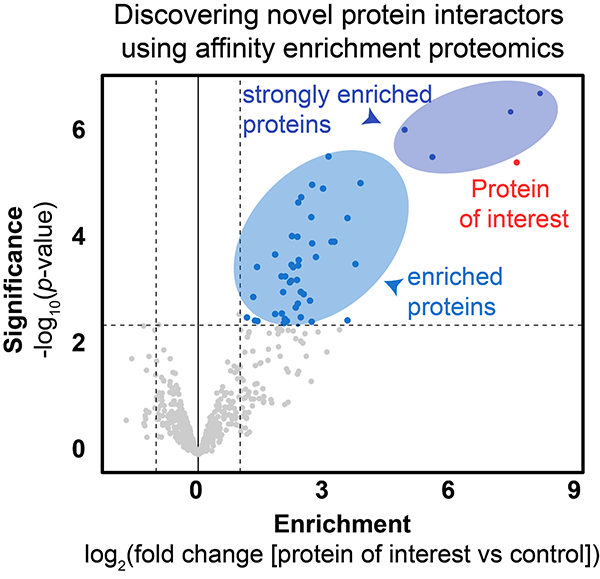
Figure 1: Discovering and functionalising proteins using a number of different techniques allows us to understand the role they play in keeping mitochondria working at their best. We can do this using a range of different proteomics techniques including affinity enrichment proteomics
2.Discovery of new proteins involved in the assembly of the respiratory chain
All enzymes of the electron transport chain are composed of several subunits that need to come together in a regulated way. This is facilitated by proteins known as assembly factors that help build the enzymes, and mutations in these proteins can lead to mitochondrial disease. Approximately 50% of patients with complex I deficiency do not have a molecular diagnosis, so there may be many assembly factors that have not yet been identified. Using CRISPR screening approaches and protein-protein interaction studies we are discovering and characterising these proteins to understand how they contribute to normal mitochondrial function and how their loss leads to mitochondrial disease.
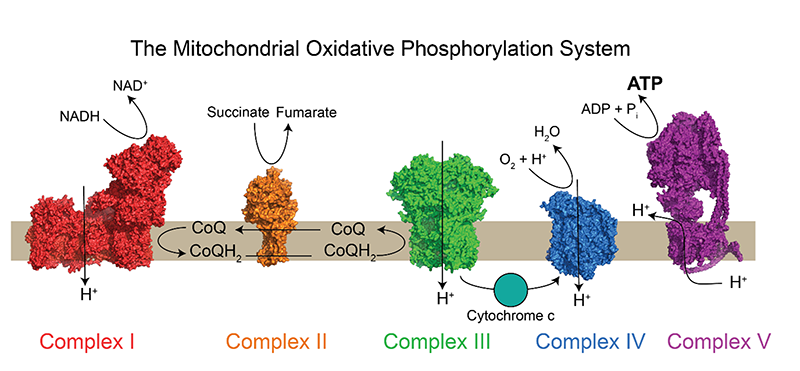
Figure 2: The mitochondrial OXPHOS system requires many proteins to form. We are interested in the
discovery and functionalisation of new proteins that help build these enzyme complexes.
3.Identifying metabolite transporters in mitochondria
Mitochondria are not only the site of energy production, but are also hubs of biosynthetic activity- they help make many critical molecules required for the cell to grow. These molecules include phospholipids for cell membranes, heme for enzymatic reactions as well as nucleotides and metabolites to synthesise DNA and modify its expression. In this project, we are identifying the mitochondrial transporters present in mitochondrial membranes for various mitochondrial-derived metabolites to understand how they contribute to mitochondrial and cellular function.
4.Investigating the metabolic changes due to mitochondrial dysfunction
When mitochondria do not work properly, their metabolism is rewired to compensate for these changes, yet many of the details on how this is regulated remain to be investigated. In this project, we are interested in understanding and modulating the metabolic changes due to electron transport chain dysfunction to unravel the molecular mechanism governing these changes.
Techniques/expertise
- CRISPR/Cas9 Gene Editing
- CRISPR screening approaches
- Quantitative Proteomics
- Protein-protein interaction analysis incl. proximity labelling
- Blue-Native PAGE
- Fluorescence Microscopy
- Flow cytometry
- Mitochondrial DNA encoded protein radiolabelling
- Mitochondrial functional analysis e.g. Seahorse Oxygen Flux studies
Collaborations
We collaborate with many scientists and research organisations around the world. Some of our more significant national and international collaborators are listed below. Click on the map to see the details for each of these collaborators (dive into specific publications and outputs by clicking on the dots).
- Prof. Mike Ryan, Monash University
- Prof. Megan Maher, Bio21 Institute
- Associate Prof. Diana Stojanovski
- Associate Prof. David Stroud
- Prof. David Thorburn
Student research projects
The Formosa Group offers a variety of Honours, Masters and PhD projects for students interested in joining our group. There are also a number of short term research opportunities available.
Please visit Supervisor Connect to explore the projects currently available in our Lab.