
People
Meet the team
Learn about the researchers, experts and partners who contribute to our projects and support our work throughout.
Leadership
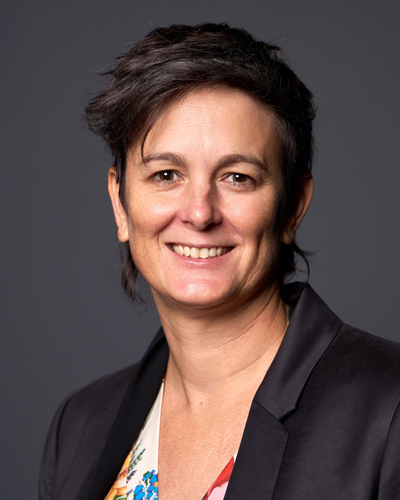
Professor Iadine Chadès
Director
Iadine is a Professor of AI and a leading researcher in decision-making under uncertainty, developing algorithms that determine what actions to take, where to intervene, and when to act. Her work has advanced the management of endangered and invasive species, disease control, and adaptive monitoring using interpretable, trustworthy AI. She also advocates for a globally coordinated approach to AI for biodiversity to maximise real-world environmental impact.

Professor Bernd Meyer
Deputy Director
Bernd is a Professor of Data Science and AI at Monash University. His work is predominantly on mathematical and computational models of collective animal behaviour with a focus on social insects. His team also develops AI-methods for animal monitoring and environmental monitoring, particularly methods for bio-acoustics. These methods are used to support and advance conservation management.

Professor Alan Dorin
Lead Food
Alan researches the ways in which technology assists discovery in the ecological sciences and in human creativity. Through his work in Artificial Life and ecological simulation, he explores the key attributes of organisms that enable them to live in complex environments. This knowledge is used to improve agriculture and horticulture, and to assist us in maintaining natural ecosystems.
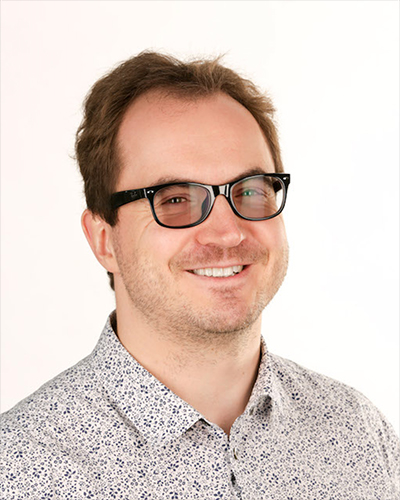
Professor Markus Wagner
Lead Renewable Energy
Markus is a Professor at the Department of Data Science and AI, Faculty of Information Technology, Monash University. His research topics range from mathematical runtime analysis of heuristic optimisation algorithms and theory-guided algorithm design to applications of heuristic methods to software engineering and renewable energy production.
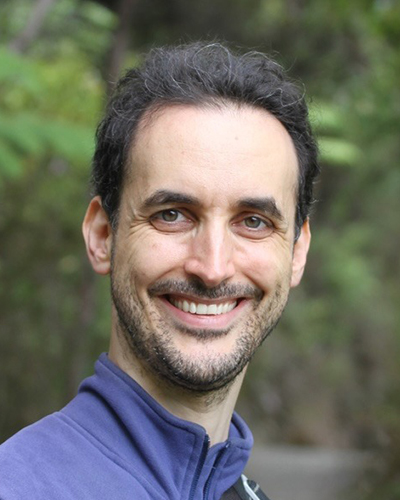
Dr Richard Scalzo
Richard is a Senior Lecturer in the Department of Data Science and AI. Richard's main research interests are in Bayesian machine learning for physical systems, especially natural systems. His work focuses on building and estimating "hybrid models" that augment mechanistic, process-based models with flexible components learned from data to improve accuracy and reliability on sparse datasets.

Dr Xinshu Li
Xinshu is a Lecturer in the Department of Data Science and Artificial Intelligence at Monash University. Her research focuses on trustworthy AI, causal machine learning, AI agents, and embodied AI, with a particular interest in developing AI systems that can reason, adapt, and make reliable decisions in complex real-world environments. She is also interested in applying AI to environmental problems, combining causal reasoning and foundation models to support more effective decision-making for environmental and societal challenges.
Dr Sina Khatami
Research Manager
Sina is an environmental scientist with academic and public sector experience in hydrological modeling, uncertainty analysis, droughts, climate change, and sustainability.
Researchers

Dr Haoran Li
Research Fellow
Haoran received the Ph.D. degree in Information Technology from the University of Wollongong, Australia. He is currently a Postdoctoral Research Fellow at Monash University. His research focuses on applying artificial intelligence across diverse domains, including weather, biomedicine, environment, and to develop interpretable and effective AI-driven solutions for scientific discovery and real-world impact. Haoran is a joint appointment with the ARC CoE Weather of the 21st Century.
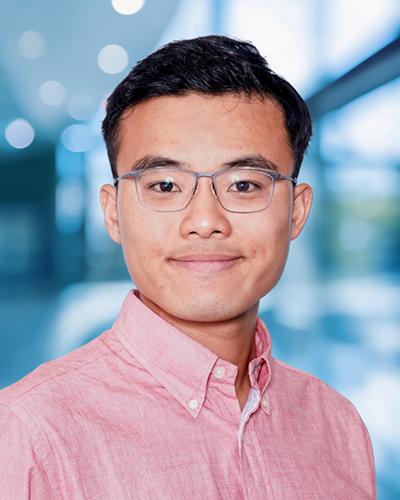
Dr Frankie Cho
Research Fellow
Frankie leverages artificial intelligence (AI) to develop robust strategies for reversing biodiversity loss in the face of global change. Trained in environmental economics, his research has modelled how climate change and economic risks can threaten national plans for nature recovery. His computational tools help policymakers discover strategies that de-risk carbon removal and conservation efforts through spatial planning, effective diversification and flexible decision-making. He is currently pioneering the use of Partially Observable Markov Decision Processes (POMDPs) and Deep Reinforcement Learning to find and implement better solutions to manage the environment.
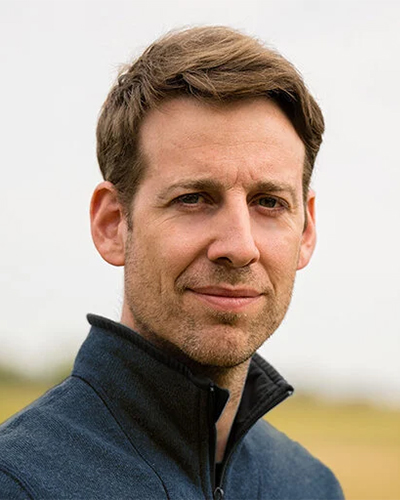
Dr Dominik Behr
International Research Fellow
Dominik is a quantitative ecologist with an interdisciplinary background in population ecology and engineering. He builds mathematical models to project how wildlife populations change over time and couples them with AI to help practitioners identify the most effective management and conservation actions. Much of his work centers on the question: how much model is enough? More detailed models don't automatically lead to better decisions – the right level usually depends on the species and the decision problem at hand. By matching model complexity to context, his work helps practitioners collect just the data needed to determine the best intervention strategy. While he works across diverse animal taxa, he has a particular interest in endangered species with complex social systems and those involved in human-wildlife conflict.
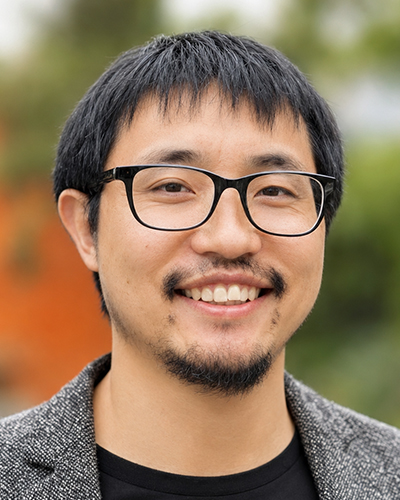
Xiangwen(Wayne) Yang
Research Software Engineer
Wayne is a Research Software Engineer at the Environmental Informatics Hub within Monash University's Faculty of Information Technology, where he previously spent over 6 years in the Department of Software Systems and Cybersecurity (SSC). With 10+ years across academia and industry, his work spans AI, distributed systems, data engineering, and security. His central aim is building trustworthy systems that bridge research and engineering for real-world impact.
PhD students
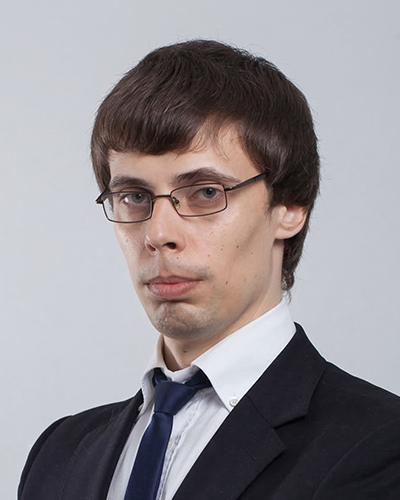
Ilya Bessonov
PhD Student
Ilya is a machine learning researcher whose work focuses on the design and application of deep anomaly detection and missing data imputation frameworks to improve data reliability in complex systems. Drawing on a strong industry background in time series analysis and generative modeling, his current research addresses the critical challenge of data noise in global biodiversity aggregators. By synthesizing deep representation learning with multidimensional clustering, this research aims to ensure the spatial, temporal, and environmental consistency of occurrence records, ultimately supporting robust, data-driven conservation and ecological management.
Mozhdeh Hematiboroujeni
PhD Student
Mozhdeh is a PhD candidate in the Faculty of Information Technology at Monash University. Her research focuses on optimization and market design for integrating distributed energy resources into modern power systems. Her work particularly examines the coordination of electric vehicle charging and vehicle-to-grid services to improve grid flexibility, support renewable energy integration, and enhance the economic efficiency of energy markets. Her research combines advanced optimization methods, energy market modeling, and electricity market data to design scalable mechanisms for managing flexible energy resources.
Jingyong (William) Liang
PhD Student
William develops an autonomous edge-AI bioacoustics platform that identifies species and behaviours directly in the field, enabling continuous real-time biodiversity monitoring. His work combines few-shot learning and foundation-model compression to create highly accurate, low-power models deployable on inexpensive edge devices. Through long-term collaborations with conservation partners, he aims to make advanced, scalable wildlife monitoring accessible to practitioners and communities worldwide.
Dangfeng Pan
PhD Student
Dangfeng develops methods that translate conservation decision problems into Markov Decision Process (MDP) models using Large Language Models and the RDDL formalism. His work aims to automate the full pipeline from problem description to validated MDP solutions, enabling rigorous optimisation under uncertainty - critical for conservation planning, adaptive management, and other high-stakes decision problems. He aims to make powerful decision-support tools more accessible and deployable in real-world environments.

Thu Hang Phung
PhD Student
Hang develops reinforcement learning algorithms tailored to small data regimes for decision-making in environmental monitoring, biodiversity management, and ecosystem restoration. Her research focuses on data-efficient reinforcement learning using offline learning, model-based RL, and prior knowledge integration. She is particularly interested in building robust, explainable, and practical decision support systems for real-world ecological applications.
Leilah Taouk
PhD Student
Leilah develops optimisation-based methods to define and measure the swimmability of urban waterways, with a focus on the Birrarung (Yarra) River. Her work embeds a trained machine learning model within a search-based optimisation framework, coupling data-driven river health prediction with process-based intervention modelling to automatically identify optimal restoration pathways. By applying mathematical optimisation to river health, she aims to provide decision support for practitioners and communities working towards a healthy, swimmable river. Her project is supervised by A/Prof Markus Wagner and Dr Paul Satur, in partnership with Regen Melbourne, and supported by OPTIMA.
Maisum Hayati
Master Student
Maisum Hayati is a Master’s student researching how to make K-MDPs genuinely explainable, not just interpretable, so that practitioners can understand why an AI recommends specific actions under uncertainty. His work focuses on generating explanations for knowledge-rich decision models, with applications in conservation and other complex domains.
Affiliated Academics
A/Prof Ehsan Abbasnejad
Ehsan is a leading researcher in machine learning, specialising in foundational AI for vision and language tasks, based at the Department of Data Science and Artificial Intelligence at Monash University.
Dr Asad Asaduzzaman
Asaduz is a Postdoctoral Researcher in the Faculty of Information Technology at Monash University. His research develops computer vision and machine learning methods for ecological monitoring, with a focus on tracking and re-identifying individual insects from imagery to improve monitoring of underrepresented insect species such as native bees. He also builds practical software tools that translate research prototypes into deployable monitoring workflows for field and lab use.
Dr Mitzi Bolton
Mitzi is a Senior Lecturer, School of Social Sciences and Research Fellow, Monash Sustainable Development Institute. Mitzi is particularly interested in how systems leverage points can connect science and policy to assist the transition to more sustainable futures.

Dr Xiaoning Du
Xiaoning is a Senior Lecturer at the Department of Software Systems & Cybersecurity at Monash University. Her research primarily focuses on the security and quality assurance of intelligent software systems, with a particular emphasis on intelligent software engineering tools.
A/Prof Ailie Gallant
Ailie is an Associate Professor in the School of Earth, Atmosphere and Environment in the Faculty of Science. She is an interdisciplinary researcher whose work spans weather and climate hazards, impacts and resources. Ailie is the Deputy Director for Industry & Government Partnerships and a Chief Investigator with the ARC Centre of Excellence for Weather of the 21st Century, and the Monash Node Lead of the National Environmental Science Program Climate Systems Hub, and a regular on Melbourne's 3RRR Science Show Einstein-A-Go-Go and on 774 ABC Melbourne.
A/Prof Julian Garcia Gallego
Julian is interested in understanding how agents can learn to cooperate in natural and artificial settings. He is an Associate Professor at the Department of Data Science and Artificial Intelligence at Monash University.
A/Prof Sarah Goodwin
Sarah is an Associate Professor within Monash's Embodied Visualisation research group. She is passionate about helping to harness data more effectively for a sustainable future. Using human-centric approaches her research seeks to create visual solutions to enable the exploration and communication of complex, multi-dimensional and geospatial data sets.
Dr Mohammad Goudarzi
Mohammad is a Lecturer at the Department of Software Systems and Cybersecurity at Monash University. He is interested in the intersection of Distributed Systems, Cloud/Edge Computing, the Internet of Things (IoT), and Machine Learning.

A/Prof Sarvnaz Karimi
Sarvnaz is a leading researcher in NLP (Natural Language Processing) and Search and Information Retrieval (IR) domains and Machine Learning in multidisciplinary settings including health, climate adaptation and agriculture, currently at Data Science and Artificial Intelligence (DSAI). She was a principal research scientist at CSIRO for over 14 years, and a researcher at NICTA for 4 years. She is currently the Director of Publicity at the Association for Computational Linguistics (ACL), the main international professional body for NLP. Sarvnaz is one of the Editors-in-Chief of ACL's Rolling Review and Publicity Editor of the Computational Linguistics Journal. She was the President of the Australasian Language Technology Association (ALTA), and an executive committee member (8 years in total).

A/Prof Roberto Martinez-Maldonado
Roberto’s work advances the understanding of socio-technical issues surrounding the use of artificial intelligence in education, promoting human-centred methodologies to create learning analytics interfaces with integrity. Roberto augments authentic learning spaces with multimodal, data-intensive computing capabilities for assessing dynamic activities such as teamwork in emergency and clinical scenarios. He also has an ongoing project funded by the Australian Research Council aimed at equipping teachers for the Age of AI. He has served as Program Chair for the International Conference on Learning Analytics and Knowledge and the International Conference of Artificial Intelligence in Education. Additionally, he is a regular Associate Chair of the Learning and Education subcommittee of the SIGCHI Conference on Human Factors in Computing Systems and an Associate Editor of the International Journal of Artificial Intelligence in Education.
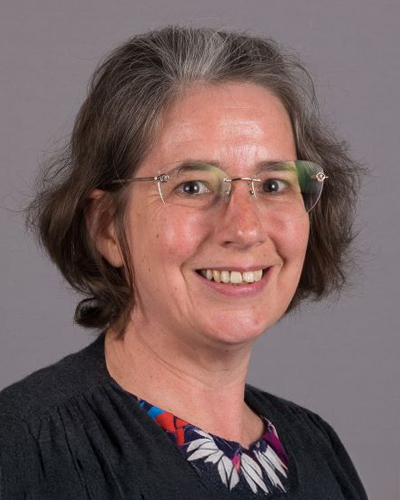
Dr Lynn Miller
Lynn is a Research Fellow at the Department of Human Centred Computing at Monash University. She is interested in machine learning and remote sensing.
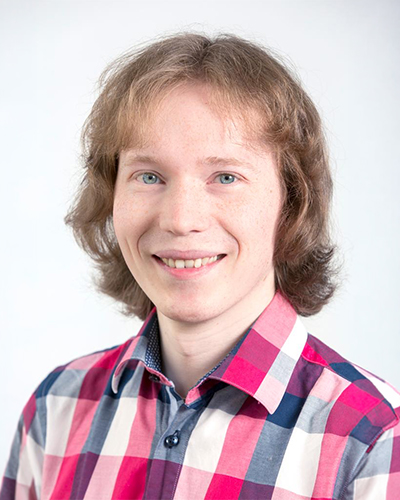
Dr Frits de Nijs
Lynn is a Research Fellow at the Department of Human Centred Computing at Monash University. He is interested in multi-agent systems, reinforcement learning, sequential decision making, demand response, and distributed energy resources.

Prof Sarah Pink
Sarah is currently Professor and Director of FUTURES Hub and the Emerging Technologies Research Lab at Monash, where she engages and innovates interdisciplinary and international research approaches to offer fresh perspectives and realistic future visions and foresight about the role of human futures in shaping digital and net zero transitions.
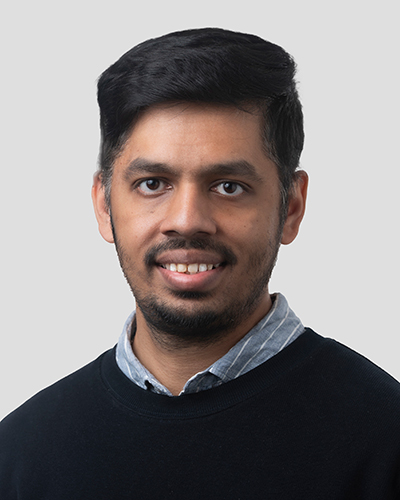
Dr Malika Nisal Ratnayake
Malika is a computer scientist whose research focuses on the design and application of computer vision, IoT, robotics, and AI-based digital technologies to monitor and understand agricultural and natural ecosystems, with a particular emphasis on insect pollination. This research informs decision-making for sustainable agricultural pollination, advances biodiversity monitoring, and supports natural ecosystem management.
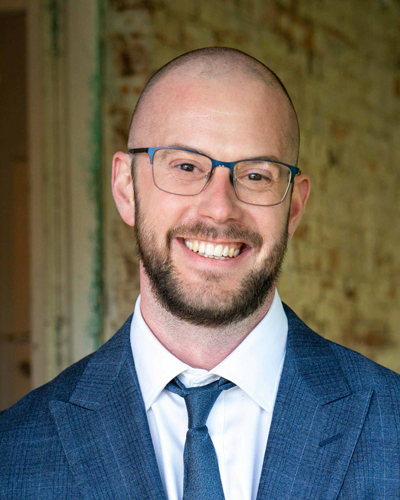
A/Prof Jathan Sadowski
Jathan is an Associate Professor at the Department of Human Centred Computing at Monash University. His research is focused on critically studying the political economy of the insurance industry, the techno-politics of risk governance, and socio-economic impacts of these actuarial systems on our lives and futures.
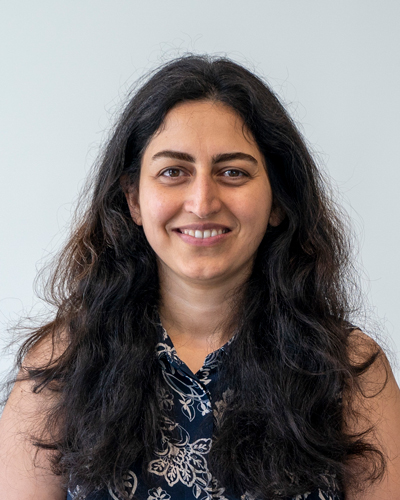
Dr Mahsa Salehi
Mahsa is a Senior Lecturer in the Department of Data Science and AI. Her research interests are in Data mining and Machine learning, specifically: Multi-dimensional time series analysis, Anomaly detection, Time series classification, Learning from non-stationary distributions, and Brain-inspired machine learning.
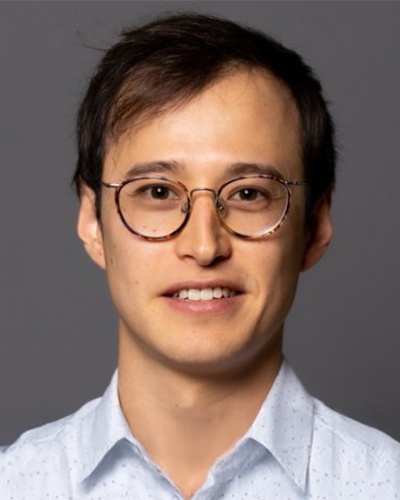
Dr Russell Tsuchida
Russell is a Lecturer in the Department of Data Science and AI. His research is focused on core probabilistic machine learning methods such as Bayesian neural networks, Gaussian processes, and density estimation modelling.

Dr Mor Vered
Mor is a Senior Lecturer in the Department of Data Science and AI. Her research interests lie in the interaction between humans and intelligent agents, where I work to incorporate lessons and inspirations from cognitive science, neuroscience and biology.
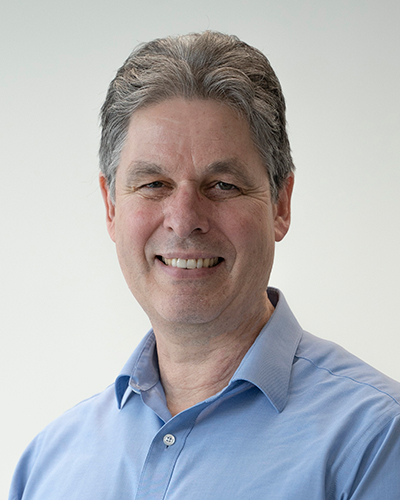
Prof Geoff Webb
Geoff is a leading data scientist and AI researcher, and ARC Laureate Professor at Department of Data Science and AI. His research interests include Machine Learning, Pattern Discovery, Time Series Classification, and Concept Drift.
Visitors
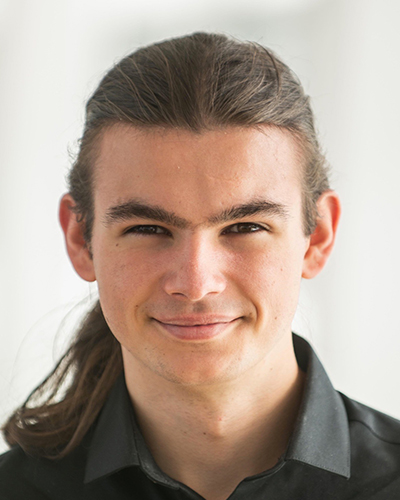
Briac Bourgain Vialar (Aug-Sep 2026)
Briac Bourgain Vialar is a second-year engineering student specialising in energy engineering at a French school currently completing a research internship in the Faculty of Information Technology at Monash University. His research focuses on multi-objective optimisation for the planning of community batteries and electric vehicle charging stations in Victorian distribution networks, integrating biodiversity considerations into energy infrastructure decisions. He combines mixed-integer linear programming and Pareto front methods to support sustainable planning policies, bridging artificial intelligence, energy systems and environmental impact assessment.
Partners
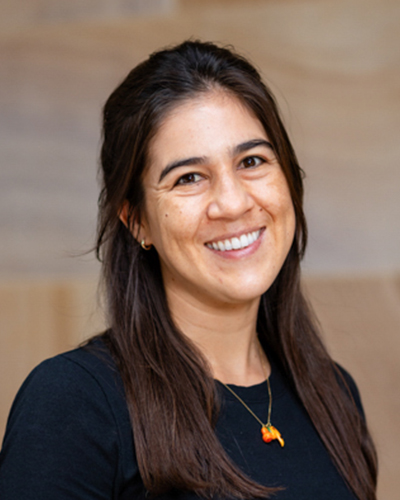
Dr Violeta Berdejo-Espinola
Violeta is an interdisciplinary research fellow at the University of Queensland in Australia. She works at the intersection of conservation science, multilingual research, systematic evidence synthesis and natural language processing, with the aim of unlocking the potential of knowledge in non-English languages.
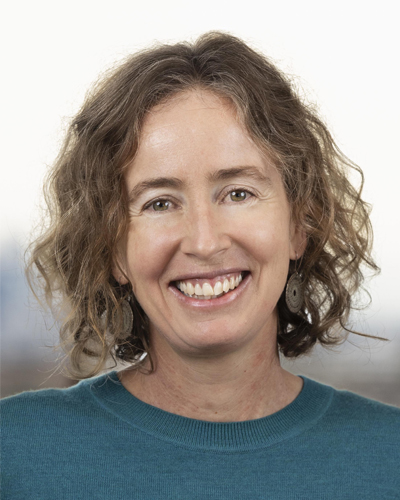
A/Prof Anita Foerster
Anita specialises in environmental and climate change law, regulation and governance. Anita's research explores the design and implementation of legal and regulatory frameworks to address climate change, biodiversity loss, and other sustainability issues at different jurisdictional scales and in different governance contexts. Anita is the Director of the Monash Business School Green Lab - Monash Business School’s hub for inter-disciplinary and applied research on climate change and sustainability.
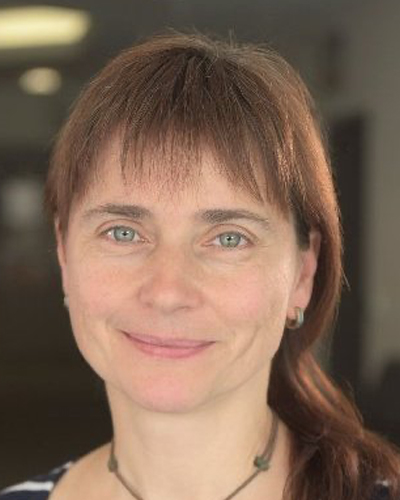
Dr Alexandra (Sasha) Pavlova
Sasha is a Senior Research Fellow at Monash School of Biological Sciences. She is also a co-lead of the Wildlife Genetic Management Group and a co-founder of the Wildlife Genetic Management Hub. Her research focuses on applying evolutionary principles to enhance conservation and on-ground management of wildlife populations. Sasha’s work aims to ensure the genetic health and evolutionary resilience of threatened wildlife populations, promoting their long-term well-being.
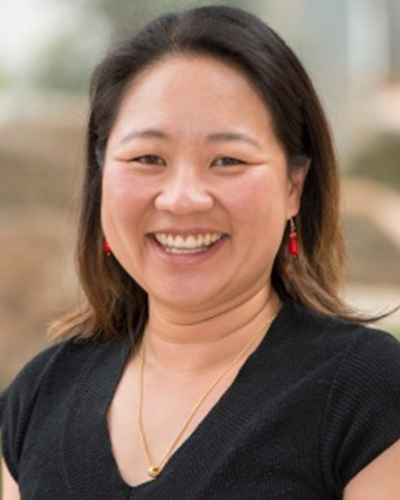
Prof Vanessa Wong
Vanessa is a Professor at the School of Earth Atmosphere and Environment, Monash University. Her research explores the spatial and temporal interactions between soils, sediments and water at a range of scales. She is interested in the role of soil-surface water-shallow groundwater processes ranging from the micron scale to the landscape scale in landscape function.

Dr Danilo Urzedo
Danilo is a Human Geographer and Research Fellow at the University of Western Australia. Working at the intersection of political ecology and science and technology studies, he examines the political geographies of environmental knowledge, technologies, and markets.