
Ecological Restoration of Phillip Island (Norfolk Island)
Ecological Restoration of Phillip Island (Norfolk Island)
Phillip Island, part of the Norfolk Island Group, is one of Australia’s 20 priority places under the national Threatened Species Action Plan.
Following 150 years of degradation caused by introduced herbivores, much of the island’s native vegetation and several bird species were lost. With the removal of rabbits and livestock, natural regeneration and revegetation are now underway, and the island remains free of cats and rodents—providing a rare opportunity for near-complete ecosystem recovery.
Recovery is limited, however, by weed dominance, soil instability, and slow natural regeneration. In response, a restoration program commenced in 2024 to expand on past efforts to accelerate ecosystem recovery through weed control, planting native species, and soil stabilisation, and ultimately to establish Phillip Island as an ‘ark’ for threatened species.
The project has two primary objectives: first, to develop and refine effective, cost-efficient restoration methods through a structured, experimental approach; and second, to deliver on-ground restoration at scale in key areas such as entire valleys. The program also serves as a model for restoration science, generating lessons that can be applied to other islands in the Norfolk group and beyond.
Speaker
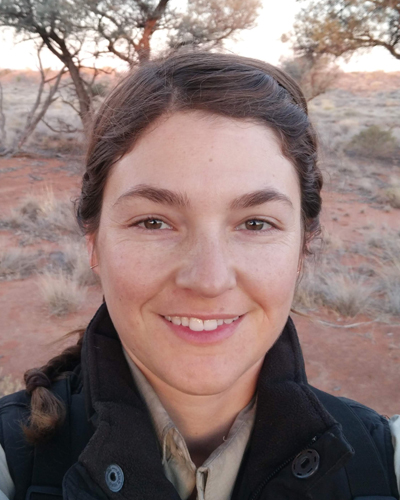
Dr. Michelle Gibson
Michelle was a Research Fellow in the School of Agriculture, Food and Ecosystem Sciences from 2021-2024 – and now works at Monash University. Originally from California, she has worked in Mediterranean ecosystems in the southwest U.S.A. and South Africa’s Cape region conducting research on invasive plants, pollination, and human disturbances on bird communities.
Her work in Australia has involved desert bird ecology and measuring effectiveness of restoration actions for Australian woodland birds. Her research at University of Melbourne examined the effects of bushfires and planned burning on ecosystem resilience with a focus on avifauna monitoring across diverse ecosystems in Victoria.
Monash University values the privacy of every individual's personal information and is committed to the protection of that information from unauthorised use and disclosure except where permitted by law. For information about the handling of your personal information please see Data Protection and Privacy Procedure and the relevant Data Protection and Privacy Collection Statement that applies to you depending on the nature of your interaction with us.
If you have any questions about how Monash University is collecting and handling your personal information, please contact our Data Protection and Privacy Office at dataprotectionofficer@monash.edu.