Empathy Models and Software Engineering - A Preliminary Analysis and Taxonomy
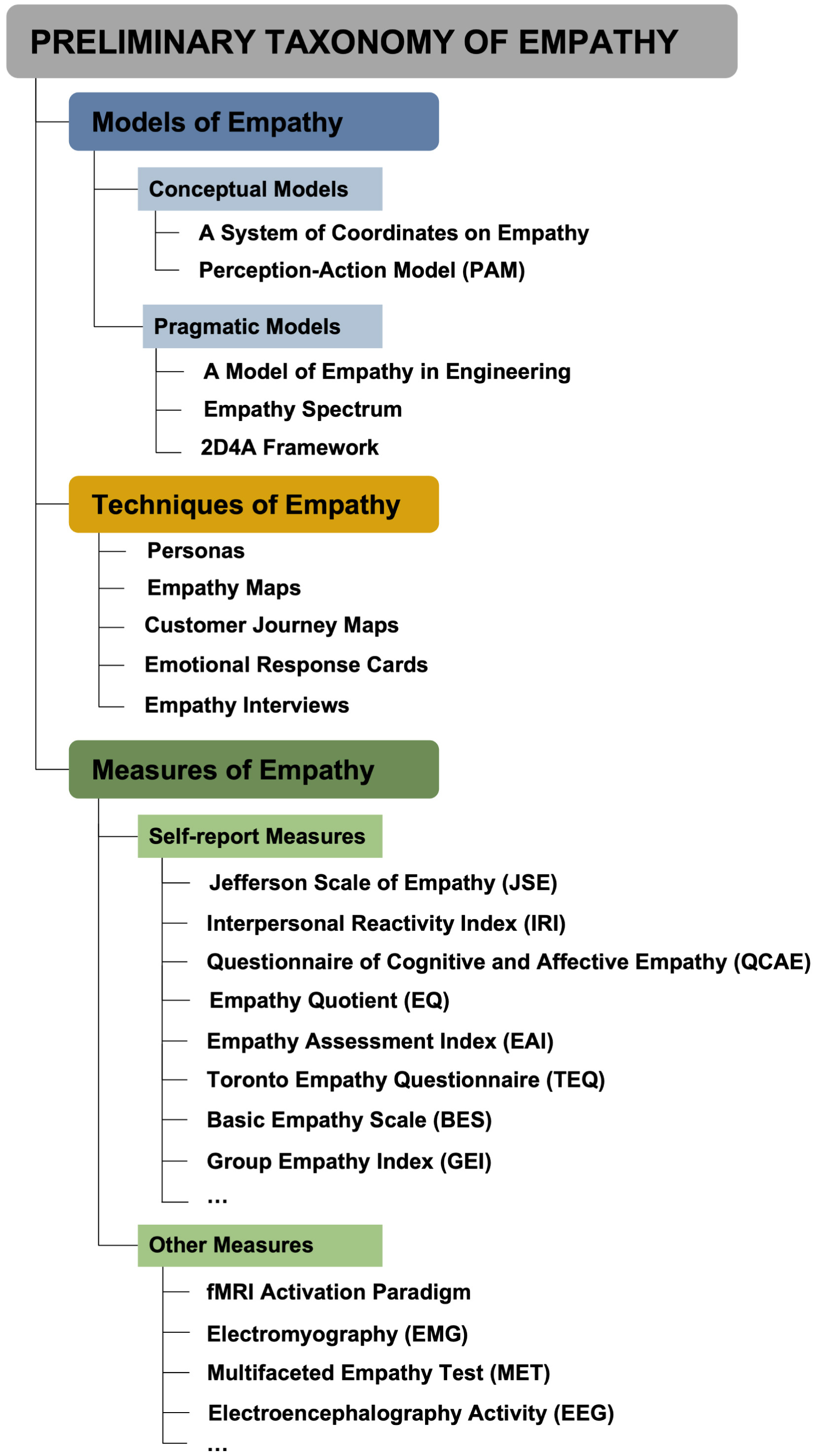
Despite its recognised significance in human interactions, empathy remains a relatively underexplored aspect within the domain of software engineering (SE) research. This study addresses this gap by conducting a comprehensive review and analysis of key empathy models from different disciplines. Through this examination, we aim to elucidate the relevance of empathy to software development processes and outcomes. Drawing from existing literature, we present a preliminary taxonomy of empathy, providing a framework to guide future research efforts.
The study offers a comprehensive review and analysis of empathy-related work and models, aiming to address the under-researched aspect of empathy within SE research. Through this analysis, we have developed a preliminary taxonomy of empathy, drawing from various conceptual and pragmatic models, techniques, and measures of empathy available in the literature. This taxonomy serves as a guiding framework for future researchers interested in exploring empathy within the context of SE. By delving into different facets of empathy, the study identifies various avenues for empathy research within SE. Overall, the study contributes to the understanding of empathy in SE and lays the groundwork for further exploration and integration of empathy-related considerations in SE research and practice. For software practitioners, this study offers valuable insights into the role of empathy in shaping team dynamics and project outcomes. Recognising empathy as a foundational aspect of effective collaboration, practitioners can prioritise the cultivation of empathetic skills within their teams.
Project Lead
Hashini Gunatilake (PhD Candidate)
Project Team
Prof. John Grundy, Dr Ingo Mueller, Prof Rashina Hoda