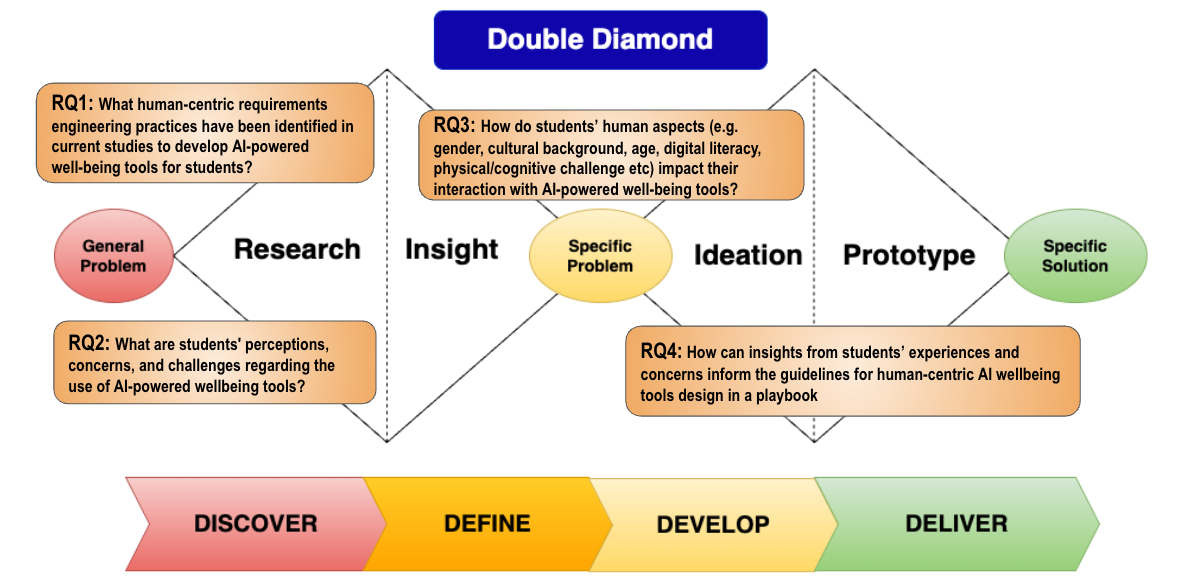
Human-Centric Requirements Engineering for AI-Powered Wellbeing Tools: Understanding Students' Perceptions and Challenges
Artificial Intelligence (AI) has rapidly evolved and now permeates various aspects of daily life, including mental health and well-being support. AI-powered tools such as chatbots, mobile applications, and personalized recommendation systems are increasingly used to provide psychological assistance, stress management, and general well-being support. As dependency on AI for mental health interventions grows, it becomes crucial to understand university students' perceptions of these tools and the challenges they face in using them. University students represent a key demographic due to the unique academic and personal pressures they experience, making them prime candidates for AI-driven well-being solutions. Although these tools offer the promise of accessibility and personalised care, their adoption and effectiveness may be limited by several factors, including trust in AI, data privacy concerns, usability challenges, and doubts about their perceived effectiveness.
This PhD project aims to investigate how various human aspects of students such as age, gender, culture, cognitive or physical abilities can inform the design of human-centric AI systems. By exploring students’ perceptions and usage challenges, this study will contribute to the development of best practices for designing AI tools that effectively support student well-being in the form of a playbook. The outcomes will provide a comprehensive, human-centric framework for enhancing the accessibility, trustworthiness, and overall impact of AI in mental health care for higher education.
Project Lead
Jonny PJ Low (PhD Candidate)
Project Team
Prof John Grundy, A/Prof Judith Hope, Dr Marc Cheong