This project proposes a new aquatic facility in Torquay North that engages with the area’s civic context to reclaim a sense of identity at the urban fringes.
The project is conceived of as a series of layered interventions borrowed from and inspired by historic, environmental, and social context.
Together, these elements form a unified vision for a socially and environmentally responsible counterpoint to the rapid and unconsidered urban sprawl in the region that aims to foster a healthy and connected community.
Best in Studio: 'Civility'
Most outstanding design project in the studio 'Civility,' in the Master of Architecture
On Entering
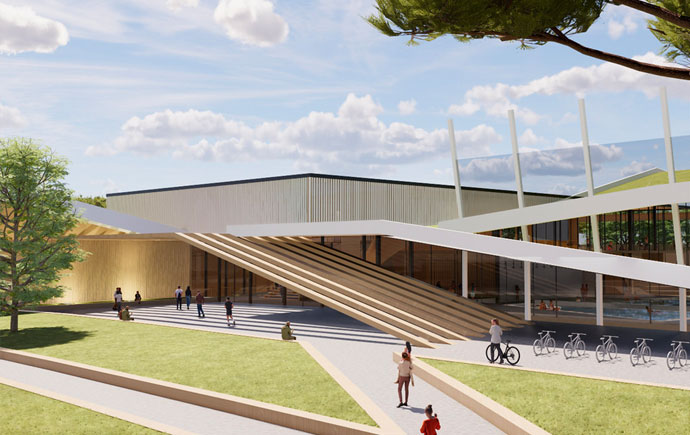
This view highlights the experience of entering the space below the roof canopy, and the layered quality of the project elements – each of which respond to the civic context behind the project (see ‘Layers and Civic Substance’ image for more detail). The layers also create gradients from public/private, indoor/outdoor, and natural/built environment to create an open, connected and inviting space for the community.
Layers and Civic Substance
This diagram highlights the project’s layered strategy – each component a response to the civic context that inspires the project. These layers include ‘borrowed elements’ from the existing social and cultural context of the area, and interventions that aim to reconcile the current tensions between urban growth and environmental preservation. The result is a unified project that returns a sense of identity to the urban fringe.
Under the Canopy
This view highlights the experience of the roof canopy above the learn to swim facilities. The sloping, organic roof maximises rain capture above the space and directs it into the regenerated habitat outside. The transparent ETFE roof together with voids in the walls create connections to the world outside. The use of rammed earth also suggests the building is a continuation of the earth below.
Section Perspective
The section perspective highlights the structural elements of the project – the steel diagrid and ETFE roof canopy, rammed earth walls, concrete pool and mesh ground surface for circulation between facilities. The material selection is a balance between grounded, sculptural elements that feel as though they are a continuation of the earth, and lightweight structures that have minimal footprint. A key example of the latter is the mesh surface raised above the regenerated wetland – maximising the area for habitat restoration.
Rain Harvesting Roofs
This view captures the atmosphere of the facility during a downpour and the function of the roof canopy as it captures water. The transparent ETFE roof allows people under the canopy to engage with the process directly – educating visitors about how ecological restoration can be integrated within the built environment.
In the spirit of reconciliation Monash University acknowledges the Traditional Custodians of country throughout Australia and their connections to land, sea and community. We pay our respect to their elders past and present and extend that respect to all Aboriginal and Torres Strait Islander peoples today.