Monash University logo

Monash Art, Design and Architecture Student Exhibition 2022

Ashley Hanrahan

Reconfigured House

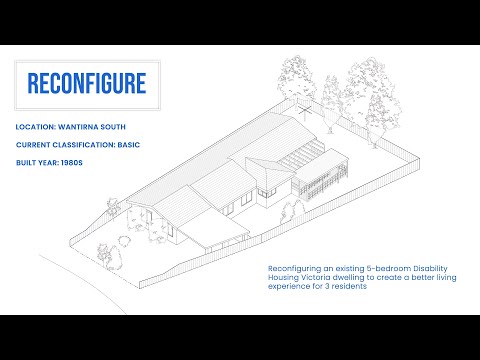
Reconfigure studio examines potential renovation strategies for existing shared Disability Housing Victoria (DHV) properties to improve their amenity for a reduced number of residents. This particular house is a cramped, 1980s single-storey brick-veneer, located in the South-East suburbs. As a DHV spot purchase, the home doesn’t meet the requirements for Specialist Disability Accommodation and has a dark and clinical atmosphere. The reconfiguration addresses these spatial requirements, whilst creating a higher quality internal setting with opportunities for privacy, community and engagement with the garden.
Play

'Animation of Reconfiguration Strategies'

The animation communicates three main reconfiguration strategies used to achieve a better housing outcome for residents. Clustering the bedrooms into a sequence with a private ensuite and outdoor terrace helps provide a private sanctuary for each resident to enjoy. These internal spaces are afforded better light, air, and access to prospect through extending existing openings into larger windows or doors. Finally, integrated ramping, pathway and gardens provides step-free access to the home, whilst bringing the garden closer to residents.

View full video at www.youtube.com/watch?v=EhTtUJNXjIQ

Existing Floor Plan

The existing plan consists of a central communal living zone, surrounded by five compact bedrooms and a carer’s office. There are also three bathrooms and an additional two WCs, along with a covered deck for communal use. Currently, the house is disconnected from the street with large obstructive planting and a side primary access. The narrow corridors, inaccessible bathrooms and small bedrooms also fall below the size requirements of the Specialist Disability Accommodation. However, the large overall footprint provides the opportunity for high quality rearrangement entirely within the existing house envelope, and connection to the vast backyard and dominant western aspect.

Proposed Floor Plan

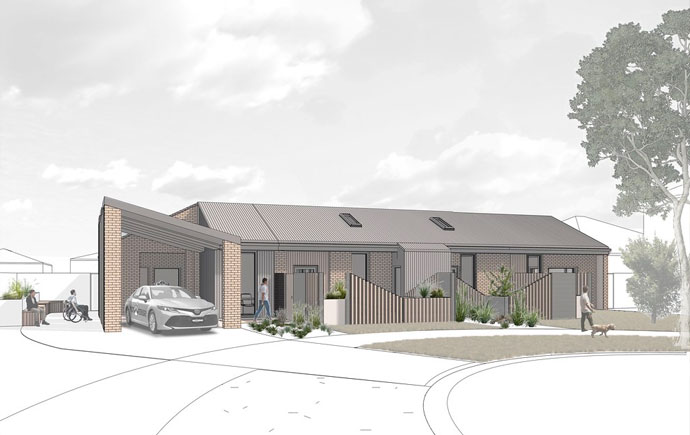
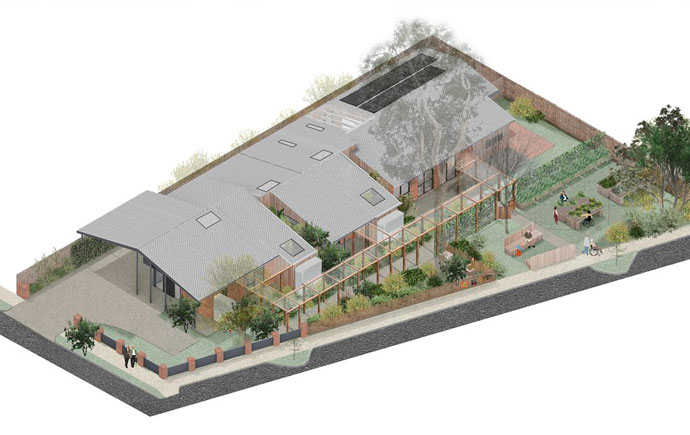
The proposed floor plan achieves larger private domains, with a bright and active central communal zone. The carer has maintained position as watchkeeper of the street, with a secondary access introduced to retain the autonomy of residents. Moreover, each bedroom and bathroom has extensive views into private garden space, elevating the spaces. Outside, the proposed reconfiguration takes advantage of the house’s elevated floor level to explore seamless ramp and garden integration, employing precast panels to create planters bordering ramps for step-free access.

Before and After Main Living Area Views

The existing main living zone is dark and aged, with an aspect of the empty, concreted backyard. The reconfiguration introduces a larger side window and lighter surfaces to make the space feel larger. Grouping the kitchen, dining and living allows easier supervision for carers and cements the zone’s role as the heart of the house. Moreover, the new communal outdoor zone with seating, BBQ and elevated garden beds provides a view of a lush and active garden.

Internal Wall Construction Sequence

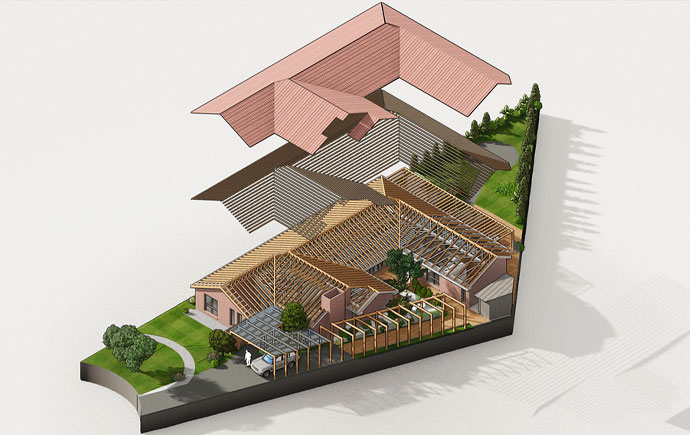
The internal reconfiguration uses prefabricated lightweight timber partitions to reduce construction time, allowing existing internal demolition and reconstruction to occur ideally within a fortnight of beginning.

Explore more

View all

Other years

Back to top