Monash University logo

Monash Art, Design and Architecture Graduate Exhibition 2024

My design for the eco-research center at Cranbourne Quarry takes on the challenge of regenerating a site that currently serves as a collection point for construction waste. By repurposing this waste within the building itself, the project not only reduces environmental impact but also aligns with sustainable practices. The disassemblable structure, which employs an interlocking brick system and an elevated foundation, minimizes disturbance to the land while supporting research on native and endangered species. This eco-research center plays a key role in the larger vision to transform the quarry from a barren site into a thriving green corridor extension of the adjacent botanical garden.

A perspective view of the site

This perspective view of the eco-research center at Cranbourne Quarry highlights a sustainable design focused on land regeneration. The three-story structure uses a mix of new and recycled bricks, with wave-patterned bricks adding playfulness to the façade. The site includes outdoor classrooms, a planting area, and algae ponds to support conservation research on native species. An arched roof shelters the rooftop eating area, offering views of the surrounding green corridor extending to the neighboring botanical garden. This design fosters community engagement and ecological education while minimizing environmental impact.

The floorplans

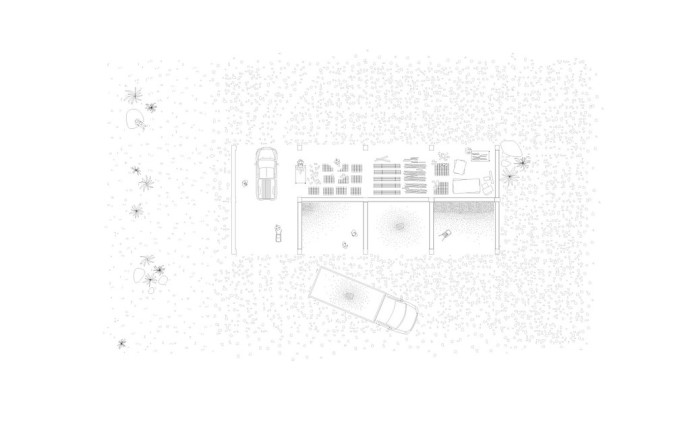
The floor plan of the eco-research center is designed to encourage a gradual shift from interactive to formal spaces. The ground floor, a flexible space with partition walls, is intended for small workshops involving local students and visitors, fostering community engagement and environmental education. This level also opens to a large outdoor area featuring a planting zone and outdoor classrooms.

Moving up, the first floor becomes more formal with indoor classrooms and a research library. The second floor houses dedicated research labs. The rooftop provides a canteen, eating space, and viewing area, while also featuring water tanks to capture rainwater.

Sectional detail 01

A round operable window provides a seamless transition from indoor to outdoor spaces, with its extended sill serving as a shared working bench that enhances interaction and encourages a seamless flow between the two spaces.

To optimize sustainability, a waffle slab construction method is employed, using terracotta pots as fillers to minimize concrete usage and promote environmental benefits. This approach is applied across all three levels and left exposed for aesthetic appeal. Additionally, the bricks are tied together with metal rods, facilitating disassembly through dry-stacking techniques for a sustainable and adaptable structure.

Sectional detail 02

An arched roof made from dry-stacked terracotta cups, providing an aesthetical element while allowing for natural ventilation. A layer of spray concrete provides weatherproofing, while crushed rubble, consisting of tiles and small fragments, adds a layer of strength and aesthetic appeal. The columns supporting the roof are constructed from 3D-printed sand bricks, which are also dry-stacked and tied together with metal rods, utilizing sand sourced from the quarry to promote material reuse. Additionally, the rooftop features a dedicated eating space, allowing visitors to enjoy scenic views of the landscape.

The rooftop space

The view of the rooftop area showcases the aesthetic appeal of the stacked terracotta cups that form the roof. Their natural color and texture creates a visually striking pattern, enhancing the connection to the environment while adding character to the space. Supporting the roof are the 3D-printed columns, made from sand sourced from the quarry, which provide strength and visual interest. This unique roofing design not only contributes to the overall beauty of the rooftop but also features large openings that offer panoramic views of the surrounding landscape, allowing visitors an opportunity to immerse themselves in the natural beauty of the site.

The internal views of the building

The view on the right showcases the ground floor workspace, emphasizing the aesthetic appeal of the waffle slab roof, with its exposed terracotta pot fillers, adding a layer of unique texture and warmth. The use of recycled timber cladding complements this design, breaking away from the solid concrete and brick element, enabling us to create a welcoming atmosphere. In contrast, the left view presents a close-up of the round operable window, which serves as a functional and artistic feature. This window enhances natural light and ventilation, while its extended sill provides a seamless connection to the outdoor planting area, fostering interaction between the two spaces.

Explore more


View all


Back to top