
Teaching & learning

-

One of our most significant milestones in 2025 was the successful accreditation of the Graduate Certificate of Prescribing for Midwives by the Australian Nursing and Midwifery Accreditation Council. This achievement represents not only the culmination of extensive planning and collaboration but also our ongoing dedication to supporting the evolving scope of practice for midwives across Australia. Building on this momentum, we have commenced the accreditation process for the Professional Certificate of Designated Prescribing for Registered Nurses. This work reflects our proactive approach to addressing workforce needs and expanding educational pathways that empower nurses to practise with greater autonomy and confidence.
This year also marked the inaugural delivery of three new specialty nursing streams: Cancer Nursing, Neuroscience Nursing, and Palliative and End of Life Care Nursing. These programs were developed in close consultation with industry partners to ensure they reflect contemporary practice and emerging trends in healthcare. The positive feedback we have received from students and stakeholders affirms that these offerings are meeting a genuine need and are equipping nurses with the advanced skills required to deliver high‑quality, compassionate care in complex clinical environments.
Our pre‑registration programs continue to demonstrate strong outcomes, with graduates highly sought after by employers. The number of students securing graduate positions remains impressive and speaks to the calibre of our curriculum, the dedication of our teaching teams, and the strong partnerships we maintain with health services. It is incredibly rewarding to see our graduates transition confidently into the workforce, ready to contribute meaningfully to the health and wellbeing of their communities.
Looking ahead to 2026, we are excited to officially launch the Graduate Certificate of Prescribing for Midwives and to explore the opportunities this will create for increased student enrolment, deeper engagement with industry, and broader collaboration across the sector. Our focus remains firmly on enhancing the quality, relevance, and innovation of all our programs. We are committed to ensuring that every graduate, whether entering the profession for the first time or advancing their practice, emerges well prepared to meet the demands of a rapidly changing healthcare landscape.
As I consider the achievements of the past year, I am immensely proud of what we have accomplished together. None of this would be possible without the dedication, expertise, and unwavering commitment of my exceptional colleagues. I look forward to continuing this important work with you all as we strive for even greater success in 2026.
Associate Professor Tamsin Jones
-
-
Teaching areas summary





-
-
Celebrating our students and graduates
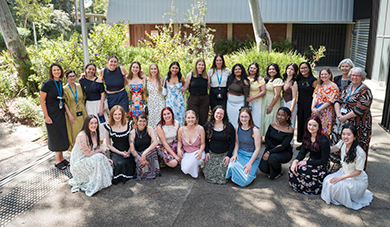
Honouring tradition, celebrating achievement
Our annual Nursing and Midwifery Badge Ceremony once again stood as a highlight of the academic year, marking a significant milestone for our graduating cohort. This year’s event brought together staff, students and families to honour the dedication, resilience, and professional growth of our future nurses and midwives.
Nursing badges have always carried more than metal and enamel. They carry belonging. They carry achievement. Their history stretches back through military, chivalric, and religious orders, symbols awarded to those who pursued excellence and service.
The ceremony opened with a welcome address from Professor Julia Morphet, Head of Monash Nursing and Midwifery, acknowledging the profound responsibility and privilege inherent in the nursing and midwifery professions. Professor Morphet then continued, reflecting on the challenges faced by the graduating class throughout theirAcademic journey, including the evolving demands of contemporary healthcare, and commended their commitment to compassionate, evidence‑based practice.
Integral to the event was the presentation of badges, symbolising each student’s transition from learner to professional. These badges recognising not only academic achievement but also the personal development, clinical competence, and ethical integrity demonstrated by each graduate.
This year’s Badge Ceremony was more than a celebration; it was a launchpad. It honoured the hard work of our students, the support of their families, and the dedication of our academic and clinical teams. As our graduates step confidently into their professional roles, the ceremony stands as a testament to their readiness, resilience, and the bright future they bring to the healthcare sector.
Celebrating excellence in critical care nursing
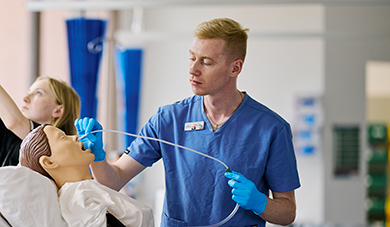
We are proud to acknowledge the outstanding achievements of students in the Master of Advanced Clinical Nursing, Intensive Care Nursing stream, who were nominated for the Australian College of Critical Care Nurses (ACCCN) certificate and professional recognition for the Best Critical Care Nurse Graduate of the Year.
In 2025, several of our students were nominated for the ACCCN Victoria Critical Care Nursing Prize, reflecting their exceptional clinical acumen, dedication to patient care, and leadership in the field of intensive care nursing:
- Christine Quinn (Cabrini Health)
- Zahnika Hipgrave (Eastern Health)
- Desiree Pineda (Alfred Health)
- Elizabeth Dorgan (Alfred Health)
- Alison Lau (Eastern Health)
We extend our heartfelt congratulations to Dylan Gartland (Bendigo Health), who was named the overall winner of this prestigious award. This recognition underscores the calibre of our program and the commitment of our students to excellence in critical care.
These accolades are a testament to the rigorous training, compassionate practice, and professional integrity that define our nursing graduates. We commend all nominees for their contributions to the advancement of critical care nursing and for upholding the highest standards of clinical practice.
Growing through connection, culture, and clinical practice in Alice Springs
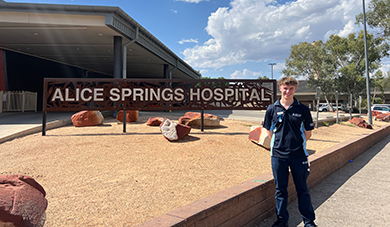 2025 gave us another fantastic opportunity to send our nursing and midwifery students out on rural placements, and the impact was undeniable. With support from HESTA Super, these placements opened the door for students to experience firsthand the challenges many rural communities face when distance and limited access make healthcare harder to reach.
Owen, a second‑year Bachelor of Nursing student, jumped at the chance. He didn’t just take part, he made the absolute most of it. And in his own words, he shares what the experience meant to him.
“My placement at Alice Springs Hospital became one of the most defining chapters of my nursing degree. It challenged me, grounded me, and expanded both my clinical capability and my understanding of what it truly means to care.
One of the most powerful components of this placement was the Introduction to Central Australian Aboriginal Cultures and Context workshop through Flinders University. Stepping into that space reshaped the way I see my role as a nurse. I learned about the deep history of Aboriginal communities in Central Australia, the significance of kinship systems, and the communication protocols that guide respectful interactions. The workshop pushed me to reflect honestly on unconscious bias and to consider what culturally respectful care looks like in practice, not just in theory.
Those insights stayed with me every day on the ward. They helped me better understand the complex, interconnected health challenges faced by communities in the Northern Territory, challenges shaped by history, social determinants, and systemic inequities. Being immersed in this environment reminded me that culturally safe care isn’t optional. It’s essential. It’s about listening deeply, partnering with patients and families, and recognising the broader context that shapes their health and wellbeing.
Clinically, the remote setting stretched me in all the right ways. I learned to think critically, act decisively, and collaborate closely with a team that consistently demonstrated professionalism, compassion, and resilience. Working with limited resources and caring for patients with complex needs sharpened my skills and strengthened my confidence. The nursing staff at Alice Springs Hospital set a standard I’ll carry with me throughout my career.
At the end of the placement, I left with more than improved clinical skills. I left with a deeper appreciation for rural and remote nursing, a stronger commitment to culturally safe practice, and a genuine respect for the communities I had the privilege to serve. This experience didn’t just shape my year, it shaped the nurse I’m becoming.”
-
-

A week in the life of a final year nursing student
Sammi, final year nursing student and MNM social media ambassador, produced a video blog, sharing a candid and thoughtful look into her experiences studying nursing, providing a fresh and personal lens on a student's week.
Aletha Vassiliadis
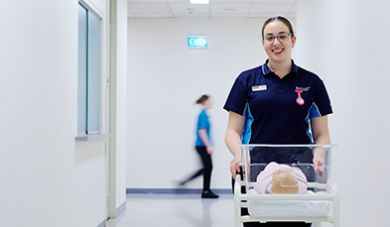
Bachelor of Nursing and Bachelor of Midwifery (Hons) graduate Alethea completed her grad year over 18 months year "I have just completed my six month nursing rotation on the general surgical ward - What a rotation! After my first shift, I was in tears, wondering how I would be able to get through six whole months, but before I knew it, the rotation was over and I ended up having the most amazing time!"”.
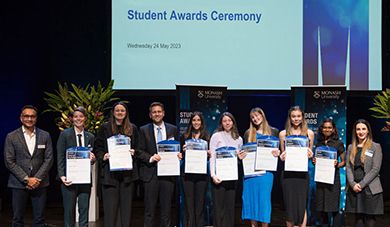
Monash Medicine, Nursing and Health Sciences Student Awards
The annual Monash Medicine, Nursing and Health Sciences Student Awards is an opportunity to recognise and celebrate the achievements of many of our highest-performing students. Twelve nursing and midwifery students were recognised over 11 awards.
Indo‑pacific collaborative health immersion – Vietnam
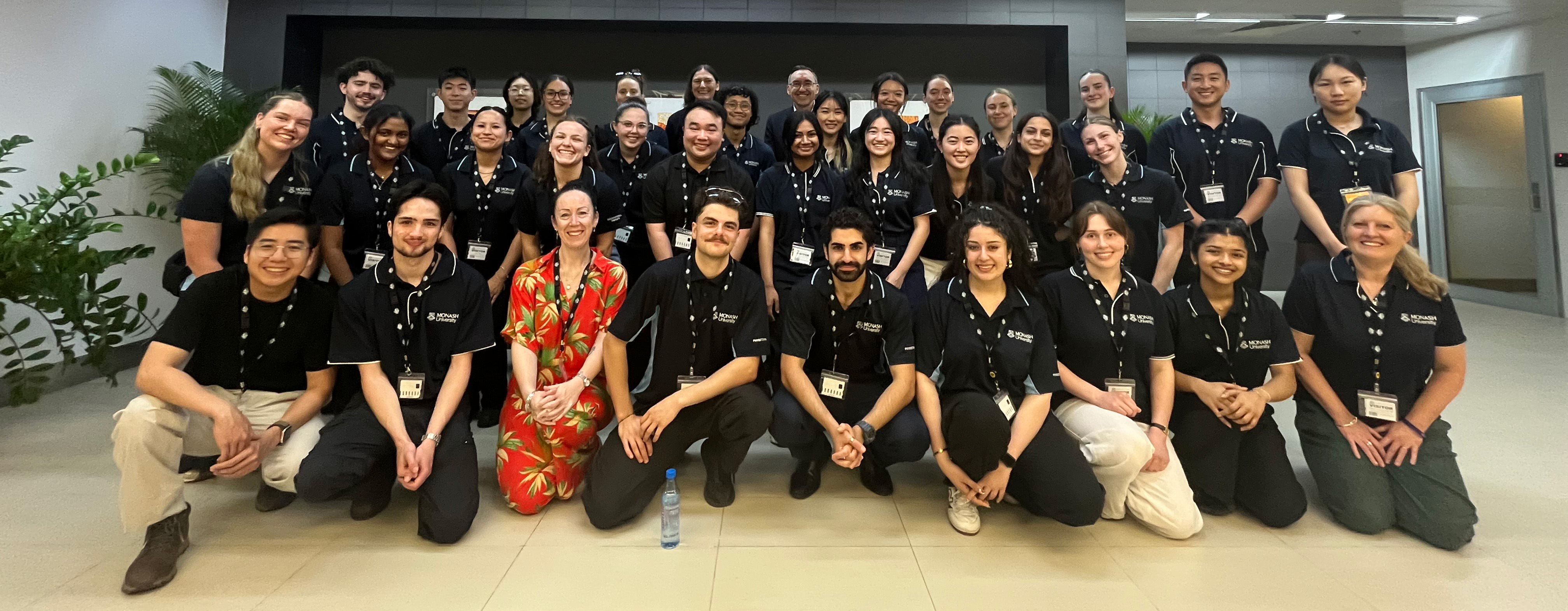
Thirty students from across Medicine, Nursing, Physiotherapy, Occupational Therapy, Paramedicine, Radiography, and Nursing and Midwifery participated in the Indo‑Pacific Collaborative Health Immersion in Vietnam, gaining invaluable cultural, clinical, and global health insights.
The program began with practical Vietnamese language classes and cultural orientation activities, including visits to key historical sites and meetings with organisations such as Alliance Anti‑Trafficking, Saigon Children’s Charity, and the Australian Consulate. These experiences established a strong foundation of cultural awareness and immersion.
Students then explored Vietnam’s healthcare system firsthand. At the Family Medical Practice in Ho Chi Minh City, they received a candid briefing on healthcare challenges, including overcrowded public hospitals and gaps in primary care. Visits to an Orthopaedic Rehabilitation Hospital and rural Can Tho further highlighted disparities in access, resources, and health equity.
Throughout the immersion, students engaged with organisations addressing critical health issues. These included Survival Skills Vietnam (first aid education), VNAH (disability support and employment pathways), and the AIP Foundation (road safety advocacy). Each session demonstrated how policy, community partnerships, and advocacy can drive national health improvements.
A key focus of the program was planetary health and climate resilience. Students learned about the Monash Water Sensitive Cities project and its collaboration with the Disabled People’s Association in Hanoi, deepening their understanding of how climate change disproportionately affects vulnerable populations.
Tutorials encouraged students to reflect on sustainability, traditional medicine, and the interconnected nature of environmental and clinical health.
By the end of the program, students returned with enhanced clinical insight, cultural competence, and a strengthened commitment to equitable, compassionate healthcare. Their experiences in Vietnam broadened their perspectives and reinforced their readiness to lead with empathy and purpose.
-