
Home

About the symposium
This symposium is gratefully supported by the International Universities Climate Alliance, Monash University, and UNSW Sydney.
As we approach the first Global Stocktake on the Paris Agreement at COP28 Dubai (November 2023), it’s important to understand how universities can accelerate meaningful Partnerships for the Goals (SDG 17).
Universities have a leadership role to play in creating diverse partnerships to work hand-in-hand with communities and train the next generation of professionals to create climate solutions. This special event, led by the International Universities Climate Alliance with Monash University and UNSW Sydney, enables you to explore the importance of real-world partnerships with governments, NGO’s, the private sector, and local communities.
We’re bringing together a diverse group of stakeholders to collaborate on exploring best practices in developing successful partnerships that promote climate empowerment throughout the Asia Pacific region.
You'll have the opportunity to gain insights from prominent leaders and experts in the tertiary sector, government, the United Nations Framework Convention on Climate Change (UNFCCC), local communities, youth, and First Nation peoples as they share their valuable experiences of fostering mutually beneficial, authentic and sustainable partnerships.
The outcomes of this workshop will be presented at an official Pavilion event at the UNFCCC COP28 in December 2023.
This is a free online event open to anyone with an interest in championing climate empowerment through effective ‘Partnerships for the Goals’.
 View this event in your current time zone
View
View this event in your current time zone
View

What's on?
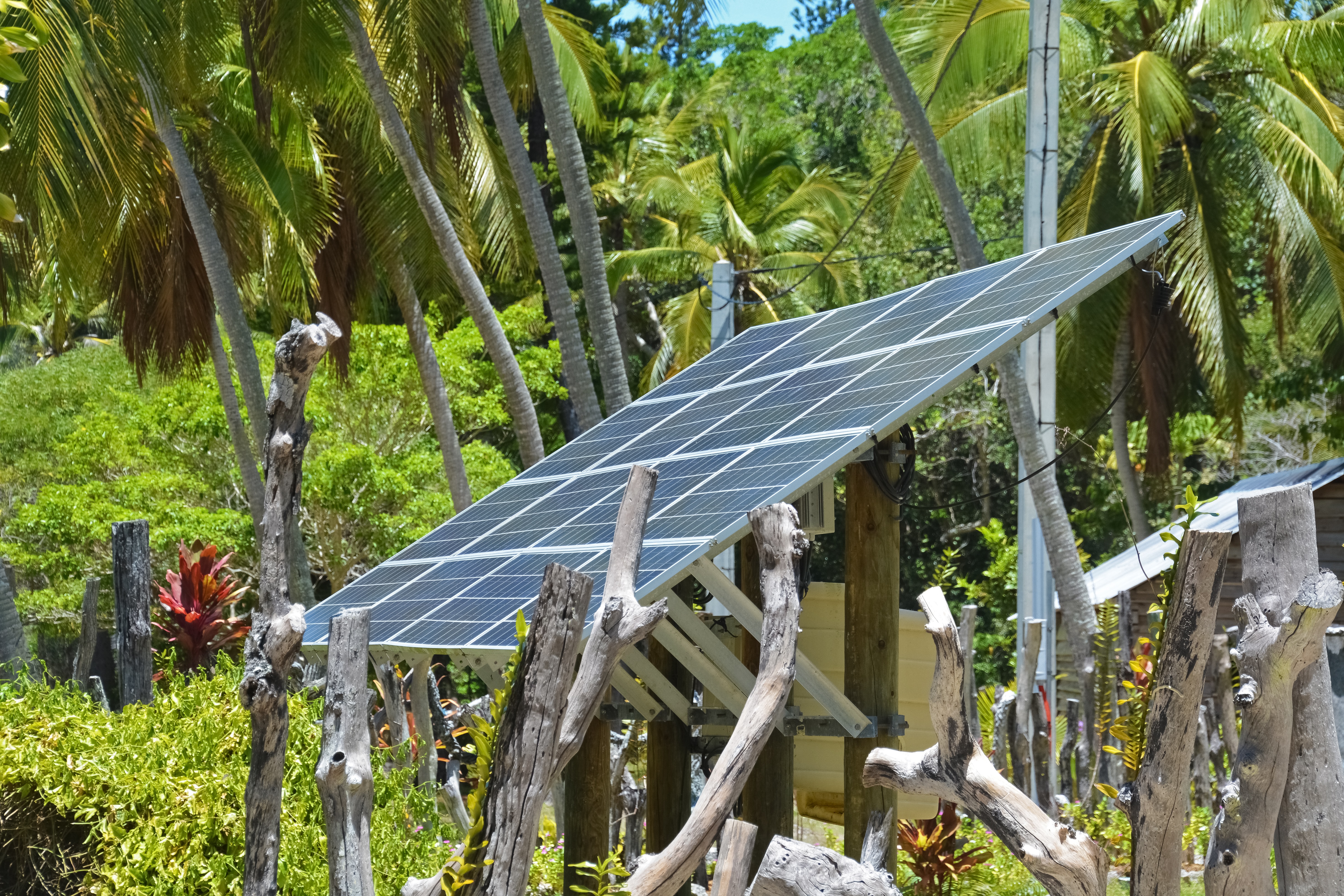
Stories from across our region
You will have the opportunity to join one of three discussions with our high profile facilitators (see ‘Facilitators’).
- Room 1: The kitchen table (local human experiences and youth perspectives)
- Room 2: The community centre (community/grassroots leaders, advocates, NGOs etc)
- Room 3: The boardroom (multi-national organisations, business & government)
Designed to provoke important reflections on the role of universities in climate empowerment and justice, and our role as a partner more broadly, each breakout room (the kitchen table, the community centre and the boardroom) will provide a space for critical engagement and shared experiences. Grounded in the concept and power of story-telling, each room will focus on the experiences, lessons, challenges and opportunities through the sharing of stories about partnership experiences.

Distinguished speakers
Meet our distinguished speakers from across the Asia Pacific region.

Professor Marcia McKenzie
Associate Dean and Director of the Global Monitoring and Evaluating Climate Communication and Education Project, Melbourne University
Marcia is a Professor of Global Studies and International Education, and Associate Dean Sustainability in the Faculty of Education, and Lead of the Climate Communication and Education Research Cluster at Melbourne Climate Futures, University of Melbourne. She is currently Principal Investigator of two SSHRC-funded studies, including the $4.5M Monitoring and Evaluating Climate Communication and Education (MECCE) Project (www.mecce.ca). Her research areas include global education policy research, geographies of education, and climate and sustainability education, including in relation to place, mobilities, and affect theory.
Kaeden Watts
Co-Founder of Te Waka Angamua and Principal Advisor, Climate Change at Wellington City Council
Kaeden (Ngāti Tūwharetoa, Ngāti Maniapoto, Ngāi Tūhoe) works at the intersection of climate change and tino rangatiratanga. Kaeden has 6+ years’ experience in climate advocacy movements, campaigning and environmental consulting/advisory services at the grassroots level and government
in New Zealand and overseas, as well as at the international-level through the International Indigenous Peoples Forum on Climate Change and United Nations Human Rights working group.He is the Trustee/co-founder of Te Waka Angamua, an organisation responding to climate-induced impacts affecting
vulnerable
communities through amplifying Indigenous methods to inform our national response to climate change.

Professor Victoria Keener
Senior Global Futures Scientist and Co-Lead of the NOAA Pacific RISA program, Arizona State University
Victoria Keener is a Research Professor at the ASU Global Institute of Sustainability & Innovation and a Senior Fellow at the East-West Center in Honolulu, Hawai‘i. She is a Co-Lead Principal Investigator of the NOAA-funded Pacific RISA program, one of the NOAA Climate Adaptation Partnerships (CAP). She earned a Ph.D. in Agricultural & Biological Engineering from the University of Florida, specialising in hydro-climatological research. Dr. Keener does interdisciplinary and applied research working with Pacific Island communities to transform climate research into resource management policies aiming to reduce climate-induced vulnerabilities. She was the Lead Author of the Hawai‘i and Pacific Islands Chapter of the 4th US-National Climate Assessment (NCA4), is an Author on NCA5, and helps to direct the Pacific Islands Regional Climate Assessment (PIRCA) network and reports. Dr. Keener is appointed to the City & County of Honolulu Climate Change Commission, where she currently serves as the Vice-Chair.

Isabelle Zhu-Maguire
Network Coordinator at the UN’s Sustainable Development Solutions Network, Monash Sustainable Development Institute
Isabelle is a Project Coordinator at the Monash Sustainable Development Institute (MSDI) and the Network Coordinator of the UN's SDSN Youth AusNZPac branch. She founded the Sustainable Universities Network and has conducted research into gender as experienced by Afghan women
and governance in the Pacific.
Hudson Worsley
Co-founder of B Corp Presync
Hudson supports organisations in the deployment of innovative technologies and systems thinking to generate business value and drive efficiency. He has a background in business and sustainability consulting and project management with extensive time spent with utilities, infrastructure projects and development companies. Hudson works with organisations on their transition to the zero-carbon economy and adaptation to the changing climate. His ability to communicate complex technical concepts in clear language to non-specialist supports the change management required to achieve sustainability objectives. Hudson is chair of the Materials & Embodied Carbon Leaders’ Alliance (MECLA), an industry collaboration he helped establish with WWF and Climate-KIC to drive the national take-up of low emission construction materials.

A/Professor Susie Siew Yuen Ho
Director of the Monash Innovation Guarantee, Monash University
Dr. Ho designs and leads education programs accelerating the Paris Agreement, SDGs, and Action for Climate Empowerment agenda. She drives collaboration and codevelopment between students, higher education and social and commercial enterprises and government and UN agencies. She is part of a UN project setting global indicators for climate change education worldwide, a lead PI in the global Youth Environmental Alliance for Higher Education, and a Board Member of the Victorian Skill Authority. She is passionate about empowering emerging leaders, leading 6 student delegations to UN climate change conferences.

Gavin Choong
Global Youth Spokesperson, Amnesty International
Gavin is a passionate activist based in Melbourne who works in the intersection between climate change and human rights. In 2023, Gavin was appointed as a global youth spokesperson for Amnesty International, representing the interests of youth activists across the Asia-Pacific. He advocates for the inclusion of First Nations and Pacific Islander youth voices in conversations surrounding climate change, as well as greater youth inclusion bycreating meaningful leadership opportunities and breaking down barriers to information.
Gavin also leads the translation sub-group for YOUNGO, the official children and youth constituency of the UNFCCC. Gavin is currently a New Colombo Plan scholar with the Department of Foreign Affairs and Trade. In 2024, he hopes to pursue human rights work with intergovernmental organisations throughout the Indo-Pacific.
Dr Bodean Hedwards
Social Impact & Partnerships Lead, UNSW Sydney
Dr Bodean Hedwards recently joined UNSW Engineering’s growing Equity, Diversity & Inclusion team as the social impact and partnerships lead, where she will be focused on building the social impact strategy and associated initiatives to help drive our collective impact across research, education, and governance activities. As part of this, Bo will be working to help strengthen and grow a network of partners across the Indo-Pacific that are interested in collaborating to achieve our broader social impact goals.
Bo is an experienced program designer, partnership broker and strategist, having led a range of high-profile social impact and education initiatives across government, civil society, and the higher education sector over the last decade. Bo is also the Co-Chair of the Australia-India Youth Dialogue, which is the pre-eminent track II leadership dialogue in the Australia – India relationship, and prior to joining UNSW was the Director of Monash University’s Global Immersion Guarantee program. With a background as a criminologist, Bo has specialised in research on the nature of, and responses to human trafficking, slavery and irregular migration, having spent much of the last decade working alongside leading organisations from around the world.
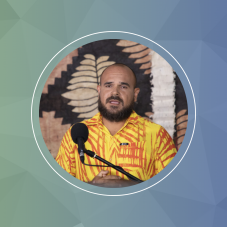
Andrew Paris
Environmental Coordinator for the Blue Prosperity Fiji program
Andrew is the Environmental Coordinator for the Blue Prosperity Fiji program. Prior to joining the program, Andrew was a research assistant and marine studies master's student at the University of the South Pacific. Andrew is a Fijian who has been immersed in ocean-centric research in the South Pacific after completing an undergraduate degree in Environmental Science. Andrew has designed and managed research in marine ecology, marine pollution, and eco-toxicology and possesses a strong record of outreach and advocacy for ocean stewardship.

A/Professor Anita Foerster
Director of the Monash Business School Green Lab
Anita Foerster is an Associate Professor in the Monash Business School, Monash University, where she researches and teaches in environmental and climate change law and regulation and leads the inter-disciplinary sustainability research network Green Lab. Before joining Monash University, Anita completed her PhD at Melbourne Law School and worked in research and teaching roles at Melbourne Law School and the University of Tasmania. Anita's research is socio-legal and interdisciplinary. She uses empirical and qualitative research techniques to track and assess the impact and effectiveness of environmental law and regulation in practice. She often works closely with government and non-government stakeholders to enhance the impact of her research.
Leading partner organisations and institutions
This symposium is gratefully supported by the International Universities Climate Alliance, Monash University, and UNSW Sydney.
Committee Members
Associate Professor Susie Ho (Monash University)
Dr Ellen Hooper (UNSW Sydney)
Dr Bodean Hedwards (UNSW Sydney)
Professor Alan Reid (Monash University)
Associate Professor Jenny Ritchie (Victoria University of Wellington)
Professor Paul Munro (UNSW Sydney)
Professor Elisabeth Holland (USP)
Associate Professor Chris Eames (Waikato)
Dr Rosiana Lagi (USP)
Dr Sally Birdsall (University of Auckland)
Dr Rebecca Green (UNSW Sydney)
Dr Louise Fitzgerald (UNSW Sydney)