
Ashmitaa Thiruselvam
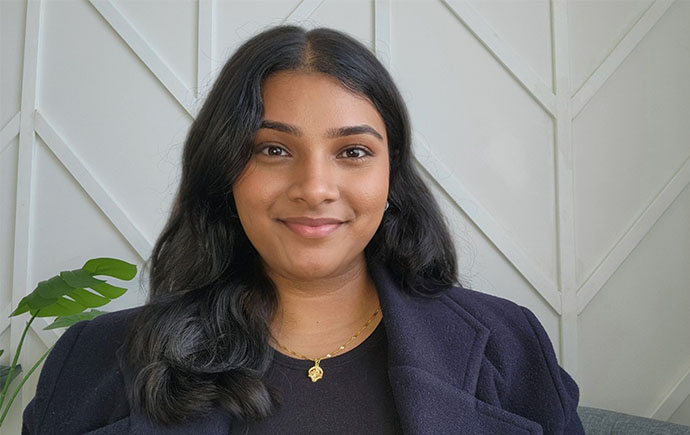
Ashmitaa Thiruselvam
- Year completed 2022
- Current position Assistant Chief of Staff & Journalist, ABC News Melbourne
- Degree(s) Bachelor of Media Communication
Career Summary:
Ashmitaa Thiruselvam is a Bachelor of Media Communication alumna and part of a new generation of journalists helping shape Australian media with integrity and curiosity. Now an Assistant Chief of Staff and Journalist at ABC News Melbourne, she works across radio, television and digital platforms: pitching stories, producing content and supporting the newsroom through fast‑paced breaking news cycles.
Her portfolio spans community reporting, multicultural storytelling, national news and political coverage, with bylines in ABC News, ABC Radio Melbourne, SAARI Collective and MOJO News, where she earned the MOJO News Award for Most Popular Story of the Year. Her journey from beginning university during the COVID-19 pandemic to becoming a trusted contributor in one of Australia’s most respected newsrooms highlights her persistence, adaptability and commitment to responsible journalism in an era shaped by AI‑generated content.
Career Pathway:
- 2024 – Present: Assistant Chief of Staff & Journalist, ABC News Melbourne
- 2022 – 2024: News Operations Assistant, ABC News Victoria; Shadow Producer, ABC’s The World; Support roles across Insiders, Offsiders, Q&A
- 2021: Intern, ABC Asia Pacific Newsroom; Travel Section Editor & Reporter, MOJO News
- 2020 – 2022: Bachelor of Media Communication, Monash University; Contributor, Esperanto Magazine; Member, MONSU
What drew you to Monash and the Bachelor of Media Communication program?
English was always my strongest subject, and I was naturally drawn to writing. In Year 10, we had to look up our ‘dream degree’, and even though I didn’t fully know what I wanted to do, I knew I wanted to make a difference in the creative industry.
I looked at a few universities, but Monash was one of my top preferences. I was set on being a journalist, even if I didn’t fully understand what that really entailed. Once I started, I stuck with journalism all the way through. The newsrooms, the mock‑up studios, the equipment… I don’t think people realise how well equipped and resourced Monash is until they’re actually in the degree.
What clubs or student organisations were you involved in?
I joined MOJO News in 2021 and received my very first byline there. I was the Travel Section Editor, pitched stories weekly, edited according to the style guide, and wrote both hard news and features. I even won the MOJO News Award for Most Popular Story of the Year in 2021. MOJO really built my confidence and put my name out there.
I was also part of MONSU, which helped me build friendships both inside and outside my course. Even though I started in 2020 during peak COVID, I still managed to make so many friends online.
How did internships or practical experiences enhance your skills and employability?
One of my first journalism internships was a two‑week placement at ABC Melbourne with the Asia Pacific newsroom. I published my first online story with them. I remember being stressed about getting it out on time, but the team was so encouraging.
That internship directly helped me secure my first casual role in the Victorian newsroom. They told me they’d spoken to my supervisor from the Asia Pacific team and liked how I performed; that’s why they called me back.
From there, I built my skills across shows like Insiders, Offsiders, Q&A, and did some shadow producing shifts with The World. Those experiences snowballed into my current full‑time role.
What skills or knowledge from your degree do you use in your role today?
One of the most memorable units I did was a broadcast journalism unit in third year. I wish I’d done it earlier. It introduced me to practical industry terminology like RVOs, copy and grabs, which I now use every day in my work.
Many of the tutors and lecturers were still working as journalists or producers. We got real examples and reality checks, not just success stories. Alumni also came back to give guest lectures. I remember Matilda Boseley from The Guardian came in and was so honest about her journey. All of those perspectives made our career goals feel achievable, especially in a competitive city like Melbourne.
What key steps or experiences guided you toward your current role?
It sounds cliché, but being persistent and networking really guided me to where I am now. I had to push past the fear of talking to people I didn’t know. That’s how I got my internship.
As an intern, I made sure to show passion, confidence and determination, even with small tasks. First impressions matter. You never know who will be on the panel for your next job.
What do you enjoy most about your job at the ABC?
I love the flexibility. Even though my main role is Assistant Chief of Staff, I’m not limited to that. I can produce for radio, TV and online, and if I pitch a great story, I’m treated like any other reporter.
I gather news, cold‑call sources, and support journalists and producers. I like feeling valued. When people rely on me, it shows I have a place in the newsroom.
When I report, I really enjoy amplifying people’s stories. Even after a story airs, people often come back with updates. It’s rewarding to know the story made a difference.
Why is journalism important in today’s society?
With AI and user‑generated content everywhere, verification has never been more critical. What we see online can’t be taken at face value, and journalists act as the filter between the public and information.
We reach out to sources, confirm authenticity, and don’t just run with something because another outlet has. Reliable, responsible journalism is essential for keeping the public informed.
You’ve worked across newsroom operations, editorial, PR, and journalism. How do you operate effectively across such diverse sectors?
I’m passionate and determined to find my place in the media industry, and I didn’t want to limit myself. Being a reporter is so broad and diverse, and that’s exactly what motivates me. I’ve always been open to trying different parts of the media landscape because every role teaches you something new. Newsroom operations showed me how stories move from idea to finished piece. Editorial work sharpened my judgement. PR revealed how organisations communicate strategically. Journalism ties it all together by letting me use everything I’ve learnt to tell stories that matter.
What really drives me is curiosity, understanding how teams operate, how decisions are made, and how each part contributes to the final story. Having a growth mindset is essential. You need to be flexible, willing to learn and open to feedback. I never wanted to box myself into one path too early, and exploring different areas helped me figure out what I enjoy, what I’m good at and where I can grow. In a field as fast-moving as media, adaptability is a strength because it allows you to step into different roles, support your team and understand the bigger picture of how the newsroom works.
What advice would you give to current students and recent graduates?
For current students: Put your hand up early and start building your portfolio by second year. Don’t fixate on landing a major role at a well-known news outlet just yet. Start with opportunities like MOJO News, Esperanto Magazine, student clubs, or volunteer projects to gain experience and confidence.
Reach out to your tutors. Many still work in the industry or have strong professional networks. Most newsrooms take on interns regularly, so ask whether they can recommend you for opportunities.
For recent graduates: Have a clear idea of the area of journalism you want to pursue, such as reporting, producing, editing, or social media. The job market can be competitive in major cities, so regional roles are worth considering if you are open to relocating. Stay active on LinkedIn, keep connecting with people, and continue building your portfolio. Persistence is key. Learning never stops, no matter your age.
Published in February 2026