
Aushaf Widisto
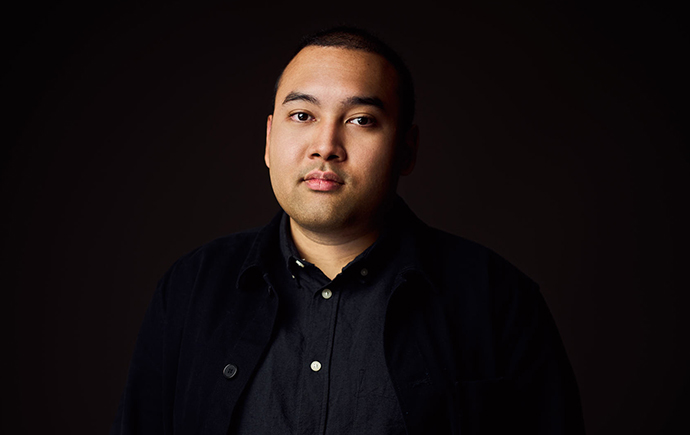
Aushaf Widisto
- Year completed 2021
- Current position Arts Administrator, Australian Network for Art and Technology, Australia
- Degree(s) Master of Cultural and Creative Industries
Career summary
Aushaf is currently the Arts Administrator at the Australian Network for Art and Technology (ANAT), helping artists collaborate with science and technology partners. He has also been freelancing as a writer since 2020, dabbling across multiple writing forms.
Having been trained in Urbanism and Creative Industries, his goal is to leverage arts and culture to create better cities and communities.
He completed a Master of Cultural and Creative Industries at Monash University in 2021. Previously, he completed a Bachelor of Science majoring in Urban and Regional Planning at Institut Teknologi Bandung in 2018.
Career pathway
2023 - Present - Writer in Residence, The Mill Adelaide, Australia
2023 - Present - Contributing Writer, InReview, Australia
2023 - Present - Author, Makna Group, Indonesia
2022 - Present - Arts Administrator, Australian Network for Art and Technology, Australia
2023 - Contributing Writer, Artlink Magazine, Australia
2023 - Welfare Officer, Australia Awards, Australia
2023 - Marketing Specialist, Studio A, Australia
2021 - 2023 - Research and Communications Assistant, Creative Economy, Australia
2021 - Contributing Writer, Traveling Circus of Urbanism, Japan
2021 - Content Writer, iDibs.it, Australia
2020 - 2021 - Program Officer, Asialink Arts, Australia
2019 - Social Media Manager, Bandung Design Biennale, Indonesia
2017 - 2019 - Copywriter, CreativeMornings, Indonesia
2017 - Program Officer, Spasial, Indonesia
Why did you choose to study the Master of Cultural and Creative Industries at Monash University in Australia?
During my Bachelor's, I pursued a major in urban planning, and the topic of my thesis was ‘creative cities'. This concept revolves around how creativity can significantly impact the field of urban planning and design. With a clear interest in this area, I decided to pursue a master's degree, and when I did my research on what uni to apply to, I found many relevant programs like Master of Creative Industries or Master of Arts and Cultural Management, not just in Australia, but also in the UK and elsewhere. If I remember correctly, Monash University was the only university offering a dedicated subject on creative cities. So that's what settled the decision for me.
How did your bachelor’s complement your master’s?
Urban planning is very broad, akin to a jack-of-all-trades experience. As an urban planning major, I've delved into a diverse range of subjects, including economics, public policy, law—particularly agrarian law—and sociology. In my Master of Cultural and Creative Industries (MCCI) program, there were related units such as cultural economy and sustainable development. These units provided a bridge for me to draw connections between urban planning and cultural and creative industries.
Furthermore, my peers at MCCI have diverse backgrounds, including communications, business, and fine arts. Each person brings a unique perspective. What sets me apart is that, while my peers with majors like business or arts tend to think specifically about making a profit or creating artwork, my perspective as an urban planning major is broader, offering a bird's-eye view of the creative industries. I tend to view things as part of a system, instead of a standalone entity. This has given me an advantage in thinking comprehensively, though, at times, I feel like I may come across as vague. So, there are distinct advantages and disadvantages to being broad versus specific.
What opportunities for professional development did Monash provide?
There were many opportunities for professional development. And one that I found really useful for me was the internship program, otherwise known as work-integrated learning (WIL). As an international student with next to no professional connection in Australia, it really helped me get my foot in the door. I undertook my internship at Asialink Arts, a nonprofit organisation located at the University of Melbourne. This organisation focuses on fostering connections between Australia and Asia through arts and culture.
How did you engage with the wider Monash community?
Not as much as I would like to. I did my studies during the Melbourne lockdown period from 2020 to 2021, so there weren't as many opportunities to engage. Although, I did join the Monash Indonesian Student Association and I made sure to attend their events once the lockdown was finished. After the lockdown ended, and we could meet people in person, then that was when I started to feel a sense of community.
Tell us about your role as an arts administrator. How do you facilitate collaborations between artists and science and technology partners?
We achieve this by organising artistic programs such as residencies, exhibitions, and symposia. Additionally, we assist artists in securing funding and marketing their work. I am a staunch advocate for cross-disciplinary collaboration; the convergence of art, science, and technology often leads to magical outcomes. I consider myself fortunate to have had the opportunity to work in this area.
Are there any particular projects or achievements that you've had in your current role that have stood out?
Currently, our focus is on our flagship residency program, ANAT Synapse, which will hit its 20th year in 2024. This initiative involves connecting artists with research organisations spanning diverse disciplines. For instance, one of our current resident artists, a poet, is collaborating with an astrophysics lab at QUT. The convergence of poetry and astrophysics in this collaboration is particularly intriguing.
These cross-disciplinary residencies offer the best of both worlds. Artists gain valuable insights and a scientific perspective for their creative research, while science and research institutions benefit from an infusion of creativity from the artists. This mutual exchange allows both parties to grow and evolve together.
You've held roles in different countries, how has having international roles shaped your understanding of cultural diversity?
When I first arrived in Australia, I perceived my foreign background as a disadvantage. Having grown up in a developing country with an unpronounceable name and English as my third language, I felt somewhat handicapped. However, with time, especially after my internship at Asialink Arts, I've come to realise that my foreignness is, in fact, an advantage. Being foreign equips me with multilingualism, a heightened intercultural awareness, and a strong sense of drive and independence. It's kind of amazing how you can view things so differently once you shift your perspective.
You also work as a freelance writer, how do you manage to excel across different writing forms?
Charles Bukowski, one of my favourite writers, once said, “When everything works best, it's not because you chose writing, but because writing chose you.” I've dabbled in various creative pursuits before, not just writing but also music, drawing, design, and more. I like to believe I gave each of them equal effort. Yet, writing turned out to be my most fruitful and persistent passion. So, I didn't set out to be a writer intentionally. It's more like, as you explore different things, you organically discover what you're good at, drifting into it without intending to.
As for my diverse interests and styles, that's just me being explorative and experimental. I think it's a fallacy to box human beings into categories. We all harbour a multitude of passions, and the idea that ‘we must choose just one’ is, I think, one of the biggest lies ever told in history.
What have been some of the highlights of your career journey so far?
Getting a job at ANAT is a major highlight for me. There aren't many organisations that operate at this exciting intersection of art and technology. Working here has introduced me to a multitude of interesting and brilliant individuals, opening doors to numerous opportunities. I genuinely hope to continue contributing to this dynamic environment for a long time.
Another highlight is my current writing residency at The Mill, a multidisciplinary arts space in Adelaide. While I've organised residencies for artists before while I was at Asialink Arts and now at ANAT, this is actually my first time being on the receiving end of an artistic residency. It's been a fantastic experience so far.
How do you envision leveraging arts and culture to create better cities and communities in the future?
In urban planning, there's this concept called ‘placemaking', and you might be familiar with it. Essentially, it's a process of transforming a space into a place, making it more human. Art is a powerful tool for placemaking. Take, for instance, the simple act of putting mural paintings on laneways, a common sight in Melbourne. It's interesting, right? Despite Melbourne's laneways sharing similarities with dark and dank laneways elsewhere, the mere presence of art makes them more appealing. They've even become tourist attractions. This is just one example; another is placemaking through festivals, like RISING Melbourne, for instance. Festivals aren’t just ephemeral events; they leave lasting benefits for the city. They draw people from different places, boost the local economy, and reinforce the city's brand as a hub of creativity. I could go on with more examples. There are numerous ways to integrate art into the urban planning process, and it's a topic I could discuss endlessly. Placemaking is a major area of interest for me, sitting at the intersection of urbanism and creativity, and I see it as a central goal in my career journey.
The impact of art is immense. Cities without art, often characterised by bland architecture and a nonexistent cultural scene, lack the vibrancy that makes a place feel livable. Fortunately, living in Melbourne, where art is ubiquitous, is a blessing. The entire vibe of the city exudes creativity.
What advice do you have for aspiring creatives in their studies and career pursuits?
Don’t just go with the flow. Often, you have to go out of your way to get what you want. If you simply follow the crowd, you'll end up with the same results as everyone else. Joseph Campbell once said, "If the path before you is clear, you're probably on someone else's." So, the message here is to not be afraid of straying off the beaten path. In fact, it might be more accurate to say, go off the beaten path despite your fear. Being afraid is often a sign that you're doing the right thing and growing.