
Ayda Akbal
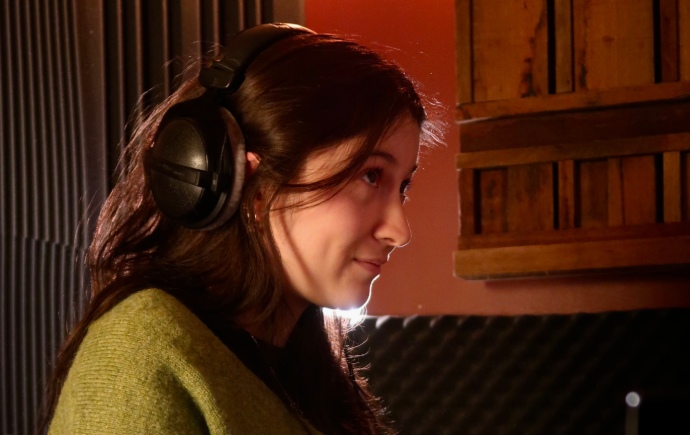
Ayda Akbal
- Year completed 2024
- Current position Composer, Artist and Orchestrator
- Degree(s) Bachelor of Arts and Bachelor of Music
Career Summary:
From scoring independent theatrical stages to collaborating with global giants like Netflix and Joy Music House in Los Angeles (LA), Ayda Akbal is redefining the modern career trajectory for music and arts graduates. Ayda’s journey spans composing original soundtracks for regional theatre, creating digital educational content for Spitfire Audio, and acting as a Research Officer for Monash’s cutting-edge AiLECS Lab, exploring the ethical intersection of AI and community safety. Now balancing high-stakes Hollywood music orchestration with corporate tech-entertainment leadership, Ayda embodies the cross-disciplinary agility, critical thinking, and technical mastery championed by Monash Arts.
Career Pathway:
- 2025 – Present: Admin Executive and Orchestrator, Joy Music House (LA)
- 2025 – Present: Music Assistant (Music Lab), Netflix
- 2024 – 2025: Music Intern, Joy Music House (LA)
- 2024 (March – September): Research Officer, AiLECS Lab (Monash University Research Centre)
- 2023 – 2024: Intern, Monash Industry Teams Initiative (MITI), AiLECS Lab
- 2023 – 2024: Content Creator, Spitfire Audio
- 2023 (February – June): Composer in Residence, Balcombe Grammar School
- 2019 – Present: Composer and Songwriter for Screen and Stage, Ayda Akbal Music
- 2020 – 2024: Student, Bachelor of Arts / Bachelor of Music (Composition and Music Technology), Monash University
How are you currently involved in music, and what does your work in screen composition look like?
I’m currently working full‑time in music for screen, film, TV and artist projects, and I’m now based in LA. After graduating, I joined Joy Music House, a production company specialising in score preparation and orchestration. That opportunity opened the door to the industry about a year and a half ago, and since then, I’ve worked across a wide range of projects in film, television and with artists.
What does music mean to you personally, and how do you keep the love of it at the centre of your work?
A life without music would feel much duller. Working professionally has shown me how important it is to keep joy at the centre of what you do. There’s little point working in music if you don’t genuinely love it.
Music is also deeply connected to people - playing with friends, listening to their work, and sharing creative energy. Keeping that love of music at the core makes everything else worthwhile.
What advice would you give current undergraduate music students about building their craft?
Learn as much as you can - theory, composition and the technical tools you’ll use daily. Become confident with your tools. Write by hand occasionally, notate, experiment, and try to gain professional experience as early as possible.
You also need business skills. As a freelancer, you’re effectively running your own business: setting rates, promoting yourself, managing contracts and understanding the legal aspects of creative work. These skills are essential for a sustainable career.
Why did you choose to study a Bachelor of Arts and Bachelor of Music at Monash?
Monash was one of the only places where I could combine both degrees. I studied psychology in my Bachelor of Arts because my parents aren’t musicians and psychology felt like the more familiar or “safe” option. But I genuinely love both disciplines, which is why I’m now completing my Graduate Diploma in Psychology alongside my work in music.
What skills from your double degree do you now use in your day‑to‑day life?
The most valuable skill is the ability to switch quickly between very different tasks. At university, I’d move from a music assignment to a psychology lecture. Now I go from working for a company in the morning to writing my psychology thesis in the afternoon.
In music, you constantly shift between finances, creative work, administration and production. Being able to change mental modes efficiently has been incredibly useful.
How did Monash’s studios and music facilities shape your development as a composer?
I loved the recording studio. In my third and fourth years, I was there almost every day. It operated professionally, and the experience of going from an idea to a recording session, inviting friends and hearing music at high quality was invaluable. My studio teacher encouraged us to be in the space as much as possible. The studios I work in now in LA use the same equipment Monash had, which gave me a strong foundation.
How did student clubs and your representative role influence your university experience?
I joined the Neuroscience and Psychology Society and the Monash Music and Musical Theatre Society. I was also the student representative for Composition and Music Technology, a point of contact for student experiences and concerns.
That role taught me a lot about communication, advocacy and contributing to a positive working environment. Because my first two years were online, joining clubs in my third year gave me the in‑person community I had been missing.
What impact did ensemble experiences online and in person have on your growth?
The main ensemble I participated in was Piano with Dr Aura Go, which brought together piano and composition students. It was a very supportive environment.
As a composition student, I assumed I wasn’t as strong in piano performance, but the focus on communication and improvisation built my confidence. Playing with others is an experience I truly treasure.
Now, about 60% of my time is spent writing and collaborating online using Zoom, Sibelius, Logic and Cubase. The other 40% involves studio recording sessions. Hearing your music played live brings back the energy of ensemble work.
What challenges did you face entering the screen‑music industry from Australia?
A big challenge and one that many undergraduates experience is that Australia is geographically large and the screen‑music industry can feel disconnected. I searched online constantly for resources, but most were based in LA, New York or the United Kingdom.
In Jazz, I had friends and professors active in the field, but as a screen composer I didn’t have access to professors working full‑time in that industry. Without a dedicated screen‑composition major, finding mentors was difficult.
Screen music is booming now with the number of composers in LA increasing significantly and interest in the field is growing. I’d love to see the university expand in this area.
What advice do you have for students wanting to work in film, TV, or game music?
1. Keep writing and release your music. If no one hears your work, no one can hire you. Share it without judgement.
2. Join the community such as the Australian Guild of Screen Composers, APRA AMCOS or High Score (a game‑music conference held in October). Talking to people makes the industry feel more accessible.
3. Reach out. Don’t be afraid. The new generation of screen composers believes in sharing knowledge. When one person succeeds, the benefits often flow back into the community. Look at Bluey, one success brings more resources to Australia.
4. Develop your own voice. Producers want originality. If you copy John Williams, you’re simply copying John Williams. Unique voices are being hired more and more. I applied for awards multiple times before winning anything. Keep applying, keep learning and keep pushing creatively.
How do you think AI will influence the future of screen composition?
AI feels unfamiliar and therefore a bit daunting, but we’re already using AI‑enabled tools for example in Logic’s EQ and mastering features. The best approach is to understand these tools rather than fear them.
Film and TV will always centre on human stories, and AI can’t replace that. Australia has world‑leading AI regulations for the creative industries, and I think the rest of the world should follow.
New tools always create uncertainty. People once thought synthesisers were “fake,” yet they’re now a key part of music history. AI is moving quickly, but we still use Logic, still hand‑write notation, and still record with real musicians whenever possible. The fear often comes from the unknown.
Published in June 2026