
Comfort Kennedy
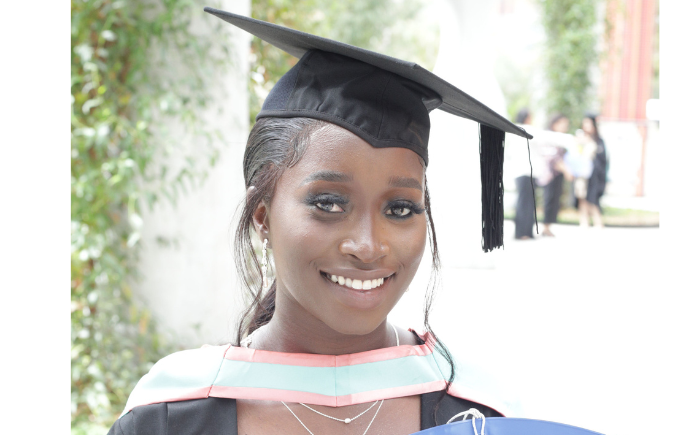
Comfort Kennedy
- Current position Psychosocial Recovery Coach, Mercy United Services
- Degree(s) Bachelor of Arts, 2021
Comfort is a Bachelor of Arts graduate whose journey began with a deep interest in human behaviour, community wellbeing, and social impact. Drawn to Monash for its global reputation, supportive learning environment, and the flexibility of the Bachelor of Arts, she chose to major in Psychology and a minor in Criminology to understand both individual behaviour and the broader systems that shape people’s lives.
Her studies strengthened her research skills, critical thinking, and ability to communicate across cultures. These capabilities became particularly valuable as she supported diverse communities through the challenges of COVID‑19. During her time at Monash, Comfort also contributed to an international study at the Turner Institute for Brain and Mental Health, exploring mental health and sleep across 60 countries—an experience that sharpened her interest in evidence‑based practice.
These foundations guided her pathway into mental‑health support roles across education, healthcare, and community services. Recognised as Young Citizen of the Year Melton (2024), Comfort has become a passionate advocate for youth wellbeing, inclusion, and community empowerment.
Today, as a Provisional Psychologist and Psychosocial Recovery Coach, she supports individuals navigating the NDIS and works to help people build purposeful, meaningful lives.
Her Monash experience empowered her to grow as a communicator, researcher, and emerging clinician, demonstrating how an Arts degree can lead to impactful, community‑centred careers that create real change.
Career Pathway:
- Present - Provisional Psychologist - Masters of Clinical Psychology Candidate
- 2026- Founder & dance facilitator, CDK Wellness
- 2026- Constitution Review Committee member, Liberian Community of Victoria Inc. (Volunteering/community engagement)
- 2024 – Awarded ‘Young Citizen of the Year, Melton’
- 2024 – Psychosocial Recovery Coach, Mercy United Services
- 2024- MC Morteza Halima A Robots Dream Film Screening, Melton Library & Learning Hub
- 2024- Host: Refugees narratives explored, Melton Library & Learning Hub
- 2024 - Community Co-Design Forum Participant, Mind Australia
- 2023 -2025-Youth Advisory Committee Member, Melton City Council (Volunteering/community engagement)
- 2023 -2024-English Tutor, Adult Migrant English Program, Djerriwarrh Community and Education Services &
- Learning for Employment (Volunteering/community engagement)
- 2023 – Disability Support Worker, Mercy United Services
- 2023 – Early Childhood & Youth Educator, Reliance Care Medical Centre
- 2022- Educator, Team Kids
- 2021- Customer Service Member, Coles Supermarket
- 2021 – Summer Research Intern, Turner Institute for Brain and Mental Health
- 2018 -2024 Livestream camera director and operator, Equip Church International (Volunteering/community engagement)
Achievements
- 2025 - Calendar Feature, Interfaith and Intercultural Calendar 2025 Melton City Council
- 2024 - Guest Speaker, Melton City Council Australian Citizenship Ceremony
- 2024 - Article feature, Learning for Employment and Newspaper Feature Article, Melton & Moorabool Star Weekly Newspaper
- Present - Provisional Psychologist - Masters of Clinical Psychology Candidate
- 2024 - Bachelor of Psychology (Honours), The Cairnmillar Institute
- 2021 – Bachelor of Arts (Psychology major, Criminology minor), Monash University
Why did you choose to study the Bachelor of Arts at Monash, and what inspired you to major in Psychology and minor in Criminology?
I chose BA because of the flexibility. I wanted to expand and do more creative work. It gave me space to choose different subjects. I was always interested in human behaviour and interested in being a detective and in the police pathway, so I wanted to get a foundation in Criminology. My father said psychology gives you more opportunities and understanding of human behaviour. Then, midway through, I chose the psychology pathway and an APAC‑accredited major, making sure it was approved so you can go into the Honours and Master's pathway.
What useful skills or practical experiences did you gain while studying at Monash?
An array of skills—everything useful. Formative critical thinking and lots of writing in Criminology and Psychology strengthened my research skills, including analysing papers, extracting key information, getting the right information, and applying it to day‑to‑day contexts. Reading and using the Menzies Library were important. By Honours, I knew how to read and analyse papers and apply them to work—research‑informed practice.
In my work today, clinical psychology interventions used are research‑based, and foundational psychology is researched. As a psychosocial recovery coach working with clients, I make sure it is ethical—what does research say, and will it be helpful? Important research and critical thinking skills.
In psychology, ethics and working with vulnerable communities, or understanding different laws and legislation to inform your line of work, professional conduct is important—being mindful of your words, human behaviour, and how you interact with others. There’s a lot, but also time management and understanding how to manage time and check in with myself.
Did you join any student clubs, groups, or extracurricular programs at Monash?
I joined the Students' Neuroscience and Psychology Society (SNAPS), where we did study sessions and met other people who were aspiring to become psychologists. This was helpful because being around others gave access to resources you did not understand. The association really helped me. I also joined the Monash African Society for representation on campus. It’s such an international, multicultural, and big campus, and having a community with a similar culture and experience was helpful. I was able to join the group, go to social events, and trivia nights. I was born in the Ivory Coast, and my parents migrated from Liberia.
How has your Monash Arts degree contributed to your career path so far?
It helped me get into my Masters and the pathway—having an APAC‑accredited major was really important to get into Honours. Resilience and different tangible skill sets were developed. A BA Psychology cohort is large, but resilience helped, and even if you have grades you want to improve, you can reflect and get better each year.
Communication—taking academic writing skills to understand the different language of academia. The BA gave me the flexibility to take on units like that and really helped me in my career path. Communication is how you write and how you are able to take information and provide it to people without jargon and technical terms. How you interact with people—behaviour, language, tone, facial expressions, reading a room, and facilitating a space.
I did the Professional and academic presentation skills unit—learning how to take up space, voice projection, how you impact a room even before you look at the audience, how you walk on stage, being a speaker, and how you interact with people. Showing your personality. This really helped me. I did volunteering work at Melton City Council and worked with vulnerable people with adult migrants and youth advisory community roles. My communication skills contributed to forums and helped me apply the communication skills Monash gave me. People noted how I was able to communicate and connect, helping them feel seen. If my interactions help people feel seen, then I have effectively communicated.
Did you take part in any internships or research opportunities, such as the Summer Research Internship at the Turner Institute?
That was phenomenal. I did a unit in Sleep Psychology and emailed to ask if there was any availability to contribute to an internship. Taking autonomy in my degree—it’s about asking; if they say no, they say no. That helped me understand research in psychology, data analysis, attention to detail, confidentiality, and working with Excel. It was really good, and during the summer, it was online with meetings. It helped me better understand the diversity of the psychology pathway—especially through the sleep psychology elective I took.
Can you tell us about your career as a Provisional Psychologist and Psychosocial Recovery Coach?
With AHPRA and psychology, when you are a candidate in your Masters, you are a provisional psychologist during placements. That has been phenomenal—putting theory into action, doing treatment planning, and seeing the value I give to people by creating a safe space and using my knowledge to provide the best evidence‑based practice, with reflection. Every day and every session, being able to reflect and check in with yourself. It’s a great journey, and I hope to be able to finish this.
As a coach, day‑to‑day I work with NDIS clients who are going through hardships and have goals they want to reach—having someone informed and working ethically is phenomenal. Seeing people’s journeys from hardship and circumstances you would not otherwise know, and having them courageously invite you on that journey, has been phenomenal.
I previously worked as an NDIS support worker and realised there are different roles, such as psychosocial recovery coach, to expand your skill set and help people. I worked in group settings with kids with special needs and realised I could work across the lifespan—from adults with different backgrounds. NDIS is large, and there are different roles. I also had peers who were psychosocial recovery coaches, and I knew the transferable skills from psychology applied. NDIS support work involves day‑to‑day routines, community engagement, cleaning up spaces, and working with parents of younger kids as a support system.
In your view, why are Arts, Humanities, and Social Sciences important for today’s society?
Society is the foundation—understanding people, culture, and human behaviour is what makes society function and flow better. With Criminology, understanding the justice system and intersectionality—all the factors that impact a person’s life—helps you better support them. If you don’t understand people, it’s harder to show that you are on the same team. Arts help with ethical decision‑making, even in day‑to‑day life, and help you understand things bigger than yourself. They expand your mind beyond what you think you know. They help you address complex information with a broader lens, which is important because not everyone is the same in society—you need background knowledge and deep critical thinking skills to communicate through writing and other modes of communication.
What advice would you give to current students about making the most of their time at Monash, both academically and socially?
Take autonomy over your course—email lecturers and tutors and ask for opportunities. It is really easy to get down and think there are no opportunities. In my day‑to‑day life, with my volunteering, if I see a problem I want to help and take initiative—apply this to your degree. It is just about asking. It really is there.
Network and meet new people. Where I did my Honours came through a friend who did a BA and was considering Honours—this is how it came about and how it affected my career pathway. Learn how to manage your academic and social life—it’s okay to be social and interact and challenge yourself. It can be scary to be on campus, especially as a person of colour. Challenge yourself, whether through self‑reflection or counselling, and let people challenge your perceptions. It can impact your life and your skill set—to be courageous.
Which skills or knowledge from your Arts degree are most valuable in your professional work today?
The flexibility that the BA provided, and embracing intersectionality in yourself as a person, has helped me be who I am as a clinician in my roles and connect with clients. Embracing all aspects of who you are helps in your career. You may love dancing or photography—your personality will show, and it will help your career and how you communicate. The flexibility and opportunity to explore things you enjoy, whether academic or creative, embracing that will help you in your journey and help you connect with people in the future. You don’t have to go down just one pathway.
What did receiving the Young Citizen of the Year (Melton) award mean to you, and how has it influenced your career journey?
Receiving the award in 2024 showed me how meaningful work affects people and how it is recognised. It was a privilege and invaluable because I did voluntary roles simply because I wanted to help my community. It helped me understand how what you do impacts people and leaves a legacy. The award is in libraries, inspiring future generations who can see what I’ve done and my progression over time—coming as a migrant, who I am, and the importance of giving back. I feel blessed to be able to do that, and it encourages me to keep going and keep giving back.
Understanding people’s stories and the gaps in the local community and society has motivated me to keep moving forward in my degree and explore different opportunities. More recently, I will be launching dance fitness classes in my local community—creating an additional space for people of different ages to dance and connect.
Published in April 2026