
Dr Souvik Chakraborty
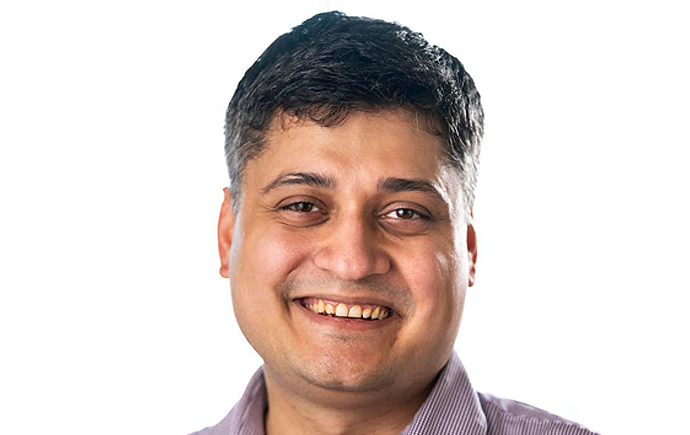
Dr Souvik Chakraborty
- Current position Monitoring and Evaluation Specialist, Whittlesea Community Connections
- Degree(s) PhD Human Geography, Monash Arts
Career Summary:
Dr Souvik is a Monash University PhD graduate whose work creates impact across community organisations, industry partners and local government. With strong research, engagement and evaluation skills, he works at the intersection of development, equity and community‑led practice.
During his PhD, he held teaching, coordination and leadership roles across Human Geography and the Master of International Development Practice program, including serving as Interim Director. His contribution to student learning was recognised with the Monash Arts Faculty Citation for Outstanding Contribution to Student Learning (Early Career), and his doctoral thesis received the Institute of Australian Geographers Award for Dissertation Excellence. These recognitions highlight his strengths in inclusive teaching, capacity‑building and academic leadership.
In his current role as Monitoring and Evaluation Specialist at Whittlesea Community Connections, Souvik applies MEL frameworks, trauma‑informed practice and community storytelling to produce evidence‑based insights for cross‑sector partners. His multilingual ability in Bengali, Hindi, English and German together with professional experience in India, Germany and Australia, enhances his effectiveness in diverse, multicultural settings.
Career Pathway:
- 2024 – Present: Monitoring and Evaluation Specialist, Whittlesea Community Connections
- 2022 – 2023: Interim Director, Master of International Development Practice, Monash University
- 2022 – 2023: Lecturer, School of Social Sciences, Monash University
- 2020 – 2021: Teaching Associate (Human Geography & International Development), Monash University
- 2018 – 2020: Teaching Associate (Environmental Governance, Project Planning, Development Studies), Monash University
- 2014 – 2016: DAAD Scholar – Master’s in Democratic Governance & Civil Society, Universität Osnabrück, Germany
- 2012 – 2013: Policy Research & Implementation Planning, Office of Naveen Jindal (India)
- 2009 – 2010: Research Assistant (Digital Cultures), University of Oregon
- 2008 – 2009: Researcher & Social Media Facilitator, East Kolkata Wetlands Advocacy Project
Awards
- Monash Arts Faculty Citation for Outstanding Contribution to Student Learning (Early Career)
- Institute of Australian Geographers – Award for Dissertation Excellence (2023)
What inspired you to pursue your PhD at Monash, and how did it prepare you to work with community organisations, industry and government?
Monash’s global reputation, together with the expertise of my supervisor, drew me to the PhD program. The Human Geography department (now Human Geography, Anthropology and Development Studies) offered a genuinely interdisciplinary environment where scholars engaged with diverse and socially significant themes. That environment encouraged me to think critically, creatively and collaboratively from the outset.
Throughout my PhD, I worked closely with stakeholders across academia, civil society and government. Looking back, that experience was invaluable. It strengthened my ability to engage across sectors, navigate different perspectives and translate research into practice. These skills now underpin my work in the community and evaluation space.
Your PhD examined India’s development pathways and their impact on tribal and marginalised communities. What motivated you to focus on this area of social justice?
My interest emerged during my Master’s in Germany, where I researched environmental governance in India. While working on my thesis, I encountered the struggle of the Dongria Kondh community in Odisha, who were resisting mining activities on their sacred land. Their story stayed with me. It ultimately shaped my academic direction.
I became deeply interested in environmental justice and in the lived realities of marginalised communities navigating development pressures. My PhD allowed me to explore these questions more rigorously, both within India and within broader global debates.
How did the Monash PhD environment - including supervision, industry partnerships, fieldwork opportunities and research training - equip you with the practical skills needed to work across community, industry and government sectors?
I was fortunate to be mentored by Dr Julian Yates, who guided me in conducting research ethically and meaningfully with vulnerable communities. Beyond supervision, the wider Monash environment was transformative. Being part of a diverse, international cohort created constant opportunities for intellectual exchange across disciplines, cultures and methodologies.
That experience taught me how to work in complex, multidisciplinary settings - skills that have been essential throughout my professional journey.
During your PhD, you held teaching and leadership roles including serving as Interim Director. How did these experiences shape you as a practitioner and influence your approach to capacity‑building?
Teaching at Monash from 2018 onwards was one of the most rewarding aspects of my career. It taught me that leadership, particularly in educational spaces, is about enabling others to thrive. Every student brings their own strengths, and I saw my role as supporting them to recognise and develop those.
As Interim Director of the Master of International Development Practice, I led a highly diverse program with students from more than 28 nationalities. The role required balancing academic leadership with operational responsibilities and navigating complex challenges. It strengthened my ability to lead with empathy, think strategically and adapt quickly. These transferable skills continue to guide my practice today.
How has your involvement in alumni and community engagement strengthened your industry networks and supported your work with emerging scholars and practitioners?
Monash has an exceptionally strong and active alumni community. Even after graduating, I’ve had ongoing opportunities to connect with current students and fellow alumni across sectors. These interactions have been both motivating and grounding. They have expanded my professional network, kept me attuned to emerging ideas and encouraged reflection on my own journey.
It has also been meaningful to contribute back, supporting and mentoring emerging scholars and practitioners as they navigate their own pathways.
How do MEL frameworks, trauma‑informed approaches and your cross‑sector experience guide your approach to community‑centred evaluation?
My teaching experience, particularly in project planning and management, exposed me to practitioners from around the world, many with extensive field experience. Those classroom conversations were deeply enriching. I often saw myself not only as a teacher, but as a facilitator of shared learning.
That perspective continues to inform my evaluation practice. I approach Monitoring, Evaluation and Learning (MEL) with humility, recognising that communities and practitioners hold critical knowledge. A trauma‑informed and culturally responsive approach is central to my work, ensuring that evaluation is not extractive but grounded in respect, participation and care.
You’ve studied and worked across India, Germany and Australia. How does being multilingual enhance your engagement with community, government and industry in diverse, multicultural settings?
I speak English, Bengali, Hindi and German, and I genuinely see this as a strength. Language opens doors, not only to communication, but to understanding cultural nuances, values and lived experiences.
Being multilingual has helped me connect more meaningfully with people across contexts, whether in research, teaching or community work. It has also exposed me to different ways of thinking, which is invaluable in both evaluation and policy settings.
How have your international experience and early work in policy and environmental advocacy shaped your perspective on development and community‑led change?
Working across India, Germany and Australia has fundamentally shaped how I understand development. Fieldwork, in particular, has shown me that meaningful policy and program design must be grounded in lived realities.
Too often, grassroots voices are overlooked in decision making. I strongly believe that engaging directly with communities leads to more effective and more ethical outcomes. My work is guided by that principle of listening first and ensuring that community perspectives inform every stage of the process.
Your awards recognise both your research strength and your commitment to community impact. How have these recognitions shaped your professional journey and the opportunities that followed?
Receiving recognition for my research and teaching has been both encouraging and humbling. It has reinforced my commitment to this work and motivated me to continue refining my practice.
These accolades have also opened doors professionally. They signal credibility and dedication, which can influence how one’s work is perceived. More importantly, they remind me of the responsibility to continue contributing meaningfully to both academia and practice.
Published in March 2026