
Amelia Evans
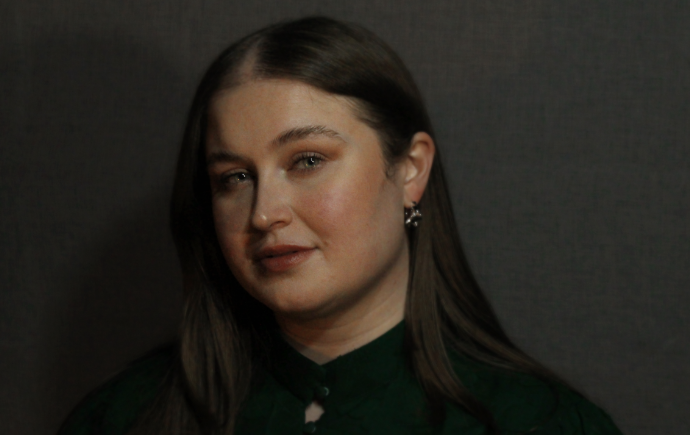
Amelia Evans
- Current position Voice Teacher, Monash University
- Degree(s) Bachelor of Music (Honours), Jazz Voice Performance, Monash University
Career Summary:
Jazz Vocalist, Composer & Voice Teacher
Amelia Evans is a Melbourne‑based jazz vocalist and educator whose artistry is shaped by deep listening, improvisation and a commitment to authentic musical expression. A Monash graduate of the Bachelor of Music (Honours) specialising in Jazz Voice Performance, she has become a respected performer and teacher across Melbourne’s vibrant music scene. Her work spans live performance, composition, ensemble leadership and vocal education, with a teaching practice grounded in musicianship, developing one’s personal ‘voice’ and the joy of sharing music as a universal language.
From immersing herself in the Melbourne jazz community as a teenager to performing internationally in Prato and New York, Amelia’s journey reflects her curiosity, discipline and belief in music as a space for connection, identity and storytelling. Today, she balances a thriving freelance career with teaching roles across secondary schools, private studios and Monash’s Sir Zelman Cowen School of Music and Performance, where she now mentors the next generation of emerging vocalists.
Career Pathway:
- 2025 – Present: Voice Teacher, Monash University
- 2024 – 2025: Headlined the Melbourne Women’s International Jazz Festival, Castlemaine Jazz Festival and the Wangaratta Festival of Jazz & Blues.
- 2020 – 2023: Voice Teacher, various Victorian secondary schools
- 2020: Finalist in the Wangaratta Festival of Jazz & Blues National Jazz Awards
- 2019: Released debut album ‘The First Song’ recorded at ABC Melbourne
- 2017: Travelled to Amsterdam to sing at the Keep An Eye Summer Jazz Workshop, hosted by the Manhattan School of Music and Conservatorium Van Amsterdam.
- 2017: Recipient of the James Morrison Generations In Jazz Vocal Scholarship; offered exclusive recording contract with ABC Jazz.
- 2016 – Present: Jazz Vocalist, Composer & Voice Teacher (Freelance)
Education
- 2016 – 2019: Bachelor of Music (Honours), Jazz Voice Performance
What inspired you to study music at Monash, and why jazz voice?
I always knew I wanted to study music. By the time I was sixteen, I’d already immersed myself in the Melbourne jazz scene, and that world of improvisation, expression and community felt like home. I’d heard so much about the Monash program from musicians I admired, and I knew the calibre of teachers there were some of the best jazz musicians in the country.
Even though the contemporary course was just beginning, jazz was always my first choice. I loved singing, I loved improvising, and I wanted to learn from people who lived and breathed the art form. I wanted to find a place to grow as a musician and human being, and it really did offer me a space to flourish. It’s never too late to choose the path that feels true to you.
How did ensembles and student groups shape your development?
Ensembles were a huge part of my development. You’re allocated an ensemble every year, and each one teaches you something different about collaboration, listening and responsibility. In my third year, I was part of the Australian Jazz Ensemble, where we only performed works by Australian jazz composers. That experience pushed me to work harder and think more deeply about the music being created in our own backyard.
I also worked with artists‑in‑residence through the Monash Jazz Ensembles as part of the Melbourne International Jazz Festival, including Terri-Lyne Carrington, Linda May Han Oh and Ari Hoenig. Collaborating with musicians of that calibre gives you a glimpse into their world — their process, their sound, their discipline. Being in those environments shapes you in ways you don’t fully realise until later. I always encourage students to explore as much as they can; those opportunities stay with you.
How did practical training prepare you for professional work?
My third and fourth years at Monash were pivotal. That’s when I really stepped into the scene with confidence including leading bands, collaborating with other musicians, and understanding what it means to communicate musically in a professional setting.
The weekly masterclasses were especially important. Working with special guests and learning how to collaborate, listen and respond in real time helped me understand the kind of musician I wanted to be. Those experiences informed the direction I took after graduating.
I left Monash feeling ready to work as both a freelance musician and a teacher. Teaching had always been in the back of my mind, and I’ve since worked in wonderful secondary schools across a range of styles, taught private students, and eventually returned to Monash to teach. It feels full‑circle.
Which skills from your degree do you use most in your work?
Theory and musicianship - absolutely. You spend so much time on them during the degree, and it can feel repetitive, but they build the foundation for everything. They helped me become the best vocalist I could be and gave me the tools to develop my own sound.
Composition, arranging and understanding how to shape your voice as an instrument are skills I use constantly. Ensemble work, stage presence, and even knowing how to use equipment properly, all of it feeds into my teaching and performing. Passing those skills on to my students is one of the most rewarding parts of my job.
Were there any standout experiences during your degree?
One of the biggest reasons I chose to study at Monash was the opportunity it gives students to travel. I was able to perform in Prato and New York, which was incredible. Travelling with my closest friends, performing in new environments, and seeing how music lives in different places taught me so much. They are some of my fondest memories from studying at Monash.
What do you find most rewarding about your work?
Being a musician is deeply fulfilling. Music connects us - whether you’re performing, teaching or simply listening. It’s a universal language, and that connection is one of the reasons I was drawn to music in the first place.
There’s also a sense of family in music. The people you play with, the students you teach, the audiences you meet - it all becomes part of your world. Expressing who we are as humans through sound is such a privilege.
Why is jazz performance and vocal education important today?
At its core, jazz is about deep listening - a skill that goes far beyond music. It teaches us to be present, to respond, to understand context and history. Jazz develops the whole musician: language, harmony, tradition, and the courage to improvise.
Improvisation also trains us to be comfortable with ourselves, to find our voice and trust it. Jazz carries stories of resistance, joy, survival and education. Keeping that tradition alive matters.
What advice would you give current students and recent graduates?
For current students: Take advantage of your time on campus. Go to lectures in person, build connections, and spend time playing and practising with your peers. Monash Clayton Campus is like it’s own mini city and you will spend a lot of time there, so make the most of it and enjoy being surrounded by like-minded musicians. These are the people you’ll be playing with for many years to come, and I’m proof of that; I met my band at Monash! Also seek out your tutors, they’re incredible resources and genuinely want to help.
For recent graduates: Stay present in the music scene and go see live music, there’s so many gigs in Melbourne if you know where to look. I know entering the music industry can feel intimidating, but think about the micro instead of the macro, and play the long game. And lastly keep seeking advice, keep finding mentors, and always stay curious.
Published April 2026