
Julia Yelim Kim
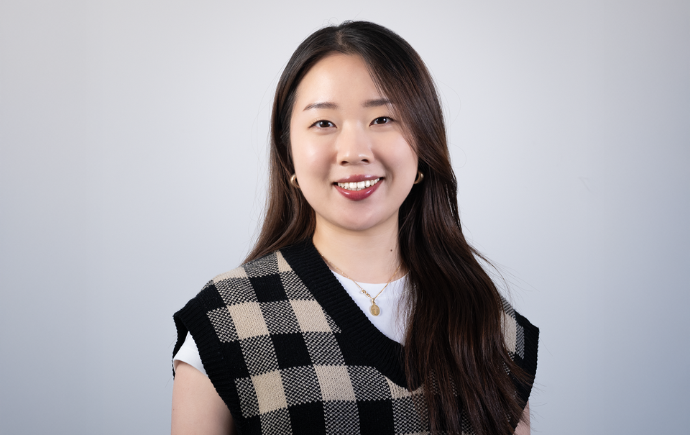
Julia Yelim Kim
- Year completed 2024
- Current position Marketing/Customer Service Representative, Atomy Oceania Pty Ltd
- Degree(s) Bachelor of Arts
- Specialisation Korean and Chinese studies
Career Summary
Julia is a marketing and customer service professional currently working at Atomy Oceania, a global Korean company. A graduate of Monash University with a Bachelor of Arts in Korean and Chinese Studies, Julia has combined her language skills and cultural understanding with experience in marketing, customer engagement, events, and international business. Her role has allowed her to bridge Australian and Korean workplace cultures, communicate with global teams, and contribute her understanding of the Australian market. Through her experiences, Julia has developed strong intercultural communication, adaptability, and organisational skills, while continuing to explore the opportunities that come from working across cultures.
Career Pathway:
Present - Marketing / Customer Service Representative, Atomy Oceania Pty Ltd
-
Career Journey questions
What led you to study a Bachelor of Arts at Monash?
I actually started with a double degree in Law and Arts at Monash and then changed to a Bachelor of Arts, focusing solely on Korean Studies.
I love learning, and I knew that doing an Arts degree would give me the opportunity to study broadly. I could choose from a lot of different electives, and being able to explore and learn about lots of different things was really appealing to me.
I think I also learned how to question things in depth — like asking why things are the way they are in Korean society and analysing those ideas more deeply. It was very interesting, and I came out of the degree with a much deeper understanding and a broader perspective.
How did you transition from university into your current role at Atomy Oceania?
During my degree, I worked as a Christmas casual as a customer service representative at Atomy. After my studies, I was offered a position in the marketing team, so it was just a very natural transition into the role.
Atomy is a global Korean company. What has been the most rewarding part of working in a Korean-based company?
I think you get the best of both worlds. I get the benefits of Australian workplace culture, like having a really casual and close relationship with my colleagues, while also experiencing the benefits of Korean work culture. Understanding the work ethic, the workflow and the mindset within the Korean workforce has been really inspiring for me. It’s something I’ve been able to apply to lots of different areas of my life, and I’m really grateful to have experienced that combination of cultures at work.
Because we’re a Korean-based company, we’re also closely connected with our headquarters in Korea and our global branches. There’s a lot of communication between our teams, so we’re constantly learning from our colleagues in different countries. I think that’s been really rewarding because you learn from each other’s differences, encourage each other and find ways to relate to one another, even though you come from different cultural backgrounds.
One of the biggest highlights for me has been being able to travel internationally and experience this firsthand. I’ve had the opportunity to travel to Korea, visit our headquarters and connect with Korean employees in person. It’s very different from simply learning about Korean culture online — you’re actually experiencing it within the workplace and building connections with people who share the same workplace and values.
I’ve also recently travelled to China and Indonesia, so it’s not just limited to Korea. Being able to experience different cultures, connect with colleagues around the world and learn from those experiences has definitely been one of the most rewarding parts of working here.
How has your cultural understanding or language background supported your work in marketing and customer engagement at Atomy?
Speaking Korean has definitely helped, particularly because Atomy is a Korean-based company. Being able to communicate directly with our headquarters in Korean means I can often get faster responses and communicate more efficiently.
But I think more than the language itself, it’s the cultural understanding behind the language that has been really important — understanding the meaning behind certain words, the nuances, and what someone is actually trying to communicate. It’s almost like a form of non-verbal communication. Having intercultural understanding has helped me empathise with others and understand where they’re coming from, which I think is a really important part of effective communication.
Within the workplace, even when people are saying the same thing, it can sometimes mean something different depending on their cultural background. Understanding those communication styles and nuances has been a key learning experience for me and something I’ve been able to apply in my work. Even though I’m Korean-Australian, learning these cultural and communication differences has still been a learning curve for me.
At the same time, I’m able to bring my own experience of growing up in Australia to the company. Our headquarters don’t necessarily know what it’s like to be an Australian consumer or what the Australian market is like, just as some of my colleagues may not fully understand what it’s like growing up in Australia. So I’m able to bring that perspective to the table and help bridge the gap between the Korean headquarters and the Australian market.
I think that ability to understand different perspectives, interpret the nuances in communication and bring my own cultural experience to the workplace has been really valuable in my role.
What skills or experiences from Monash helped you thrive in your current role?
Intercultural studies, particularly social studies and linguistics, have been really helpful. Coming into a workplace where I’m part of a global team, having that understanding of different cultures and communication styles has been incredibly valuable.
There are things that you might take at face value, but when you’re working across cultures, you need to understand the meaning and cultural context behind what someone is saying. I took a unit on intercultural communication, which looked at how we communicate across different genders, ages and cultures, including the differences between being direct and indirect. That has helped me immensely in understanding and interpreting different interactions at work.
My Korean Studies units were also really valuable. We studied and compared cultures across Korea, China, Indonesia and Japan, so I wasn’t just learning about language and history, but also about social interactions, cultural values and the specific ways different cultures communicate. We also had opportunities to speak with students who had studied these cultures or were part of them, which gave me different perspectives. That experience has been really useful in a global company.
I think this understanding has been particularly important when working in a Korean company. Inevitably, there can be misunderstandings in communication — for example, if your manager is Korean and communicates more indirectly, or comes from a different working culture and has different expectations or values. Understanding where they’re coming from helps you navigate those situations, resolve conflicts and know how to adapt your own communication style.
I’ve also developed a lot of management and organisational skills through university. Managing different units, assignments, timelines and deadlines, as well as communicating with lecturers and tutors, naturally helped me develop skills that I’ve needed in the workforce.
Communication itself has also been a continuous learning experience for me. I’ve learned a lot through observing how other people communicate, including my manager, who has been great at teaching me how to communicate with upper management in a Korean workplace. You learn when to be more direct, how to adapt your communication to the situation, and why certain approaches produce better results. I think you just have to keep learning through observation — asking yourself, ‘How do they communicate, and why does their communication flow so well?’
Were there any Monash experiences, such as internships, networking events, or student activities, that supported your career development?
My company participates in events such as the Korean Festival and the Film Festival, where I’ve had the opportunity to see and connect with different Korean organisations, including the Australia-Korea Business Council (AKBC) and government representatives. Looking back, I think these kinds of events would have been a great opportunity during my studies to connect with people from different organisations and learn more about the career pathways and opportunities available to Korean Studies graduates.
I also know that some of my peers were involved in helping prepare for events like the Film Festival, and I think those experiences would have been really valuable. They provide opportunities to develop management and organisational skills, build connections and gain a better understanding of how Korean Studies can be applied beyond language learning. It’s about situating yourself within a broader community and being exposed to different ideas and possibilities.
I also think staying connected with my teachers, lecturers and professors was really helpful. I learned a lot from them, both during my studies and after graduation. I reached out to Hyein (Ellen) Cho, for example, and she was incredible in telling me about different opportunities and career pathways that I could explore. The lecturers are really approachable, and I think maintaining those connections, even after graduation, can really open up your thinking and help you discover opportunities you might not have considered.
Your role involves marketing, customer service, events, and business travel. How do you manage these varied responsibilities in a fast‑paced, global work environment?
I’m still learning and still quite new to managing all of these responsibilities, but I think one thing that has really helped me is understanding the bigger picture. I don’t see them as separate responsibilities — customer service, events, marketing and business travel all come together as one bigger role, and they all support each other.
For example, what I learn from customer service, attending events, hearing feedback from customers and learning about their product experiences all feed into my marketing work. When I travel and speak with colleagues overseas, I also gain new perspectives and insights that I can bring back to what I do. All of those experiences help me understand what I need to produce, what the audience needs and how I can do my job better. Having that holistic view has really helped me manage everything.
I’ve also found it helpful to understand what I want to get out of each experience, whether that’s learning something new, developing a skill or simply enjoying myself. For example, when I travel interstate, it’s not just about learning about the demographics of a particular market like Perth. I also try to find little things that excite me about being there. That external motivation makes a difference.
I think the same applies to overseas work travel — I ask myself, ‘What do I want to learn from this?’ It makes everything feel less like a list of responsibilities and more like a journey that I’m enjoying and learning from.
Ultimately, I think it comes down to mindset. I try to approach my responsibilities with gratitude and appreciation, and to be as positive and optimistic as I can while always looking for opportunities to learn. I’m still learning how to position myself and navigate the workplace, which I think is also particularly important in a Korean work culture, but I’m learning along the way and enjoying the journey.
What advice would you give to students studying a Bachelor of Arts who are interested in careers with global or Korean companies?
I mentioned this during Careers Week, but I think one of the most important things is to make use of the people around you at university — your teachers, coordinators, professors and peers. Our professors are much more connected than I initially realised, and they’ve opened up so many pathways and helped me see opportunities that I hadn’t considered before. They can also give you advice on how to move forward, so I think it’s really important to stay connected with them, even after you graduate.
The same goes for your peers. You never know what opportunities might come through the people you meet at university or through events and connections you make along the way. I’ve personally experienced opportunities through those connections, so I think staying involved and building a community around you is really valuable. In particular, finding a community that connects you to Korea or Korean culture can open up a lot of opportunities. What that community looks like will be different for everyone, but I would encourage students to keep their options open and be willing to explore different pathways.
Of course, continue to work on your Korean language and cultural skills, but I also think it’s really important to develop your foundational workplace skills, such as communication, interpersonal skills and management. Those are the skills that will help you flourish in the workplace, while having strong Korean language skills can be an added advantage, particularly when working with Korean or global companies.
Finally, think about what you can bring to the table. Know your strengths and weaknesses, and think about what experiences and perspectives you can bring to a global team. In my case, I’m Korean and grew up in Australia, so I can speak both languages fluently. I’m able to use my Korean language skills for interpreting and translating, but I can also bring an understanding of the Australian market and the cultural context of both Australia and Korea. I think it’s important to be aware of the assets you already have and where you can continue to develop. That’s where you can really leverage your strengths.
I’ve also noticed that within the Korean community, people often ask those around them if they know someone who might be suitable for a position. So, especially in a relatively close-knit community like this, staying connected and building genuine relationships can be really valuable. You never know where those connections might lead.
Interviewed by Sandy Nguyen Monash Korean Studies Research Hub Coordinator, 6 August 2026.