
Kanika Sood
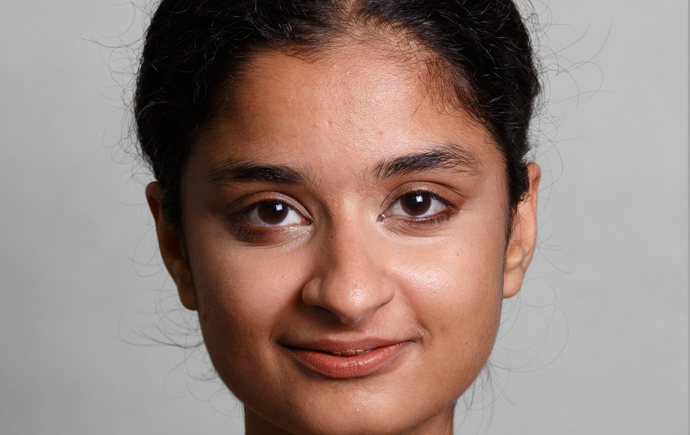
Kanika Sood
- Year completed 2016
- Current position Associate Editor, FS Private Wealth at Financial Standard
- Degree(s) Master of Journalism
Career summary
Kanika Sood left India for the first time in 2016 to complete a Masters of Journalism at Monash, excelling in her studies and earning an internship at The Age during the second year of her degree before spending three months as a graduate intern at media giant Bloomberg. Kanika is now an Associate Editor and Senior Journalist at trade news publication Financial Standard, based in Sydney.
Career pathway
2019 – Associate Editor, FS Private Wealth at Financial Standard
2019 – Senior Journalist, Funds Management at Financial Standard.
2017 – Graduate Intern, Bloomberg
2017 – Intern, Crikey
2017 – Intern, The Age
2016 – Master of Journalism, Monash University
2010 – Bachelor of Computer Science and Engineering, Guru Nanak Dev Engineering College (Punjab, India)
What made you decide to move into journalism at Monash after studying computer science?
My degree was in computer science, but I was interested in both journalism and computer science from a very young age. When I was at school, the local supplement of a national newspaper had a kids section where they would give you a brief and ask kids to write about something like what they thought about the amount of homework they were getting, so I would do that. Email wasn’t that popular then, so you had to print it out and go to the editor’s office and give it to them, and then they would publish it with your byline and photo in the paper, so that was my first newspaper byline.
In India there’s a lot of pressure to go into maths or science degrees, but I was also interested in computer science, so I was happy to do that. After completing my bachelor’s degree, I did some travelling by myself in the south of India, and it really got me curious about the economies of the little towns that I was travelling through, and finding out more. So it sparked my interest in pursuing journalism again.
I was looking at where to study, and after considering a few universities including Columbia in New York (which was too expensive), I decided that I wanted to study in Australia and specifically at Monash because it seemed like the right fit for me.
How helpful were your industry placements at Monash in preparing you to work in a newsroom?
I’d been volunteering for a community newspaper from around the start of my degree, and so some of my assignments were also getting printed in it so that was good, but my work was not going through traditional newsrooms and editors. So when Julie Tullberg, a Journalism lecturer and the internships coordinator, helped me get an internship at the The Age it was a good experience in producing work that fit mainstream media guidelines. I was given a story to write, I wrote it and it was put out without much editing, which was a really nice confidence boost. It was also evidence that I had learnt a lot from my education and volunteering and this was the right path.
I undertook a number of other internships including at Crikey. The internships were invaluable to me because they helped open doors for me – especially as I was an international student who didn’t have a network of friends or family in Australia. I was also shy. The journalism degree can teach you the basics and then push you into a place where you can learn the rest through on the job experience.
What advice do you have for current and prospective journalism students on getting a job in the industry?
Having experience doing actual reporting and publishing stories is so important for getting a job in journalism. Knowing how to handle your sources, and treating information carefully and respectfully, the ethics side of reporting is really important.
Probably the biggest advice I have is you’re not going to get a job straight away at The Age or one of the bigger newspapers we all wanted to work at. But go have a look at trade publications or a news source in a specific industry. It’s a really good way to build a deep sectoral knowledge of a beat, establish a track record of breaking exclusives.
For example, maybe go work at a dentist magazine. It will only be read by dentists, maybe prints 5000 copies a month, but you’ll pick up contacts in the industry, you’ll get to know the regulators and members of the dental association. And then maybe in a few years, you’ll be able to take this network across and go work as a health reporter at a big paper.
If you report original stories and know your beat really well, you’ll have a lot of trust with your readers.
Also I can’t stress this enough -- rewriting a press release into news story is a basic skill. It is your original reporting that will get you the readers, keep you interested in your job and keep you employed in the industry.
So don’t be afraid to pick up your phone to cold call potential sources, do your research before you interview and triple-check your facts!
Can you give us some examples of stories you have written?
The bulk of my daily reporting is tracking how funds management businesses are building their firms in Australia. My newsroom is often the first to report on businesses or products shutting down, adding new products, tenders coming into the market and C-level movements.
My editor and I also often have to chance to report industry trends before they make it into press releases and research reports.
Sometimes, the stories are complex and unfold over a period of time rather than all at once. These kind of stories can turn into series and are the most rewarding for a reporter. They are also the ones that need the most trust and collaboration with my editor.
Last year, I worked on a series of stories about the corporate regulator’s intervention in a section of the managed funds market. Australia was the first jurisdiction to allow actively-managed funds to trade on the stock exchange as exchange traded funds (ETFs) without needing to disclose their portfolios daily. These active ETFs had amassed over $3billion from retail investors when I broke the story that the Australian corporate regulator (Australian Securities and Investments Commission, or ASIC) was set to ask the country's two stock exchanges to stop admitting new active ETFs as it reviewed pricing concerns in the sector. We were ahead of ASIC officially announcing the ban. We also followed the story to its end, reporting exclusives on a subsequent glitch in pricing, the date and expected contents of ASIC's review report, and finally the lifting of the ban.
This year, we’ve worked on a still-developing series about a fast-growing financial services company called Sargon Capital which defaulted on its debt and eventually changed hands to new owners. We built a comprehensive picture of its creditors, culminating (at this point) in the company going into liquidation. We also examined the identities of the buyers of its most lucrative assets, and the executives the new buyers brought in to run the new company.
Written by Arts Journalism intern, Ed Bourke, 2020