
Lionel Diao
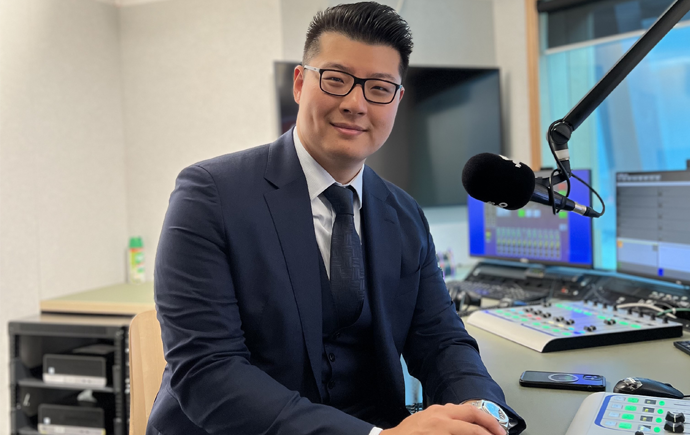
Lionel Diao
- Year completed 2018
- Current position Communications Advisor, Liberal Party of Australia
- Degree(s) Bachelor of Arts and Bachelor of Education (Honours); Juris Doctor
- Specialisation Chinese Language & Culture Studies
Career Summary
Lionel is a Monash Arts graduate whose career spans government, international business, law and education. He began as a Portfolio Manager at PICA Group, Australia’s largest property services and consultancy firm, during which time he also trained and qualified as a lawyer. He later moved to China to serve as Engagement Manager for the American Chamber of Commerce, where he strengthened trade and diplomatic relations across sectors.
Since 2018, Lionel has taught at Monash University as a Teaching Associate, where he remains deeply committed to civic education and inclusive dialogue. He now works as a Communications Advisor for a major political party, shaping policy messaging and public engagement strategies.
Lionel credits his Monash Arts degree with sharpening his critical thinking and communication skills, and with instilling the ethical and global outlook that underpins his work across borders and disciplines.
Career Pathway
Aug 2024 – Present: Communications Advisor, Liberal Party of Australia
Jul 2018 – Present: Teaching Associate, Monash University
May 2024 - Aug 2024: Lawyer, Cornwalls
Apr 2023 – Apr 2024: Engagement Manager (Legal & Policy), AmCham South China
Jan 2022 – Apr 2023: Portfolio Manager, PICA Group
Career Journey Questions
Why did you choose to study at Monash?
I chose to study at Monash for both personal and practical reasons. My sister was the first in our family to attend university in Australia, and she had such a positive experience as a Commerce/Arts student at Monash. Living with her when I first moved to Australia at 15, I saw firsthand how much she enjoyed her time there, and how successful she became in her career. That left a strong impression on me.
Later, after attending Open Days and speaking with the Monash recruitment team, I felt that Monash offered more flexibility and better degree combinations than other universities. I appreciated the option to pursue a double degree and the freedom to change directions over time. Monash gave me the space to explore different academic paths, develop professionally, and build resilience through challenging coursework. It just felt like the right fit for me, personally and academically.
How did you get your current position?
It’s actually quite a unique and unexpected journey. I had just returned to Australia for a role as a lawyer in a national practice. At the same time, I was also on the board of one of the largest Chinese community language schools in the eastern suburbs. During that time, I hosted a visit from a Federal Member of Parliament. During the visit, we had a deep conversation about multicultural engagement and how governments can better support diverse communities.
I believe what led me to this position was a mix of factors: my Monash degrees in language, culture and education; over a decade of grassroots community involvement; and professional experience across law, consulting, and property.
I started volunteering at the age of 17 as a teaching aide in one of Australia’s largest community language schools, eventually becoming a sessional teacher and later Secretary to the Board of Responsible Persons. All of this gave me deep insights into community needs and how to engage effectively. So, when the opportunity came to lead the Chinese engagement program for the Liberal campaign, it felt like a bold yet natural next step.
What do you enjoy about your job?
The lead up to the federal election was a tough and intense year, 20-hour days, high-stakes negotiations, and constant pressure. But what I loved most was the challenge. I’m the kind of person who doesn’t shy away from a good fight. Even though the role came with financial sacrifices and wasn’t ongoing, I knew it was a chance to make a real impact.
My favourite part was bringing fresh ideas into the campaign, especially in digital engagement, and helping candidates prepare for incredibly tough environments, including hostile audiences and unpopular policies. There’s real satisfaction in seeing someone you’ve prepared walk into a room fully ready and hold their ground. I saw my role as the brakes, the accelerator, and the oil of the campaign car, not the one steering, but making sure everything functioned smoothly. Above all, I took pride in supporting my stakeholders, no matter what.
How did the Monash Arts community support your growth and ambitions during your studies?
I’m incredibly grateful to have been part of the Monash Faculty of Arts. It shaped both my personal and professional growth. In fact, I began my career with the Faculty while still completing my studies. I’d finished my coursework but hadn’t yet officially graduated when I was offered a role as a Teaching Associate in Chinese Culture and Chinese Studies. That opportunity came through Hailan Paulsen, one of my lecturers and a true mentor. She saw potential in me and gave me my first teaching role in her 'From Translation to Interpreting' units.
Her support, especially while I was preparing for my NAATI exam, was instrumental, and that kind of personal encouragement meant a lot. And more importantly that role, I also learned the importance of rigour and attention to detail, from how she planned lessons to how she supported students. Her professionalism set a standard I still carry with me today. This early experience shaped my work ethic and gave me a model of what thoughtful, student-centred teaching looks like, something I’ve taken with me into every role since.
The skills I gained during my Arts degree, particularly in Chinese translation and interpreting, also gave me a head start in the legal world. As a junior lawyer, I didn’t get legal work straight away; I had to prove myself first. My language skills gave me a practical way to contribute early on, translating contracts and preparing documents, and helped me build trust with senior colleagues. Monash didn’t just give me knowledge, it gave me confidence, mentors, and an enduring professional community.
Were you actively involved in any activities that enhanced your university experience, such as student organisations or internships?
Yes, definitely. One of the most impactful experiences was joining the graduate program at PICA Group, as a Portfolio Manager. That was my first full-time role in Australia, and it really helped bridge my studies with professional experience.
During university breaks, I returned to China and completed several part-time analyst internships with leading global consulting firms, all highly competitive roles. Monash’s strong international reputation, particularly in the QS rankings, gave me a real edge. Having Monash on my resume opened doors and set me apart.
From your perspective, why are Arts, Humanities and Social Sciences crucial for today’s society?
If you’d asked me this before the recent federal election, I might have answered differently, but recent events have really shaped my thinking. We’re living in a time of global uncertainty and domestic division. In this context, the Arts, Humanities and Social Sciences are more important than ever. They train us to read between the lines, to think critically, and to navigate complexity with empathy and ethical understanding.
There’s a common misconception that the humanities aren’t “job-ready.” I strongly disagree. Democracy isn’t run by algorithms or legal codes alone, it’s guided by human values, by character, by compassion. These disciplines remind us that the measure of a society lies not in what it builds, but in what it values. That’s the role of an Arts education: to help us, as individuals and as a nation, find our true north.
I was fortunate to study units like Understanding Contemporary Australia and Foreign Policy Analysis, often as one of the few non-native English speakers. Those classes helped me appreciate Australia’s unique identity, a country built not through revolution but through peaceful negotiation, and to wrestle with what it means to define modern Australian values in a multicultural society. Grappling with questions of identity, inclusion, and historical memory has profoundly shaped the way I think and work today, particularly in political and legal spaces.
You're less likely to learn this kind of reflective, values-based thinking in law or commerce, you learn it through the humanities. It’s what separates a politician from a statesman. It’s what gives professionals in any field, whether law, business or government, the wisdom to lead with integrity. That’s why I always encourage younger family members to study Arts at Monash, ideally as part of a double degree. It teaches you how to think, how to engage, and how to contribute meaningfully to society. That’s not just important, it’s essential.
What advice would you give to current students on how to make the most of their time at Monash, both academically and socially?
My advice might sound a little unorthodox, but it comes from the heart. In today’s world, earning a university degree isn’t enough. It’s not about collecting credentials, it’s about letting the experience transform you. Use your time at Monash to discover something bigger than yourself. Raise your hand. Wrestle with ideas. Find a mentor. Be bold.
We are incredibly privileged in Australia, university is accessible here in ways it simply isn’t elsewhere. We shouldn’t take that for granted.
Monash offers more than academic knowledge, it offers community. You’ll meet some of the most inspiring people: lecturers, peers, future leaders. Seek them out. Break bread with people you disagree with. Go to Orientation and talk to the Liberal Club, the Labor Club, even the Victorian Socialists. That’s the Australia I love. We don’t silence each other, we listen, we debate, we learn. That lawn at Monash is democracy in action.
Above all, be present. This isn’t just the start of your career, it’s the start of your contribution to society. Don’t just tick boxes, make it count. As one of Australia’s youngest universities, Monash has produced brilliant minds across every field, from Parliament to the CSIRO. You’re now part of that story. So be brave. Wrestle with ideas. Leave no regrets. I spent seven years as a student at Monash, and another seven as a staff member on that beautiful campus. It shaped who I am, and I wouldn’t change a thing. Be proud to be part of this community, and make sure you leave it better than you found it.