
Marc Russouw
Marc Russouw
- Year completed 2014
- Current position Performance Engineer, Abt Sportsline, Germany
- Degree(s) Bachelor of Engineering (Honours) and Bachelor of Arts
- Major(s) German studies
Career summary
Marc Russouw completed a double degree in Bachelor of Arts, majoring in German, and Bachelor of Aerospace Engineering at Monash University in 2014. He has always had a love of fast cars and motorsport, and started working as a Student Aerodynamicist with the Monash Motorsport team as well as tutoring in Engineering and Spanish throughout his double degree. Marc has since worked extensively across the engineering industry with companies including Rolls-Royce, Red Bull Racing and Audi. He is currently a Performance Engineer for Abt Sportsline in Germany.
Career pathway
2019 – Performance Engineer, Abt Sportsline, Germany
2015 – Performance Engineer, Audi, Germany
2014 – Infiniti Red Bull Racing Engineering Performance Academy Finalist, Red Bull Racing & Infinity, United Kingdom
2014 – Graduate with a Bachelor of Arts (Languages)/Bachelor of Aerospace Engineering, Monash University
 Why did you decide to study a Bachelor of Arts (BA) alongside a Bachelor of Engineering?
I chose Engineering and Arts because it was strongly linked to what I studied in high school. I mainly took science and maths subjects in school, but also studied German. My goal was always to get into engineering, and I thought that developing the language skills I learnt in school would be a great asset to my future job prospects. I thought it would broaden the scope of opportunities available to me and expand the possible environments I could work in. As a lot of car manufacturers are in Germany, I thought I would gain a competitive advantage over my counterparts in English speaking countries to be able to speak the language fluently as well as have the cultural competency to work well within their teams.
I really enjoyed my Arts units. I undertook German because I wanted to further my education from high school, and I also studied Spanish from scratch. It was really enjoyable because the staff were great, and the teaching was high quality. It balanced out my heavy maths subjects really well, and it was refreshing to interact with lots of people in Arts, compared to Engineering which was a bit less social. I was able to have very different discussions and arguments with my fellow arts students, and it allowed me to use different sides of my brain and be more creative. I enjoyed being able to leave one side of campus, which was engineering, and walk down to the Menzies area where the Arts was and completely shift my thinking.
My Arts units allowed me to work on my communication skills as well as gain the intercultural competency skills, which has been really beneficial to me when interacting with so many people from different cultures and backgrounds. The breadth of fascinating units I could choose from meant within the Arts areas was great too as I was able to study things I hadn’t considered before.
Studying languages at Unviersity doesn’t mean you just learn how to speak and read the language. You learn about the culture, the people and its history. For example in German, we were learning about its history and society in the 1900’s. And I have to say at the time, I didn't really think it was very relevant. But when I came here, I started understanding why this culture and people think and react a certain way in certain events - things like a pandemic, or terrorist events. The country’s past has a lot to do with the way they behave and react. It just gave me a lot of depth and understanding, which allowed me to connect with the people a lot better.
What does your current role at Abt Sportsline entail?
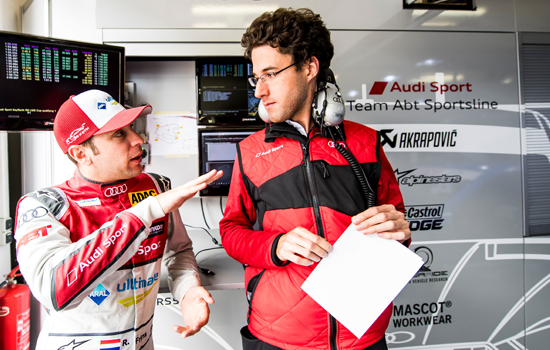
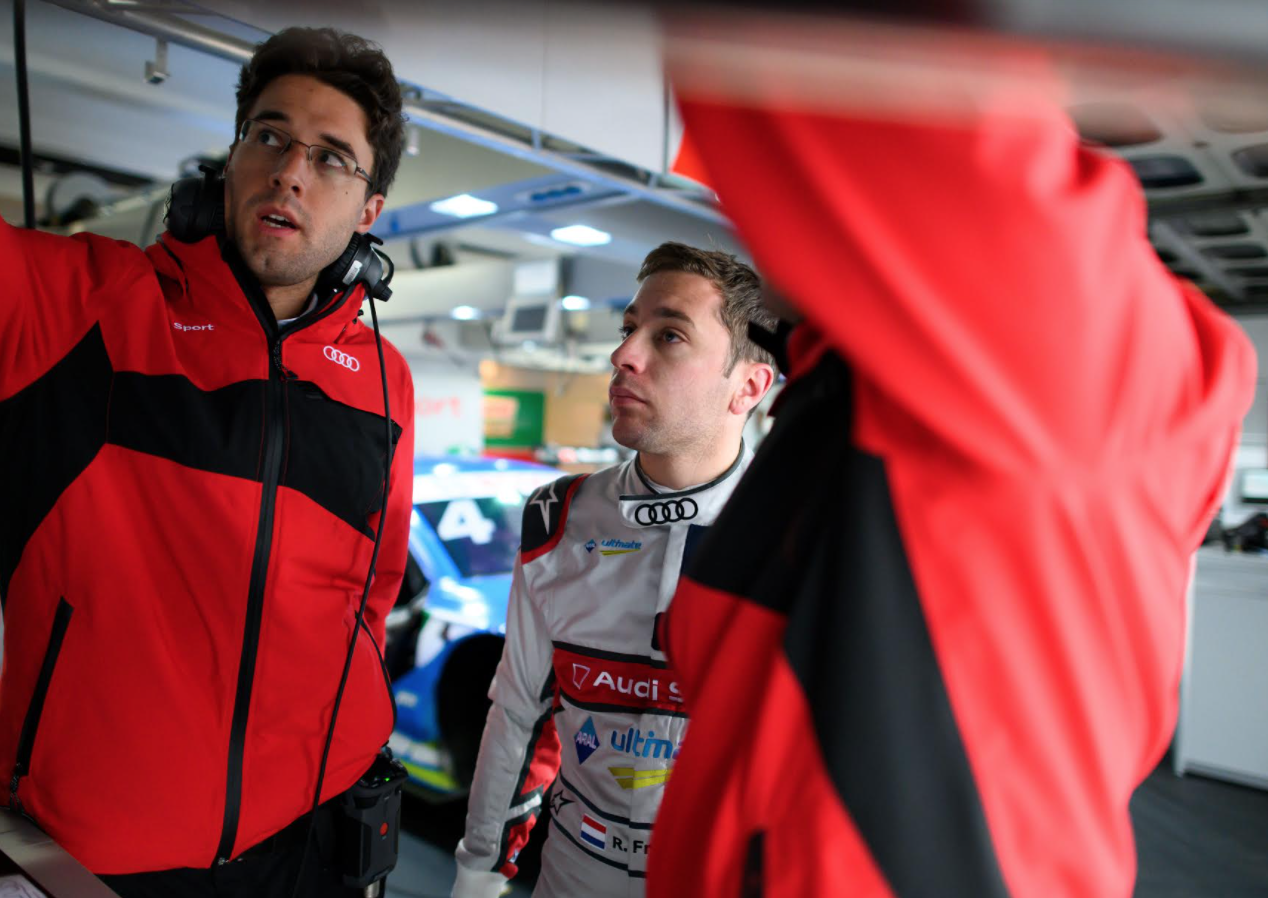
Abt Sportsline is a subsidiary of Abt, which has been around for close to 200 years. They basically take vehicles from an Audi or Volkswagen manufacturer, then tune and change them to increase their performance for the motorsport industry. In motorsport, changing products and improving the performance of the car is a lot quicker than the general automative industry – because it’s not for the general public. So I can see the impact I have a lot faster. In my position as a data engineer, I work closely with race drivers to analyse their race data. Whenever a car comes in from doing some laps on the track, I’m looking at the data, seeing what can be done to improve the performance, and then speak with the driver and team about how this can be done. For example, I’ll show the driver where the car is slower or stronger compared to other drivers on the track. I also interact a lot with the mechanics, conduct planning sessions and discuss how we can improve car performance.
I work in a lot of different environments – it’s not just sitting in the office, it’s also moving around a bit, on the racetrack and away from home. I could be in the office reviewing what we did in the last race or travelling to a racetrack overseas. Last year I went to Chile, Mexico and Saudi Arabia for work. You basically go where the cars and drivers go. It’s really interesting as it’s always something new. You’re always experiencing something different.
What are the skills you gained in your BA that you have utilised in your career?
Being able to converse in German has given me a lot of confidence in approaching the people I work with in their own language, as I am able to convey information easily. I’ve been able to live in a country that doesn’t speak a lot of English and integrate really well into life in Germany. I think no matter what field you’re studying, being able to effectively communicate to another group of people really broadens your opportunities.
When I started at Audi, they definitely asked me about my language skills and whether I could speak German. I think that having a good command of a language other than English can set you apart from other applicants, especially if you’re thinking about working in an overseas company. It puts in the interviewer’s mind that you, as an applicant, are able to cooperate effectively within a company team, and no additional concessions need to be made for you.
So even though I don’t directly work in the Arts field, undertaking a Bachelor of Arts has given me an extra dimension in the industry I ended up in. I still use German on a daily basis – speaking it, writing it and reading texts and reports in German. So, it has really helped me tremendously.
Do you have any advice for those who are interested in Engineering and considering a Bachelor of Arts?
I would say definitely go for it. If you’re worried about missing out on one side of theory with either course by doing a double degree, that’s actually not the case. The course is structured well, and the workload is really reasonable. There were very few clashes in timetabling and lots of opportunities to catch up if there ever was a clash.
If you have subjects from school that you were good at or are interested in furthering skills in an area other than engineering, it’s really helpful to undertake a Bachelor of Arts as well. At the end of the day, whether you’re going down an engineering or an arts and humanities path, your future career will require you to be flexible and adaptable in some way. The skills you learn in both degrees will be very important in building that flexibility. Whichever career path you choose, you will always have the knowledge and skills that you’ve developed at university.
Interview written by Monash Arts journalism intern, Ruth Ong, January 2021