Marianna Linnik Hansen
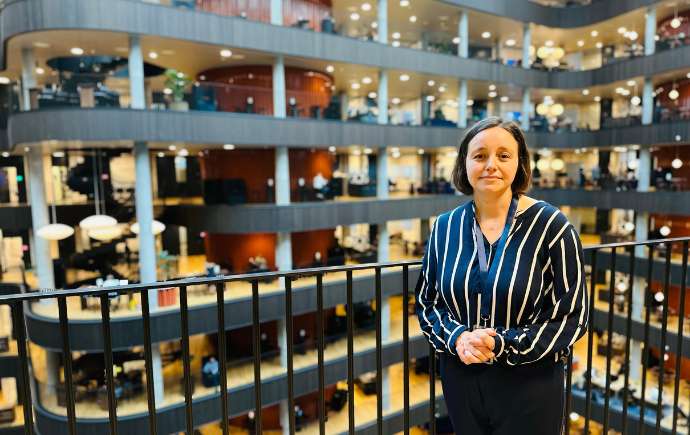
Marianna Linnik Hansen
- Year completed 2009
- Current position Head of Anti Bribery, Corruption, Tax Evasion and Internal Fraud at Danske Bank
- Degree(s) Bachelor of Laws (Honours) and Bachelor of Arts
Career Summary
Marianna Linnik Hansen has been Head of Anti-Bribery, Corruption, Tax Evasion and Internal Fraud at Danske Bank since 2026, where she leads work across financial crime compliance in an international banking environment. A Monash University graduate with degrees in Arts and Laws, her studies and exchange experience in Copenhagen helped shape her international outlook and interest in working across cultures and organisations.
After beginning her career in international development in Australia, Marianna moved to Denmark and transitioned into financial crime compliance, building experience across operations, risk, and anti-money laundering. Now based in Copenhagen, she leads a team focused on navigating complex regulations and implementing effective compliance frameworks across an international organisation. Her journey highlights how an interdisciplinary education, adaptability and a willingness to pursue new opportunities can lead to an international career in an unexpected field.
Career Pathway
Feb 2023 - Present: Leader of Anti Bribery Corruption and Tax Evasion at Danske Bank
Sep 2021 - Feb 2023: Team Leader at Danske Bank
Apr 2021 - Sep 2021: Senior Risk Officer at Danske Bank
Jan 2020 - Apr 2021: Risk Officer at Danske Bank
Nov 2017 - Jan 2020: Senior Operations Officer at Danske Bank
2017: Project Manager at CLEAN - Innovating Green Solutions
2017: Customer Due Diligence Specialist at Nordea
2014 - 2016: Student Assistant at Danish Institute for Human Rights
2014: Associate at Global CSR - Consultancy
2011 - 2013: Policy/Project Officer at the Australian Department of Foreign Affairs and Trade
2010: Lawyer (Graduate program) at MinterEllison
2009: Inter at the Australian Department of Foreign Affairs and Trade
2008 - 2009: Research Assistant at Monash University
2006: Intern at Global CSR
-
Career Journey questions:
Why did you decide to study a Bachelor of Arts at Monash?
When finishing school, I wasn't entirely sure what path I wanted to take and didn't want to limit my options. Studying Arts was a great way to keep doors open because of the broad range of subjects available.
While I also completed a Bachelor of Laws which was much more specialized, Arts gave me the time and freedom to explore different disciplines and figure out what truly interested me.
Could you walk us through your career journey from Senior Operations Officer to Head of Anti-Bribery, Corruption, and Tax Evasion at Danske Bank?
My path started during a student exchange to Copenhagen through Monash, where I took Arts and Law subjects. After graduating and working in Australia for a few years, I relocated to Denmark.
Finding my footing took time, so I began conducting informational interviews with people across different sectors. One conversation led to a contract role on a major bank's anti-financial crime program. Though I didn't have a background in financial crime at the time, I quickly realized how dynamic and critical the field was.
I joined Danske Bank during a pivotal period of transformation. Following significant regulatory scrutiny and fines around anti-money laundering, the bank invested heavily in building robust financial crime defenses. Being in a growing, high-priority department created incredible professional growth.
I started as an Operations Officer handling due diligence, moved into a Risk Officer role establishing policy requirements, and was promoted to Senior Operations Officer. As the department expanded, I put my hand up to lead a team. It was a combination of being in the right place at the right time, but also being ready to step up and seize opportunities as they appeared.
What does a typical day look like in your current leadership role?
While every day brings something different, a large portion of my time is spent in meetings across our international network. I work in a hybrid setup, three days in the office and two from home.
Much of my work revolves around translating complex legal frameworks into operational reality. For example, with new EU anti-money laundering regulations taking effect soon, a typical day involves aligning with project teams, consulting Legal on statutory interpretations, and guiding subsidiaries on implementation across different regions.
The other essential part of my day is team leadership. I regularly meet one-on-one with team members to delegate work, answer questions, provide guidance, and support their ongoing career development. It's a balance of high-level strategy and practical execution.
How did your Monash Arts background and exchange experience shape your path into compliance?
At Monash, I majored in Geography and International Development because I was passionate about poverty alleviation and global issues. I actually began my career in Australia on the graduate program at AusAID (now part of DFAT).
While my Law degree provides the analytical skills needed to interpret regulations, my Arts degree developed my understanding of people, cross-cultural contexts, and organizational dynamics, all essential for effective change management. My exchange to Denmark also sparked my interest in building a career abroad.
How does working culture in Denmark differ from Australia, and what is key to succeeding in a Nordic environment?
I work in a very international environment where English is widely used. Larger companies across the Nordics generally operate in English, and Danes speak it exceptionally well, so I'm fortunate that I don't need Danish fluency to work professionally. Because of that global environment, my experience is heavily centered around international collaboration, though distinct Danish influences shine through.
One of the standout aspects I love is the genuine Nordic focus on work-life balance. Even though I’m leading three teams, I work 30 hours a week so I can prioritize being a present mum for my two small children. Coming from Australia, where working hours were noticeably longer, that level of flexibility is rare.
In Denmark, even for those on full-time schedules, offices often empty out by 4:00 PM. People typically work from 8:00 AM to 4:00 PM and head home, reflecting a clear cultural boundary that values life outside of work. Having the privilege to build a rewarding leadership career while maintaining that personal balance is something I feel very grateful for.
For Monash students preparing to study in Copenhagen, what advice would you give about making the most of their exchange experience, especially for building connections and networks?
Firstly, meet as many people as possible and dive into extracurricular activities. Making international friends is usually seamless because other exchange students are equally eager to connect. Meeting local Danes, however, takes a bit more deliberate effort since they tend to be more reserved and maintain long-established friend groups from school.
A key piece of wisdom I discovered later in my time here is that Danes form new friendships through shared hobbies and extracurriculars, whether that's joining a sports team or signing up for a creative class like ceramics. There are endless opportunities through the university and wider community to get involved. Participating in those hobby-based activities is where Danes open up and build new friendships. It's something I started doing later in life that transformed my social network, and it's definitely the best approach I'd recommend to incoming students.actually where Danes tend to meet new people and become more open to forming new friendships. That's been a little gem of wisdom that I discovered quite late.
Looking back at your journey from Monash to your current leadership role, what advice would you give to students hoping to build an impactful international career?
Say yes to the opportunities that come up. Opportunities will appear, so be patient, be ready, and don't be afraid to speak up.
At the start of my career, I assumed that if I simply did a good job, people would notice and promote me automatically. But in reality, it helps to be proactive and say, "I would like more responsibility, and I'm interested in taking on more." Don't wait for people to come to you, be vocal about your ambitions in a humble way, plant those seeds, and let things develop over time.
I’d also strongly encourage seeking out constructive feedback. Before I stepped into my first leadership role, I asked my departing manager point-blank: "I have this idea that I might want to manage people, but please be honest. If it's a terrible idea, just tell me, you're leaving anyway, so you've got nothing to lose!" He gave me reassuring encouragement along with specific areas to refine, which gave me the exact blueprint I needed to take the next step.
Departure moments and exit interviews are incredible opportunities to get unvarnished, open feedback. Whenever someone leaves my team today, I always take the time to ask what worked well and what could have been better. Be clear about your goals, actively seek honest input, and don't hold back when new doors open.
Interviewed by Zoe Wilkinson, Bachelor of Global Studies, as part of the Monash Arts Global Industry Connections (GIC) project, 15 September 2026