
Miranda Day
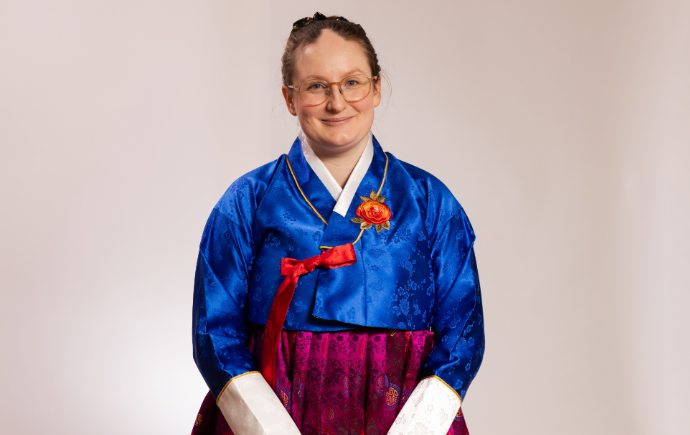
Miranda Day
- Year completed 2016
- Current position Founder and Designer, MiranDay Designs
- Degree(s) Bachelor of Arts
- Specialisation Korean studies
Career Summary
Miranda Day is an Australian hanbok designer and the founder of MiranDay, a brand that brings together traditional Korean clothing and contemporary design. Through her creative practice, she explores the cultural significance of hanbok while reinterpreting its forms, fabrics and aesthetics for modern audiences. Her work reflects a passion for Korean culture, fashion and cross-cultural creativity, introducing hanbok to audiences in Australia and beyond.
Career Pathway
2015 - Launched MiranDay Designs
2017 - YTN TV interview with Sun-ok Yang
2017 - Launch of Australian Korean Young Professionals Association - Invited to share Hanbok at Launch
2018 - Melbourne International Millinery Competition - Fashion Show with Hanboks
2018 - Minus18 Fundraiser Fashion Show
2018 - RAW Fashion Show Collaboration with Milliner Cathering Ellen
2019 & 2024 - Sydney Korea Festival - Hanbok Experience
2019 - FOMA (Fashions of Multicultural Australia) Exhibition, Sydney
2019 - Gyeongju World Cultural Expo Fashion Show, Gyeongju, South Korea
2021 - Australian Korean Foundation 60th Anniversary Publication Feature
2022 - Powerhouse Sydney Lunar New Year Celebration Hanbok Lecture & Fashion Show
2022 - Present Monash Language (Korea) Week - Hanbok Experience & Fashion Parade
2022 - Melbourne University - Hanbok Lecture & Fashion Show
2023 - Seollal Hanbok Celebration Workshop at Korean Cultural Centre Sydney
2023 - Lunar New Year SBS Interview
2023-2025 Melbourne Korea Festival - Hanbok Experience & stall
2023 - Canberra Korea Festival Fashion Show
2025 - SBS 50 Years Lunar New Year Celebration - Hanbok Experience
2025-2026 - Hallyu! & Beyond Hanbok Exhibition
-
Career Journey questions
Why did you choose to study the Bachelor of Arts at Monash, and what inspired you to major in Korean Studies?
I first became interested in Hanbok while studying a Diploma of Costume for Performance and wanted to learn more about its history and cultural significance. I soon realised that to truly understand Hanbok, I needed to learn the language as well. When exploring study options, I discovered Monash's strong Korean language program and its connections with universities in South Korea. After attending an Open Day and speaking with staff, I knew Monash was the right choice.
One of the main reasons I chose Monash was the opportunity to study abroad. In 2016, I spent six months on exchange at Yonsei University in Seoul, where I strengthened my Korean language skills and deepened my understanding of Korean culture and Hanbok. I also completed a project exploring Hanbok's cultural significance, visited the National Folk Museum and learned from Hanbok designers. These experiences expanded my understanding of the craft and helped shape the direction of my career.
What first drew you to Korean culture and hanbok, and how did studying Korean language and culture shape that interest into a career?
I first discovered Hanbok while attending a film festival during my Diploma of Costume for Performance. I was immediately captivated by its beauty, vibrant colours and the variety of styles. As part of my Diploma, I chose to create Hanbok wedding garments for a costume project. Researching the garments, their history and their cultural significance sparked a deeper interest in Korean culture and traditional dress. At the time, access to information in Australia was limited, so learning Korean became a way for me to explore the culture more authentically. Through my Bachelor of Arts, I gained a much deeper understanding of Korean history, traditions and the cultural context behind Hanbok.
The more I learned, the more my passion grew. I also began connecting with members of the Korean community, which strengthened my appreciation of the culture and helped turn a personal interest into a career.
What key skills did you gain from your Arts degree that you use in running your fashion and design business today?
One of my main goals at Monash was to develop my conversational Korean through both my coursework and exchange experience. The teaching staff were exceptional and created many opportunities to practise and build confidence in speaking the language. I wanted to reach a professional level of communication so I could discuss specialised topics such as textiles, costume design and fashion. Working closely with lecturers and language teachers played an important role in achieving that goal.
Beyond language proficiency, my Arts degree gave me the confidence to pursue new opportunities, build professional relationships and engage with diverse communities. These experiences helped me develop strong communication skills and create meaningful networks that continue to support my work today.
How has your understanding of Korean history and culture informed the way you design contemporary Hanboks?
I always knew that the understanding of culture and history plays a big influence on fashion. Civilisation and historical events shape what people wear at different points in time. With Hanbok, I became interested in how the styles have changed over the centuries. The lengths of skirts and jackets evolved, and I learned about how different social, cultural, and historical periods influenced design.
What fascinated me most was that Hanbok is not only traditional clothing. It has continued to evolve and is still evolving today. Modern Hanbok designers often draw inspiration from different historical periods, such as the 16th and 17th centuries, and incorporate those design elements into contemporary pieces. I also learned about embroidery, colour symbolism, and the significance behind many aspects of Hanbok design. There is so much meaning woven into different elements of Hanbok.
Today, I enjoy using those traditional influences in contemporary ways. For example, I am currently working on a BTS-inspired design project. It is really exciting to explore different periods of Hanbok history and reinterpret them for a modern audience.
How has networking and community-building shaped your journey, particularly in expanding your brand presence within Korean communities in Australia?
I have been incredibly lucky to be introduced to many amazing members of the Korean community in Australia and overseas. They have taught me so much about Korean culture.
One of the first people to support me was Ellen (Hyein) Cho, who introduced me to the Korean Consulate and Embassy and is now part of Monash Korean Studies. Through these connections, I became involved in a range of cultural events, volunteer opportunities and collaborations with Hanbok designers, including Ms Sun-Ok Yang, and organisations such as the Korean Cultural Centre in Sydney.
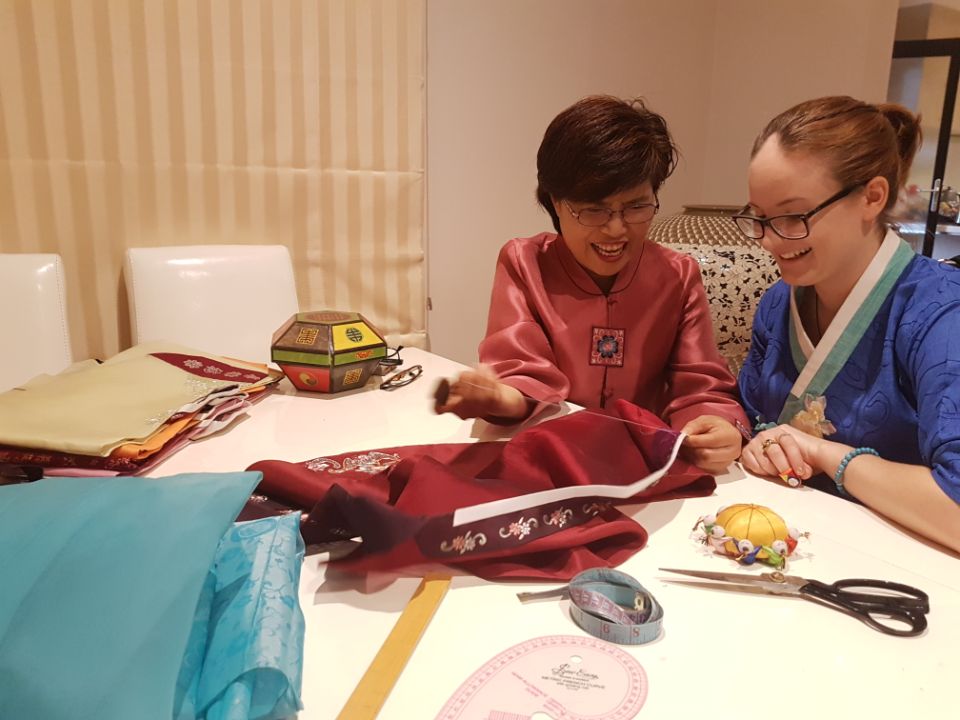 The Korean community has been incredibly supportive of MiranDay and my goal of promoting Hanbok. Being able to provide opportunities for people to wear Hanbok in Australia helps many reconnect with their cultural heritage and traditions.
Building networks and fostering community has been one of the most meaningful parts of my journey. I have been involved with Korean societies, cultural festivals and the launch of Australian Korean Young Professionals. During COVID-19, I was also featured in an Australia-Korea Foundation publication celebrating 60 years of Australia-Korea relations.
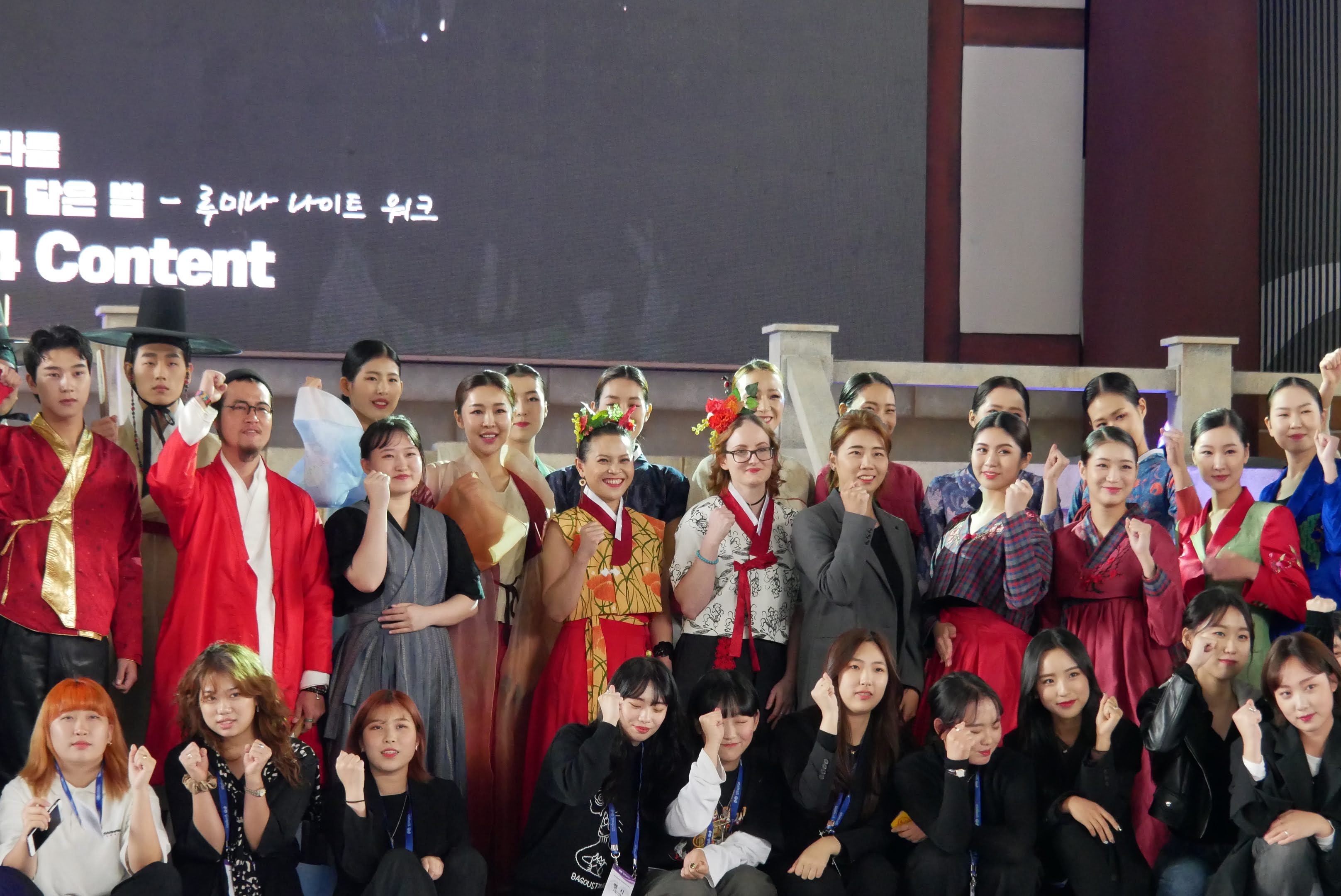
More recently, I was selected to showcase my work at the National Museum of Australia's Hallyu! The Korean Wave exhibition in Canberra. One of the Hanbok pieces displayed was a design I originally created for the 2019 Gyeongju World Culture Expo. Following an interview with Fashions of Multicultural Australia, I was invited to participate in fashion shows and a television interview for YTN Korean TV (YTN Korean TV), helping expand awareness of Hanbok and connect with wider audiences in Australia and Korea.
 What does a typical day look like and what services do you offer at MiranDay Design Studio?
At the moment, I am working full-time and have been very busy with BTS coming to Australia next year. They are helping to promote Hanbok and Korean culture, and I have been creating commissioned pieces related to the concert. I also produce ready-to-wear designs and spend a lot of time communicating with customers and working in the studio to create custom garments.
In addition, I offer Hanbok rental services for photoshoots, weddings, and special occasions. There has been growing interest in Hanbok for weddings, which has been wonderful to see.
I have also been running craft workshops and Hanbok try-on experiences, including events at Monash University and upcoming Korean festivals. There are always multiple projects underway, which keeps me very busy. It’s been really rewarding to dedicate my time and energy to something I love.
What was it like returning to Monash as an alumna to support events such as Korea Week?
It has been fantastic. I love coming back to Monash and seeing how much the program has grown. When I studied there, it was a relatively small program, and it is incredible to see how many students are now involved. I really enjoy being able to share my experiences with current students.
It feels very special, and I hope it sparks interest in Korean language and culture for others. It may even become their passion, just as it became mine. If I can inspire that curiosity, I will be very happy. I love sharing and promoting Korean culture, and it means a lot to be able to do that through Monash.
What advice would you give to students considering a Bachelor of Arts or majoring in Korean Studies at Monash?
There are so many different ways Korean language skills can be used. Having a second language is incredibly valuable. It changes the way you think about the world and opens you up to new perspectives and opportunities. Once you have learned one additional language, learning another often becomes much easier. Language learning broadens your mindset and allows you to connect with people and cultures in a much deeper way.
Make the most of every opportunity available to you. Take part in extra programs, events, and activities whenever you can. Not only will you meet new people, but you will also have valuable opportunities to practise and apply your language skills.
Conversational Korean can be challenging, so the more opportunities you have to use it in real situations, the better. For me, one of the most beneficial experiences was studying abroad on exchange. I met so many amazing people, and beyond the language skills I gained, the experience gave me confidence, independence, and lifelong friendships.
Monash was incredibly supportive in making that possible and was there to guide me every step of the way.
Interviewed by Sandy Nguyen Monash Korean Studies Research Hub Coordinator, 3 August 2026.