
Rebecca Jane Jones
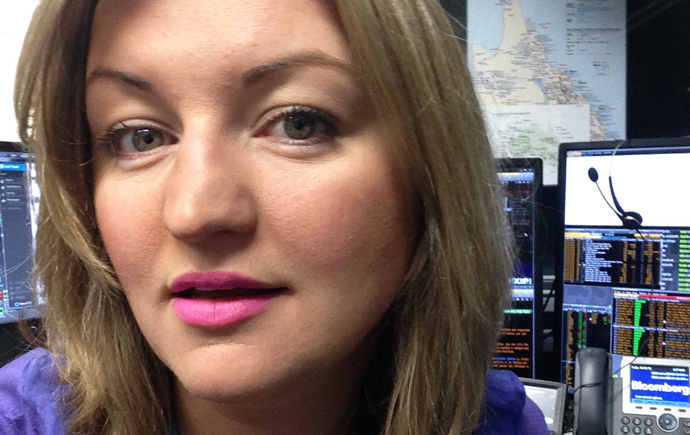
Rebecca Jane Jones
- Year completed 2018
- Current position Managing Editor for Australia and New Zealand at Bloomberg
- Degree(s) PhD (Creative writing)
Career summary
Dr Rebecca Jones is the Managing Editor for Australia and New Zealand at Bloomberg, the first woman to hold this role in Australia. Bloomberg is one of the world’s leading financial news organisations that globally produces roughly 5,000 stories a day and has earned more than 800 awards since it was founded in 1990 – including the 2015 Pulitzer Prize for explanatory reporting. Rebecca is also a Diversity and Inclusion Champion for the greater APAC newsroom and Co-head of the Australia and New Zealand D&I Committee at Bloomberg.
She graduated with a Doctor of Philosophy from Monash University in 2018, with her thesis, Moses in Egypt: Crossing Boundaries to Informed Narration. She also undertook her Bachelor of Arts with Monash.
Career pathway
2021 – Managing Editor for Australia and New Zealand, Bloomberg
2019 – Member at UN Women National Committee Australia, UN Women Australia
2018 – Melbourne Bureau Chief, Bloomberg News
2018 – Business Council Member, National Gallery of Victoria (current)
2018 – Industry Mentor, RMIT University (current)
2018 – Doctor of Philosophy (Creative Writing), Monash University
2017 – Volunteer, OzHarvest (current)
2017 – Global Curation Editor/Editor, Asia Equities
2012 – Editor, First Word Asia
2012 – Master of Arts (Writing), Swinburne University
2008 – Team Leader, Southeast Asia and Oceania Breaking News
2006 – Editor, U.S. Breaking News
2005 – News Editor, Australian Associated Press (AAP)
2004 – News Editor, Money Management & Super Review Magazine, Reed Elsevier PLC
2004 – undertook Bachelor of Arts, Monash University
Why did you decide to undertake your PhD at Monash?
I have been long fascinated with the intersectionality of the fields of journalism, research, history and creative writing. I wanted to investigate how these distinct, yet often complementary subject areas could combine to solve problems, gain insight into and enrich our collective understanding of the human condition and how life is represented through literature.
What did you want to achieve going into your PhD at Monash?
As a career journalist who deals primarily with breaking news, with rolling event horizons in a 24-hour news cycle, undertaking doctoral research enabled me to dig into areas I was very interested in, and gave me agency to explore concepts with a level of rumination not traditionally afforded to a working reporter in a busy newsroom.
What was the topic of your research and what drew you to the creative writing PhD?
My thesis, Moses in Egypt: Crossing Boundaries to Informed Narration, seeks to map out a multi-dimensional strategy for writing about people who lived in the past of whom little evidence now remains, inspired by Virginia Woolf’s essay “The Death of the Moth” and the rich textual outcomes she produces writing about the life and death experience of a seemingly insignificant creature.
This strategy is illustrated in the creative component accompanying this thesis, Moses in Egypt. Moses in Egypt is an Australian historical narrative presented in a combination of literary non-fiction and fiction, clearly delineated by chapters. What cannot be resolved with non-fiction is presented as fiction via a creative strategy I call “informed narration”. This hybrid narrative form incorporates techniques used by historians, creative writers, and journalists. I argue that the success of a “moth” narrative rests on co-operation as well an acceptance of the philosophical relevance of multiple relations with the past, including both fact and fiction. The aim of informed narration is to cross the boundaries between the three writer groups, to optimise the evidence and analysis available on a subject and to use this evidence and analysis to inform the creation of fiction where gaps are present.
Who was your academic supervisor/s?
I was fortunate to be mentored by Dr Ali Alizadeh, Senior Lecturer, Literary Studies at Monash University as my main supervisor and Dr Sascha Morrell, Lecturer in Literary Studies. I was also guided for part of the PhD journey by Associate Professor of English Language and Culture, Anna Poletti from the University of Utrecht (formerly of Monash University).
How does your PhD help you in your career today?
My PhD taught me many things, from patience and time management on a practical side, to the need to continually question established literary conventions and ways of doing things. It helped me approach problems systematically, see the links between ideas, evaluate arguments, and analyse information in new and deeper ways.
As a newsroom leader, I draw on the skills gathered during my time as a doctoral researcher daily. The PhD helped me build stamina to complete a long-term project and surfaced new strategies for approaching teamwork and source building. The milestone presentations helped me articulate my ideas more succinctly, and the Q&A sessions bolstered my confidence as a subject matter expert.
What was your favourite aspect of your PhD? Were there any moments/highlights that stood out to you?
My favourite aspect of my studies, other than doing the actual research, was my meetings with my supervisors. After every session I would walk away invigorated, challenged and bursting to get back to my laptop. The personalised attention I received as a candidate was world-class and completely flexible to suit the scope and nature of my project as well as my personal circumstances and life commitments.
What does your current role at Bloomberg entail?
I am the Managing Editor for Australia and New Zealand at Bloomberg, and very proud to be the first woman to hold this role in Australia. I oversee news coverage across five bureaus in the region. At the core of this role I work to break news, build a diverse and inclusive newsroom and help talented individuals teach their potential.
Through our philanthropic partnerships I am pleased to participate in the National Gallery of Victoria Business Council as well as UN National Committee Australia. I also helm a mentoring program with my bureau and university students.
Do you have any advice for students wanting to pursue a PhD at Monash?
Every day is a once in a lifetime opportunity. I would encourage anyone even slightly considering a PhD to just go for it. I continued to work during my candidature and even gave birth to twins mid-way. My supervisors and the graduate research support staff were there for me every step of my journey. Monash University offers such world-class innovation, infrastructure and intellectual support it is impossible not to achieve your academic goals provided you are willing to put in the work. Completing my PhD realised a lifelong dream of mine, and I will use the skills and knowledge I gained for the rest of my life.