
Riyadh Sidat
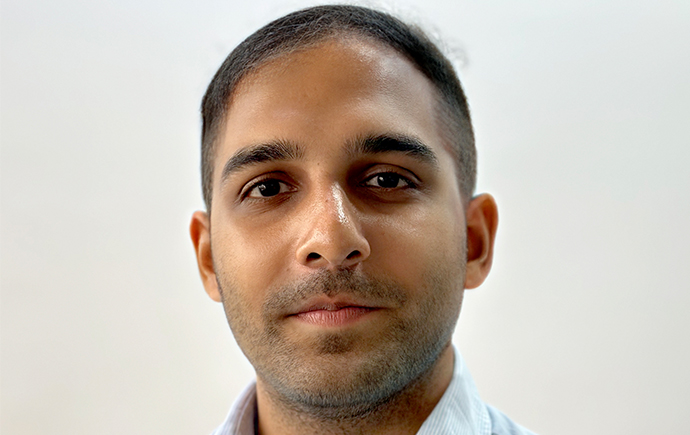
Riyadh Sidat
- Year completed 2019
- Current position Humanitarian Affairs Officer, United Nations OCHA
- Degree(s) Master of International Development Practice
Career summary
Riyadh Sidat is a dynamic and results-oriented professional in the field of international development and humanitarian assistance. Riyadh, a 2019 graduate of Monash University's Master of International Development Practice program, has carved an impactful career path marked by his motivation, versatility, and unwavering commitment to finding solutions to global challenges. Currently serving as a Humanitarian Affairs Officer at the United Nations Office for the Coordination of Humanitarian Affairs (OCHA), Riyadh brings a wealth of experience in crucial areas such as peace and security, humanitarian affairs, post-conflict peacebuilding, good governance, and security sector reform.
Career pathway
Present - Humanitarian Affairs Officer, United Nations OCHA, Bangkok, Thailand
2022 - Humanitarian Affairs Officer, Cabo Delgado, Mozambique
2020 - Founder/Consultant, LokDev, Cabo Delgado, Mozambique
2020 - Political Affairs, United Nations, Nairobi, Kenya
2019 - Master of International Development Practice, Monash University
2019 - Intern Advisor, Fundasaun Mahein, Timor-Leste
2017 - Interim Professional, UX Information Technologies, Maputo
Why did you choose to study the Master of International Development Practice at Monash?
One of the biggest motivating factors was how highly regarded the course was. I had heard very good things about Monash and from friends who studied in Melbourne. The city of Melbourne itself was also a bonus.
Monash offered the opportunity to acquire practical experience in international development through the course, which excited me. It offered a diverse range of units and the ability to gain a wide range of skills, such as project management, and leadership. The study environment was touted as very multicultural, and I had heard about the rigorous disciplinary core curriculum offered.
The course seemed well suited to my interests and my career aspirations. It offered a multidisciplinary approach to the theory and practice of sustainable development. It focused on understanding and tackling issues regarding inequality, wealth disparity, international security, the environment, and other big issues happening in the world. Monash offered the possibility to understand more of what's happening around me and how I can engage with it and be an agent of change in my community and on a global level.
What opportunities did Monash offer for professional growth?
Monash allowed me to embark on a journey to Timor-Leste where I undertook an international internship with an NGO specialising in security sector reform. This experience immersed me in a unique context where I learned about a new culture, a unique history and current social and political issues. The internship offered a different perspective and challenged my preconceived thoughts and opinions about international development. Engaging with real-world professionals during this internship encouraged me to critically analyse my work and experiences, fostering valuable insights and growth.
I also grew through campus life. There were a lot of associations and clubs available to join. The amazing campus life helped me explore new and familiar topics and challenged my beliefs. I had some enlightening experiences that moulded me toward my current profession. I engaged in a lot of sports - such as football - which had a positive impact on my well-being and study-life balance. I joined the debating club and the Monash Socialists. I took part in regular MIDP events on and off campus regarding a vast array of topics, such as politics, the state of development around the world, professional growth, and networking. All these experiences gave me the necessary tools to develop my professional career.
Was it a smooth transition from finishing your master's to your current role?
As you are close to finishing your master's, the urgency to find a new way into the new professional life can be exciting. There was a lot of frustration and anxiety to understand the next step. There are emotional days in which self-doubt may appear. Fortunately, Monash made available some key pathways to gaining work in my field. In some of my units, I was mentored by professionals in the field. They provided support and encouragement and answered questions about which websites to search for suitable positions and how to write a cover letter and a CV. I also took some Monash courses outside my degree, which taught me more about writing a CV and cover letter, submitting a job application, and most importantly, being determined and persistent.
After finishing my degree, I submitted close to 70 applications to jobs around the world. A couple of weeks after finishing the course, I received only one request for an interview. I then started an internship with the UN in their regional headquarters in Nairobi, Africa. It was not a smooth transition, but with the support of professors and family, I had the belief, the confidence, and the patience to keep applying and trying.
Were there any professors who made a significant impact on your learnings and journey?
I am grateful to my professors, each of them gave me critical advice and provided me with the self-belief and the tools I needed to engage effectively in my professional career, which has had a positive impact on my personal life as well. They were realistic about what we would face in the field of international development and humanitarian assistance. As professionals in the field, they provided an in-depth landscape from a theoretical and practical basis, demonstrating through their own experiences. The professors made me more grounded about the work that I would be engaged in and what the challenges were going to be. They equipped me to think critically, be adaptable and flexible, and understand the specificity of context in this field of work.
How have the skills and topics covered in your course influenced your approach to your work?
We covered a vast array of topics in the course. I studied the foundational theory and practice of development. We gained practical skills in project management and how to be adaptive to multicultural settings. I also chose specific units focusing on conflict security and development and contemporary security topics aligned with my interests. These topics massively influence my current work in humanitarian affairs because they explain the complex intersections between security and sustainable development, its challenges and cover diverse cultural and geopolitical contexts.
The units focusing on security developed my knowledge and understanding of relevant topics regarding the nexus between security and development. They addressed how security and development interplay in conflict-affected environments and the challenges that need to be addressed. We engaged critically in discussions about the role of international organisations, peacekeeping, nuclear disarmament, gender in security, human security, geopolitical rivalries, and post-conflict peacebuilding. One such discussion touched on the issues posed by a pandemic - such as their effect on international security - prior to the COVID-19 pandemic.
The course provides in-depth knowledge about national security risks, challenges, and risks posed to vulnerable people and their environments. Today, we have diverse conflicts, geopolitical rivalries, climate change, and a recent pandemic, which all exacerbate humanitarian needs. It is a complicated operating environment that is likely to become more complex over the coming decades.
How do you stay up to date with current trends and best practices in your field?
It can be difficult to study outside work, but I put in a lot of effort to consistently learn new skills in my field. I consume a lot of literature relevant to my work. Many things impact my work, so I read about security and development economics, trade, climate security, leadership and emotional intelligence. Reading up on the current state of these topics provides me with an ongoing big picture and understanding of how these topics interplay in my work. Monash also exposed me to key sources for gaining good analysis and opinions about the state of the world.
I also spend quite a lot of time improving my linguistic capabilities by trying to learn new languages. In the UN, understanding a variety of languages is a highly regarded skill. The organisation has five official languages, so I’ve tried to learn a few. I try to learn more as it gives me the confidence to be an even better professional in multicultural environments.
What are the key skills that you took away from your course?
The key skills I learnt included technical skills as well as soft skills. The hard technical skills included project management, policy analysis, and policy analysis and effective reporting.
Regarding soft skills, learning in a multicultural environment with colleagues and professors from around the world provided me with great insight and the ability to dialogue with different nationalities and cultures. It is a crucial skill in a globalised world to adapt to different contexts and ensure your communication is effective in these places. Importantly, I was provided with an understanding that there's no one way to do things. In the development sphere, the same rule applies as there's no one way to do development.
I did some units within the course related to multicultural environments. I engaged in theory about the different communication styles between different cultural backgrounds. This theory helped to develop my cross-cultural communication skills and intercultural understanding. I also developed my negotiation skills, which are useful in my role for the UN, as I work to persuade key decision-makers to advocate for and amplify the voices of the most vulnerable.
Tell us about your role as the Humanitarian Affairs Officer for the United Nations OCHA.
I work within the agency of the United Nations, which coordinates humanitarian responses worldwide. We work with all other UN agencies, NGOs and civil society around the world responding to natural disasters and in conflict settings to coordinate the humanitarian response and amplify the voices of the most vulnerable. We support the humanitarian community to help people in need in sensitive areas. My role in the regional office of OCHA for Asia Pacific is to support the country offices in the region and surge to support countries in crisis. We also support the regional coordination mechanisms to ensure effective coordination in our thematic areas.
Is there a particular accomplishment or contribution that you've made in your role that stands out the most to you?
Working in my home country has given me a great sense of accomplishment. I had the privilege to serve in the North of Mozambique in a complex emergency. I was with OCHA, supporting the coordination and working with all the stakeholders in the region. I engaged with and supported the government in responding to the displacement of people due to conflict.
I was humbled to be there working for a UN agency in my own country, supporting my own people. It gave me great solidarity and urgency to address their needs. We managed to support the affected populations in hard-to-reach areas where assistance was not reaching. I was preparing and leading missions to volatile areas with the support of dedicated professionals. Each of them specialised in their own specific field. During my work, I interacted with diverse stakeholders using key diplomatic skills, tough negotiations, and trying to reach a consensus. More importantly, the relief and joy of the people who lost their livelihoods finally getting assistance is what we, as humanitarians, are working on.
What advice do you have for students who want to pursue a similar career path?
As development and humanitarian professionals, we work in very difficult environments. Therefore, it's always important to have a humble and solution-driven mindset and strive to achieve a certain goal. You must work to serve the people, to provide relief and to amplify their voices. You must do your best to help people achieve justice and freedom. This involves finding innovative ways to give them dignity and empower them to be active agents in their communities. You don't need to work in the UN or a specific organisation; this can be done even at a community level by hearing what they believe is the best for them.
Lastly, always be humble and honest about what you can and cannot do. Always admit your mistakes and try to learn from them. Be persistent in the face of deadlock and adversity. You're always going to be your own biggest supporter and advocate. Connect with people. Ask for advice and support when you need it. And always try your best to achieve your goals.