
Ruchira Kakkad
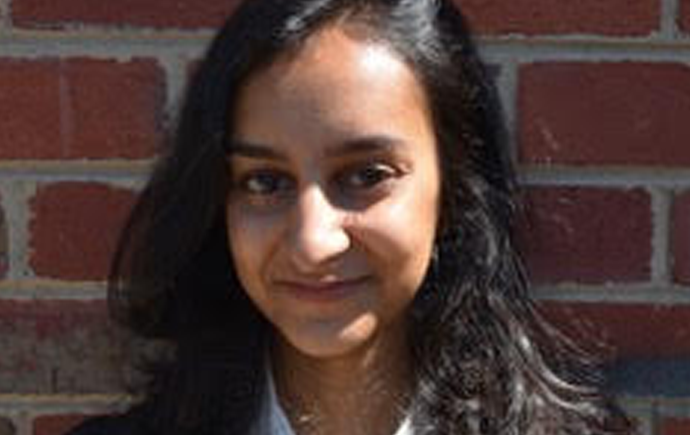
Ruchira Kakkad
- Year completed 2016
- Current position Policy Officer for Gender, Peace and Security, Australian Government
- Degree(s) Bachelor of Arts (Honours)
- Major(s) German studies
Career summary
Ruchira Kakkad graduated with a Bachelor of Arts, majoring in German, from Monash University in 2016. She went on to receive Honours from Monash in German Studies in 2019. Since graduating from her Bachelor, Ruchira has worked for the Australian Government as an International Policy Officer and then as Policy Officer for Gender, Peace and Security.
When Ruchira was in high school, she decided to pursue engineering at university and wanted to study German because she felt that Germany would offer better prospects for this career path. It was only by undertaking her major in German Studies as part of her Bachelor of Arts, as well as her student exchange and research internship overseas, that she realised her passion lay in international relations, the humanities and social sciences. As a result, she started investigating careers in the Australian Government.
Career pathway
2020 – Policy Officer for Gender, Peace and Security, Australian Government
2019 – Graduated with a Bachelor of Arts (Honours) in German Studies from Monash University
2017-2020 – International Policy Officer, Australian Government
2016 – Graduated with a Bachelor of Arts (German Studies) from Monash University
Why did you decide to study a Bachelor of Arts at Monash?
Initially, I was undertaking a double degree in Engineering and Arts because I thought I wanted to be an engineer. I also really enjoyed my humanities subjects at high school, and was keen to pursue this area of interest at university.
I undertook French as a minor, building on my high school studies. My interest in taking up German stemmed from the fact that I thought at the time that there would be more opportunities to work as an engineer in Germany. I also wanted to learn another language and was curious about German. Ultimately, I found that my Arts degree was a great balance to the technical and mathematical aspects of Engineering.
What were some highlights of your time at Monash?
The exchange program was the main highlight of my time at Monash. I was able to develop my independence and learn practical skills. It was scary and challenging, because it was the first time I left home for an extended period, but it gave me a real opportunity to learn so much more about myself and my abilities.
It was so valuable to be in an environment that encouraged me to learn a language in the most practical way possible. I was able to engage with people who were native German speakers, and that was a fantastic way to push myself and expand my skills.
Monash was supportive and flexible in allowing me to split my one-year exchange between two different universities. I studied in Munich and Berlin and ended up staying longer to undertake an internship.
While I was on exchange, I took a break from Engineering to re-evaluate what I wanted to do. Even in my internship at an engineering company in Mannheim, my role wasn’t so much in engineering as it was working on implementing a service management system in the company. It involved undertaking research, engaging with different stakeholders – including local German businesses – and producing a set of options for senior management to agree upon.
After those experiences overseas and returning to Australia, it became clear to me that I wasn’t too keen on pursuing a career in the engineering field. Instead, I decided to focus on my Bachelor of Arts, take on diverse work experience and apply widely for graduate opportunities.
How did you start working for the Australian Government?
My sister played a valuable role in introducing me to the options I had available. She was already working at the Australian Government and suggested that I explore roles in the public service. I ultimately applied for a number of government graduate programs at the state and federal levels. Defence was one of the programs I was offered and I was particularly attracted to it because it was such a broad program in a large organisation. I felt that it would allow me to experience a number of diverse roles and better understand what interested me. This was ideal because I didn’t have a specific or clear idea of what jobs or career I wanted to pursue.
Tell us about your career after graduating from the Bachelor of Arts
I completed the Defence Graduate Program directly after graduating from my Bachelor of Arts. After completing the program, I worked on Australia’s defence and security relationship with Pacific Island countries, managing our cooperation, engagement and partnerships across the region. I spent around two years in that team and was fortunate enough to be able to work on different country portfolios and visit these countries on certain occasions.
This role was an eye-opening experience for me. I was able to deeply understand the importance of Australia’s relationship with the Pacific – even beyond a security perspective – which was not something I knew about in great detail before joining the team. It was a unique and valuable experience to understand government priorities when it comes to foreign and defence policy.
In 2020, I was granted the opportunity to work on Gender, Peace and Security with the Department of Foreign Affairs and Trade (DFAT). This was a personal interest of mine and something I was keen to learn more about in a professional capacity. I’ve found it useful and insightful to operate in a thematic environment – as opposed to geographic as I had done on the Pacific – and to explore the challenges and opportunities this approach presents. I am confident that the knowledge and skills I have gained at DFAT will be highly applicable to future roles.
What skills did you gain from your bachelor’s degree that you can apply to your work?
My Arts degree taught me the fundamental skills of being able to write, research and communicate effectively with other people. These are essential skills that help you regardless of the job you have. I found that my writing improved dramatically from when I graduated high school to when I started work as a direct result of the things I learnt throughout my degree.
I was also able to learn a new language, which in turn helped broaden my worldview and strengthen my understanding of different cultures. Beyond learning how to speak or read another language, I developed my intercultural competence – being able to understand and relate to people from diverse backgrounds and cultures. This has contributed to how I have engaged in my professional life, especially working in international policy.
Arts gives you so many transferrable skills that are highly relevant for a multitude of workplaces. I think this also translates to recruiters in recognising the breadth of these transferrable skills.
What advice would you give to students who are considering a career in policy?
Speaking in hindsight, I think it’s important to start early when considering your options after university – where you might want to work or what you might like to be involved in. Think about whether you have or need to gain experiences to leverage and talk about on your CV or in job applications or interviews, whether that’s work, volunteering or exchange programs. Make sure you give yourself enough time to plan – for example, in my experience, graduate programs open up their applications a year in advance.
I recommend looking for different resources – including seeking out people you can speak to – to understand more about the application process. I would also say not to underestimate the value of an Arts degree. You can sell yourself effectively with an Arts degree alone, and it can provide you with many great experiences and skills.
Written by Ruth Ong, Arts Faculty Journalism Intern, April 2021