
Sacha Cody
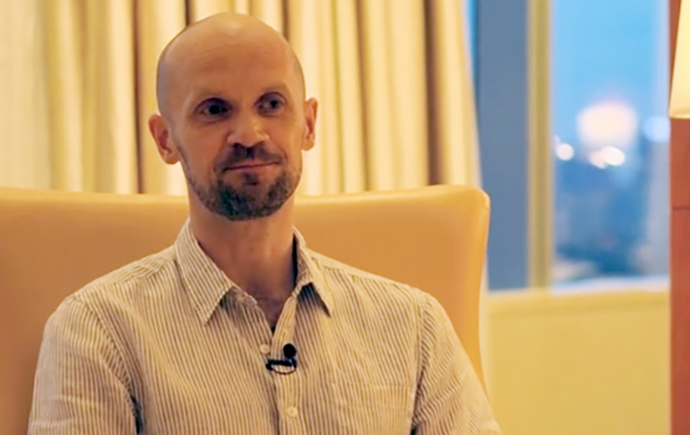
Sacha Cody
- Current position Director, Forethought
- Degree(s) Bachelor of Commerce and Bachelor of Arts
- Major(s) Chinese studies
Sacha completed a Bachelor of Arts and Bachelor of Commerce in 2002 and a Postgraduate Diploma in Arts (Research) in 2012.
Anthropology might not often be associated with business but Sacha Cody’s argument is that it can give valuable insight.
He’s worked with Chinese companies for around 15 years and in that time, he’s seen the ins and outs of how the Chinese market reacts to new products and how Chinese corporations respond to their consumers.
Armed with that kind of knowledge, Sacha consults Westerners on how to thrive in a Chinese market and/or workplace.
“The importance of the Chinese economy is huge but it's complex, it's changing fast and it's difficult to understand” Sacha said.
“People come to China and they think “I've got a good product and things will be fine” but the business performance is often not as expected. I also regularly hear stories around the world of very senior people in big global companies not able to interpret and understand the information they receive about their business performance in the China. That's what international consultants do; they build trust with their clients by helping them contextualise and interpret what they can see but don’t understand.
To succeed in the Chinese market, Sacha advises clients to think outside the box.
“When adopting products for China, sometimes what seems funny and crazy will work.” Sacha said.
“Take Kentucky Fried Chicken, for example. They have congee and fried dough on the breakfast menu because this is a typical breakfast in China.
“It doesn't fit the image of Colonel Sanders and fried chicken, but it works in China and it has enabled KFC to be one of the biggest businesses and brands in the country.”
He also looks at the difference between how Chinese corporations conduct their business in comparison to western corporations.
Sacha believes Chinese corporations’ willingness to innovate and make mistakes in the process enables them to adapt faster in a climate of constant and unpredictable change.
This is despite the fact that China’s industrial revolution much later than in the West.
“Over the years, many Chinese companies have learned to make products through emulation. But now, it’s at the point where they're innovating themselves beyond what they learnt and faster than many of their Western competitors."
“What a typical Western company will first do is a lot of research. They'll develop three prototypes, they'll pick one that is perfect and they'll launch it. What Chinese companies tend to do is to launch five things that are incomplete as soon as possible and get direct feedback in the market. And so, through trial and error, they build something in the market much faster than western firms. This has enabled them to be much more agile and successful in many industries where they’re becoming leaders. This has all really changed in the last ten years I would say.”
Importance of an Arts degree in the world
"When I was an undergraduate at Monash, there was a perception that an Arts degree wasn't a worthwhile degree or that it would disadvantage you. These people believe you should do a commerce degree or a law degree or whatever." Sacha laughed.
"I think that's quite a short sighted view.
"The world doesn't need another accountant or another lawyer, it needs accountants and lawyers who understand, for example, how to build micro-financing in Indonesia or Africa, how law has evolved in countries like Russia or China.
"They need to apply those vocations in the context of our world, a world with complex social, cultural, economic processes and realities. This is why an Arts degree is incredibly valuable.
"It makes you a smarter person. It makes you a more global person. It makes you a more compassionate person and it makes you a more interesting person as well."