
Stephanie Daborn
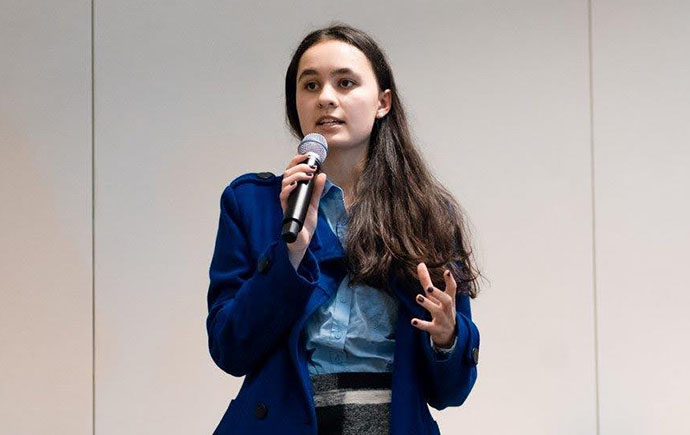
Stephanie Daborn
- Year completed 2021
- Current position Geographic Information Systems Analyst, Victoria’s Big Build
- Degree(s) Bachelor of Science and Arts; Bachelor of Arts (Honours)
Career summary
Stephanie graduated from Monash University in 2021 with a Bachelor of Science and Arts and Bachelor of Arts (Hons), with majors in Geographical Science and Human Geography. Currently an Analyst in Geographic Information Systems at Victoria’s Big Build, Stephanie uses the skills gained in her Bachelor of Arts daily when conducting research, resolving problems, interpreting technical information, and communicating and collaborating with others.
During her time at Monash, Stephanie took every opportunity to discover and grow her passions through endeavours in interdisciplinary undergraduate research, Monash international study tours, and organisations such as CSIRO, Greenfleet, and Monash Human Geography. Stephanie shared and fostered this passion in others through her mentorship of students as a Monash Arts Ambassador.
It was only by undertaking the Bachelor of Arts that she realised her passion lay in using Geographic Information Systems to answer the big questions of tomorrow.
Career pathway
2022 - Geographic Information Systems Graduate, Victoria's Big Build
2021 - Enterprise Support Officer, CSIRO
2021 - Bachelor of Arts (Honours), Monash University
2020 - Administration Officer, CSIRO
2020 - Geographic Information System Intern, Greenfleet
2020 - Casual Research Assistant, Monash University
2019 - Assistant Editor, Reinvention
2019 - Education & Administration Officer, CSIRO
2019 - International Compass Mentor, CURIE
2018 - Vacation Scholar, CSIRO
2018 - Volunteer Database Developer, Monash University
2018 - Science Future Leaders Program, Monash University
2018 - Arts Ambassador, Monash University
2017 - Bachelor of Science and Arts, Monash University
Why did you decide to study a Bachelor of Science and Arts at Monash University?
I chose to do a double degree because I didn't really know exactly what I wanted to do after university. I knew that I was passionate about science – both my parents come from a science background – but I found science on its own to be a little too descriptive and detached from the world. So, I really wanted to build on my other skills and gain a better understanding that way.
Doing a Monash Arts degree gave me a broad set of choices, so I could do whatever I wanted to do. I appreciated that flexibility.
How did Monash Arts help develop your passion for Geographic Information Systems (GIS)?
Monash Arts was what first introduced me to GIS. GIS is about using maps to solve problems. I've always been really interested in problem solving and trying to answer questions, but there are so many ways you can go about that. I'm now coming at it from a place-based angle, so when looking at things I question how their location impacts the problem. I found that my Monash Arts degree really helped me to solidify that interest, in getting a better understanding of how we can answer some broad and abstract questions, and to be able to come up with an evidence-based concrete answer, rather than just some thoughts.
What was your experience with internship and volunteering during your studies?
One experience I was most proud of was with the Centre for Undergraduate Research Initiatives and Excellence (CURIE), which helped with my Monash undergraduate research. Through CURIE, I was involved with the International Conference of Undergraduate Research (ICUR), where I presented four times about different research initiatives I had worked on. I also helped run the conference by chairing sessions and helping students engage with each other and connect on a deeper level.
I also got involved with Reinvention, which is an undergraduate research peer-reviewed journal. Reinvention was run by the Monash Warwick Alliance and offered me a great opportunity to be an assistant editor, which meant that I was involved with selecting which articles would go through to peer review, and then working with authors to make the changes that peer reviewers suggested. This was an amazing opportunity to work with colleagues at the University of Warwick and be exposed to lots of different types of research. I was also able to connect with academics to encourage them to review for our journal, as well as help young academics to become published authors, which was an exciting opportunity to be involved in.
What opportunities did Monash University provide?
While I was at Monash I was lucky to be involved with quite a few Monash programs. One was the Arts Ambassador program where I was a mentor, which meant that I was able to meet a whole variety of different people and get some great connections, while also making a difference. I also helped on open days, which meant getting to meet so many different prospective students, getting to talk to them about why I was passionate about what I do, and help them understand how they could get where they wanted to go through studying Arts at Monash.
I was quite lucky to work with the Monash Human Geography team to set up and administrate a database of all their contacts all over the world in industry and research, to really solidify Monash University’s connections to other geography departments all over the world, and really improve our work.
I also went to Italy on a Monash study tour. We went to the Cinque Terre National Park, where we worked with the local community. We each came up with a research question and were able to speak to the community and other researchers in the area, to come up with a sustainability problem and solve it. I was able to work with other people from Monash which was exciting and helped me get to know some of my fellow students a lot better. And to see that the work I was doing in the classroom could be applied to the real world quite quickly, and not just in Australia, was also exciting.
What was your study experience like with Monash Arts?
It was fantastic. I was challenged, but in a really good way. Everyone was supportive and happy to help me out when I was feeling stuck but were also there to push me further and not let me settle. I was surrounded by heaps of passionate and interested students. We were all able to work together to help each other get to where everyone wanted to go. It was a really nice community feel, particularly in a lot of my subjects. I came across the same people over and over again, so I got to know people quite well and really connect. I felt a real sense of community, which was amazing.
How has your Monash Arts degree helped you in the workplace?
Even the skills I learned in my first-year ancient history class have come in handy. I think the skills you learn in the Arts are just as, if not more important than the technical skills you learn outside it.
My Monash Arts degree has helped me with my communication and research skills. Having communication skills is important in my role because I'm doing technical work, which other people don't necessarily have the background to understand. I need to be able to work with those people to determine the question they want to solve, then explain how we're going to work out the answer, and then communicate that answer back to them. Research has also been important because I don't necessarily know all the intricate details of the questions they are asking.
I work at the Victorian Government’s Level Crossing Removal Project – which is a construction operation – and I don't have an engineering or construction background. But with the skills that I learned in my Monash Arts degree, I'm able to work out where I need to go to find information, and how to quickly discern what the most useful and important information is, in order to do my job effectively.
What advice would you give to future students?
Focus on the skills you can get out of something, but also take every opportunity that comes along, and really try to connect with your fellow students and lecturers.
I was able to work with the Monash Human Geography Department because I spoke to one of my lecturers and said, ‘Hey, I'm really interested in the work that you do. What opportunities are there?’. As a result, I was able to help him by doing some data visualisation for a paper he was writing, and it was just because I asked him after class one day. It’s important to be able to speak up and talk to people that you're interested in because you never know where things are going to take you unless you take the initiative to make that connection.
I've also found so many close friends through everything I've done. I've made friends in classes, but also through programs such as the Arts Ambassador program. They're people I can rely on to understand issues I'm having and be able to support me. They’re people who are really driven and understand what it's like to be a young woman in the workplace and in an academic environment. So, talk to your classmates, talk to your lecturers, just talk to people and see what opportunities come from it. And if you try something and you don't like it, you can always change your mind.
Written by Arts intern, Enya Martin, 2022