
Stephanie Sprott

Stephanie Sprott
- Year completed 2015
- Current position Lawyer
- Degree(s) Bachelor of Laws (Honours) and Bachelor of Arts
- Major(s) History
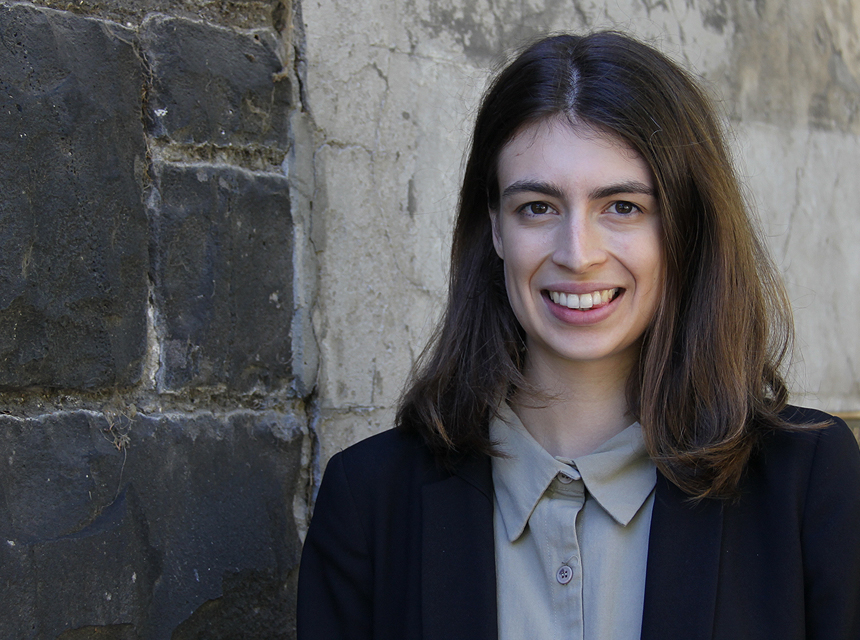
In 2015 Stephanie Sprott, interned at the International Criminal Tribunal for the former Yugoslavia (ITCY).
Why did you choose to do the internship at the International Criminal Tribunal for the former Yugoslavia?
I thought it was a really perfect combination of my two degrees (Arts/Law). It was an international criminal tribunal, so I would be working in a legal context, but it was an international criminal tribunal that is a pillar of post conflict reconstruction from a very significant conflict that happened in the 90s, and that means it has a really historical context.
I’d learnt a lot about the break up of the former Yugoslavia in both my degrees, and I felt like it tied in with my disciplinary interests really well.
Why so long after the massacre occurred was work still going on to investigate and bring the perpetrators to justice?
Well the reason the case that I was working on was still going on was that the defendant (Ratko Mladic) was in hiding, he was a fugitive for fourteen years, so his trial only began in 2011. So that’s why this particular case was so delayed.
This [delay] was partly just because the international legal sphere is fairly un-resourced and things move quite slowly, and if there’s an appeal, then you have another case that has to be redone, and sometimes appeals go back to trial, and then it just goes on and on.
It’s interesting in a way that you are doing something ‘current’, but really it’s about history.
Yes, and I personally really enjoyed that because I had that historical background, but quite a lot of the other interns at the tribunal who were from a straight ‘law’ background found that a bit challenging, because they found it hard to connect with something that seemed very much in the past.
A lot of the evidence is really old, you’re dealing with a lot of hand-written witness transcripts that are barely legible, and you can’t track who has given that evidence properly, and sometimes you’ll just get piles and piles of very random documents and you have to work out how they fit together.
It actually helped a lot because in history you learn how to analyse documents in context, how to connect different factors together, and so having having that training, I think, gave me an eye for dealing with document analysis quite well.
And you wouldn’t be put off by barely legible documents – that would be ‘normal’ for historians?
Exactly! You’re given a lot of images as well and you have to understand the context of those images, and I think that is something we do a lot in history studies, where images are a really important primary source.
It must have been very confronting for you, some of those images?
Some of it was really confronting, yes, there are definitely times when you are affected by the sensitivity and gravity of the material.
Actually it can be a bit disorientating sometimes because you are in The Hague, which is this very beautiful sterile city in the Netherlands, full of bureaucrats and lawyers. So even though you are looking at this imagery, you’re quite far removed from the issues, it’s not that different from from learning in a classroom in some ways.
There’s also a big network of support there, you’re working with about twenty other interns, so I think that support makes it easier to process the issues you're dealing with, but it’s definitely still hard.
Would you do it again?
Yes I would do it again, I think it further invigorated my interest in human rights issues. I also like dealing with things like this that are at the core.