
Sujala Pant
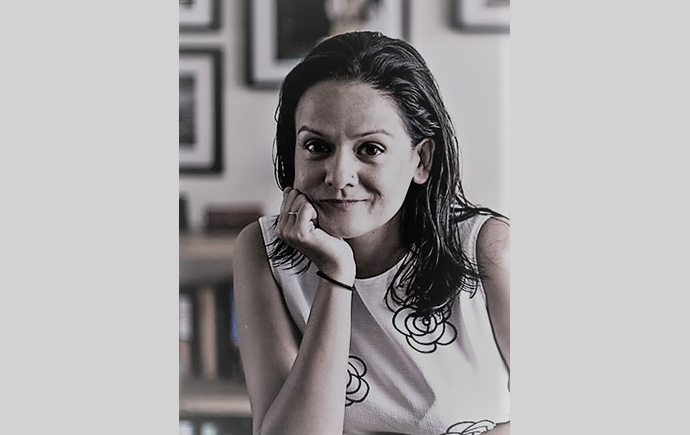
Sujala Pant
- Current position Chief Technical Advisor, United Nations Development Programme, Regional Bureau for Arab States
- Degree(s) Bachelor of Arts
- Major(s) Politics
Career summary:
Now a Chief Technical Advisor for the United Nations Development Programme, Sujala Pant graduated from Monash University in 2001 with an Arts Degree majoring in politics. Sujala has had a successful career working for NGOs and the UN, supporting over 30 countries on their sustainable development goals. She has been based in South Korea, Thailand, the USA, Bhutan, and Nepal. She is currently in Jordan working for the United Nations Development Programme, where she manages the SDG-Climate Facility Project: Climate Action for Human Security which focuses on how sustainable development, countries in crises and climate change intersect.
Career pathway:
2019 – Chief Technical Advisor, United Nations Development Programme
2017 – Regional Coordinator, Green Climate Fund
2016 – Deputy Country Director ad interim, UNDP Bangladesh
2013 – Regional Governance and Climate Finance Advisor, UNDP Bangkok Regional Hub
2011 – Democratic Governance Specialist, UNDP Bangkok Regional Hub
2008 – Governance Specialist, UNDP HQ
2006 – Advisor Local Governance, SNV Bhutan
2003 – Advisor, SNV Nepal
2002 – Graduated, MSc in International Relations, London School of Economics, UK
2001 – Graduated from the Bachelor of Arts, Monash University
Why did you choose to study at Monash University?
I was born in Nepal, but I have lived in a number of different countries throughout my life. I went to primary school in France, then middle school in in both Beijing and Shanghai in China before returning to Nepal to finish high school.
I always knew I wanted to study overseas for my tertiary education. When I was doing the research into where I wanted to live and study, my father suggested Australia – because he had visited the country and had a great first impression.
Melbourne was a top choice due to its high reputation as one of the most liveable cities in the world, and then, I was accepted to the undergraduate programme at Monash University. I was excited about this because of its good international reputation and for the wide array of subjects on offer that open up a number of different career pathways.
Why did you choose to study an Arts degree?
I visited the UN Headquarters when I was about 15, and it reconfirmed my aspiration to work for the United Nations. Even though there is always room for improvement, the mission of the United Nations is something I believe in sincerely, and I wanted to contribute to that. However, finishing high school at 17, I was not clear what exactly I wanted to study since the options were so vast.
The Arts degree gave me the opportunity to study a wide array of subjects so that I could figure out what I wanted to specialise in eventually.
I majored in politics, and supplemented that with courses in economics, sociology, Mandarin Chinese and French, which are valuable when pursuing an international career.
What is the value of studying and an Arts Degree?
The Arts degree gives you critical thinking skills and the ability to analyse and assess issues in an open-ended manner. It equips you to ask the right questions and identify where synergies and linkages can happen between different topics and groups. This is really important in the international development field because everything is inter-related, and you cannot afford to be linear in your thinking and approach.
I think the arts degree equips you with those skills to ask the right questions and look out for things that are less obvious, but create the underlying foundations to respond to challenges in a comprehensive manner.
What does your current role as Chief Technical Advisor for the United Nations involve?
I manage a project in the Arab region, which looks at three vastly different issues - we're looking at sustainable development, we're looking at countries that are in crisis, and we're looking at climate change, and the interface among those three big agenda.
In countries such as those in the Arab states that already have very high levels of inequality, are underdoing different levels of political and social crises, climate change makes some of those vulnerabilities worse.
Therefore, the project looks at the role of climate change, and how it can exacerbate existing challenges. At the same time, we also identify ways in which climate-related initiatives can be part of the solution in a way that addresses not only the climate impacts, but also bring about positive socio-economic dividends.
For instance, we are currently supporting work in Yemen and addressing the problem of public waste, and by using the appropriate technology, transforming that into energy. What we are concerned about is how that source of energy can be used to create jobs, how it can be used by health care centres, or schools for instance. In doing so, we are meeting the basic needs of communities who otherwise may not have access to reliable and affordable energy. In doing this, we are concerned not only about the impact on the ground, but what lessons we can derive from those projects to feed into policy-making, and policy reforms.
What are some of the highlights of your career so far?
I have so many! First and foremost, the opportunity to work in, and work with many different countries is an eye opening and humbling experience. No matter what academic qualifications you have, the hands-on experience that you get from being in the context itself is invaluable. For instance, I was based out of the Department of Local Governance at the Ministry of Home Affairs in Bhutan during one of my first international postings. It gave me such a different appreciation of the challenges and the day-to-day difficulties. In recognising that, you become a more rounded professional.
Another highlight would be joining the Green Climate Fund (GCF). As a Regional Manager for countries in West and Central Asia, and South-Eastern Europe, I was able to apply skills that I had consolidated working on governance issues in the context of climate change. The GCF was a very different world for me – as one of the larges climate funds in the world, it definitely took me out of my comfort zone. But this challenge gave me new skills and a better appreciation of the different ways in which we can contribute to addressing the existential threat of our times.
It was a bit of a risk given that I was very comfortable in my previous job. But it was intensely rewarding, and made me a better professional and I do believe that experience helped me to get to where I am today.
And finally, I think by far the most eventful highlight of my career was my selection in the UNDP LEAD programme, which had been developed to identify young professionals with high potential to contribute to the mission of the UNDP in various kinds of roles, and at different levels. It was devised as a programme to train the next generation of leaders in the organisation, drawing on the strengths of applicants from all over the world. In 2008, when I applied, there were over 4000 applicants, but only 20 of us were selected. The program had a profound effect on my career, not only because of the opportunity, but because of the amazing network of colleagues and friends that I made during that time, and the invaluable guidance given to me by mentors.
What advice would you give to students interested in a career in the international relations or politics field?
You must get out of your comfort zone, and take risks. It is scary but highly rewarding. Definitely don’t assume you have a full picture of any particular issue, because chances are you don’t. So don’t be afraid to question what you know, unlearn and learn again. I think the ability and the willingness to be okay with that, and see it as a positive, rather than something to run away from, is crucial.
And if you’re seeking to join an international organisation like the United Nations, first, try to get some experience working with smaller organisations especially in the field. Try to apply for jobs that will give you more responsibility. Take every chance you get to travel to the difficult places, and go on those field visits in remote areas. It will make you a better professional with far more appreciation for the challenges that you are trying to address, and therefore give you invaluable insights to make impactful contributions.
Interview written by Monash Arts Journalism intern, Simone Kealy, May 2021.