
Xenia Sanut
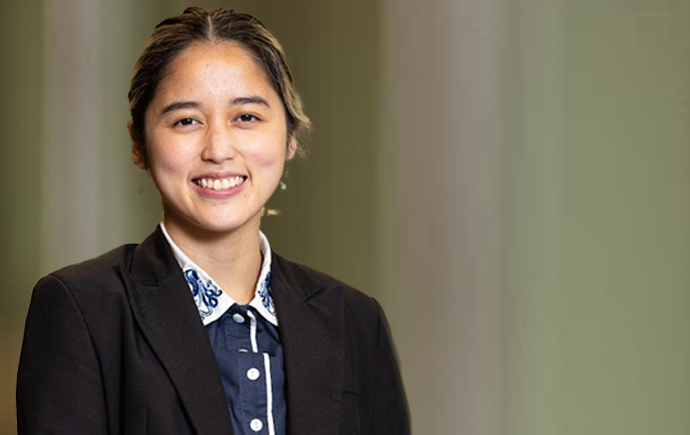
Xenia Sanut
- Year completed 2023
- Current position Multicultural Affairs Policy Officer, Department of Premier and Cabinet (Vic)
- Degree(s) Bachelor of Arts and Diploma of Languages, Japanese studies
- Specialisation Journalism and Global Asia
Career Summary
Xenia is a versatile communications and policy professional whose Monash Arts degree, with majors in Journalism and Global Asia, has been pivotal in shaping her career. Actively involved in student media and leadership roles, she developed strong writing, editing, research, and project management skills. Her internships in strategic communications at Metro Tunnel and marketing at Asahi Beverages allowed her to apply these skills across sectors.
Passionate about public service, she transitioned into government work focusing on multicultural affairs, where she supports diverse communities through strategic policy and community engagement.
Xenia’s university experiences, ranging from volunteering and student media to international collaboration, have fostered valuable networks and transferable skills, preparing her to contribute meaningfully to public sector initiatives. She credits her Arts degree for opening doors to unexpected opportunities and for nurturing her intercultural competence, which is central to her current role.
Career Pathway
Jan 2024 - Present: Multicultural Affairs Policy Officer, Department of Premier and Cabinet (Vic)
Sep 2024 - Jan 2025: Service Delivery Graduate Policy Analyst, Department of Education
May 2024 - Sep 2024: UK & Europe Graduate Investment Manager, Department of Jobs, Skills, Industry and Regions
Mar 2023 - Nov 2023: Food & Beverage Attendant, Sir John’s Bar
Nov 2022 - Feb 2023: Summer Internship Program (Marketing), Asahi Beverages
Jul 2022 - Sep 2022: Session Chair, International Conference of Undergraduate Research (ICUR)
Jan 2022 - Jan 2024: Crew Member, Guzman y Gomez Mexican Kitchen
Jan 2022 - Jul 2022: Strategic Communication Intern, Rail Projects Victoria
May 2021 - Oct 2021: Student Director, International Conference of Undergraduate Research (ICUR)
Jan 2021 - Feb 2021: Journalism Professional Practicum Intern, InClover Magazine
Sep 2020 - Dec 2020: Monash University Arts Alumni Intern, Monash University
Jul 2020 - Oct 2020: Global Sanitation and Sustainability Project Intern, Global (ACET-Global)
Apr 2020 - Dec 2020: Youth Press Gallery Participant, YMCA Victoria
Jul 2019 - Nov 2021: Year 7-12 English Tutor, Cluey Learning
Jul 2019 - Oct 2019: VCE English (3&4) VCE Psychology (3&4) Tutor, Gleneagles Secondary College
Career Journey questions
What advice do you wish someone had shared with you on your first day at Monash?
Simply have fun. I came into university with a strong focus on building my employability and preparing for life after graduation, which led me to seek out experiences I thought would look good on a resume. While that mindset helped shape the path I’m on today, in hindsight, I wish I had allowed myself to slow down and be more present, to enjoy the journey, not just the destination. University isn’t just about ticking boxes or chasing outcomes, it’s about growth, discovery, and, yes, joy. I think part of that pressure came from the perception that an Arts degree is less “employable” or lacks a clear-cut path, which made me feel I had to constantly prove its value. But the breadth and openness of Arts turned out to be its biggest strength, it gave me space to explore, learn, and be brave. So I’d tell my younger self: trust the process, be open, and don’t forget to enjoy the ride.
How did the Monash Arts community support your growth and ambitions during your studies?
The Monash Arts community played a crucial role in supporting my growth and ambitions, especially through the strong connections I built with tutors and coordinators. Their guidance and references were vital in helping me secure graduate programs and professional opportunities like the ACICIS Professional Practicum. These experiences gave me practical skills and helped me move closer to my career goals.
Beyond academic support, the community extended through alumni events and friendships with classmates who are now doing amazing things in their fields. These connections have been invaluable, connections not just with more experienced mentors, but also with peers at the same stage of their journey as me. Often students underestimate the power of networking with their contemporaries, but these relationships can open doors and provide you with advice as your careers evolve. The Arts community truly offers a network of lifelong contacts and opportunities that are essential for personal and professional development.
Were you actively involved in any activities that enhanced your university experience, such as, student organisations or clubs, internships or study abroad?
I participated in Monash’s Global Immersion Program (GIG), which gave me valuable international exposure and intercultural experience. That opportunity was a turning point, it inspired me to take Global Asia as a second major and greatly influenced my career path into multicultural affairs. Monash Arts also provided many other ways to enhance my university experience, such as involvement with the Monash Student Association, editing for student publications like Lot’s Wife and Mojo News, which sharpened my writing and communication skills.
Beyond that, I took on leadership roles like student director for the International Conference for Undergraduate Research, where I learned event management and collaboration across global campuses. I also completed internships, such as strategic communications at the Metro Tunnel and marketing at Asahi Beverages, which helped me apply my academic skills practically in government and corporate sectors.
What advice would you give to students on how to make the most of their time at Monash, both academically and socially?
I’d say be open and curious. There are so many options, clubs, societies, volunteering, and part-time work, that can help you meet people and gain experience beyond the classroom. It’s important to check your emails and Moodle regularly because lecturers and coordinators often share opportunities related to your studies that might push you out of your comfort zone but will teach you a lot. Sometimes just chatting with someone once or stumbling on a Monash webpage can lead to great opportunities like mentoring or volunteering.
Also, don’t focus solely on passing assignments, set aside time to explore new experiences socially and academically. For me, getting involved started with being a Global Immersion Guarantee (GIG) social media ambassador and helping with social media for Arts events, which opened doors to many more opportunities, including public speaking and networking. These connections, especially in Arts, can lead to valuable contacts in your future career, as the field is so broad and diverse, it might shape your path in ways you never expected.
How did your Monash Arts degree contribute to where you are today in your career or personal life?
My Monash Arts degree has been foundational to where I am today. The practical skills I gained, especially through journalism, like research, writing clear briefs, and stakeholder management, directly apply to my current role in multicultural affairs and government communications. Beyond the classroom, editing for student publications and helping run international conferences gave me valuable experience in collaboration and project management.
Studying Global Asia and Japanese studies expanded my understanding of multiculturalism, which is crucial in my job. Monash also connected me with amazing tutors, coordinators, and classmates who supported my growth and continue to be part of my professional network.
Internships during my studies, such as with the Metro Tunnel and Asahi Beverages, helped me apply my skills in real-world settings and confirmed my passion for public sector work. These experiences, combined with my degree, prepared me for opportunities like the Victorian Government graduate program, which is how I ended up in my current role.
What is your favourite part of your job?
My favourite part of the job is knowing that the work I do helps communities. Although much of it happens quietly and indirectly through strategy and policy, I get the opportunity to engage directly with peak bodies, as well as community leaders. These interactions provide valuable insight into the on-the-ground realities and how our strategic work supports them. Right now, I’m involved in a review and consultation process, which involves receiving constructive feedback on how we can improve Victoria’s multicultural policies and programs.
What’s meaningful for me, especially early in my career, is gaining firsthand experience of community needs and perspectives. This helps me bring real-world understanding back into government policy, with the hope that our efforts will lead to positive change.
Working in multicultural affairs is especially rewarding because it aligns with my values around equity and inclusion. Unlike some other government roles that can feel administrative or technical, this role keeps me connected to the human stories behind the policies. It’s inspiring to know that my work contributes to supporting diverse communities and advancing social inclusion.
From your perspective, why is Arts, Humanities, and Social Sciences an area of study crucial for today’s society?
Arts, humanities, and social sciences are absolutely crucial for today’s society, even though they’re often undervalued or seen as “nice to have” rather than essential. These fields teach us to understand history, learn from past mistakes, and critically analyse the complex issues we face today. They help us see how society intersects with areas like the economy and global relations, encouraging bigger-picture and strategic thinking. Unlike some more specialised degrees, arts and humanities nurture skills to ask critical questions and explore society deeply, which is vital in an increasingly connected and complex world. Now more than ever, with rapid global changes and challenges, we need graduates trained in these areas to help us navigate uncertainty and make thoughtful, informed decisions.