
MGFVPC Seminar Series
Join our Centre Director Associate Professor Kate Fitz-Gibbon as she facilitates an in-depth discussion with Centre Members and Affiliates on their expertise.
The 2022 Seminar Series will host a number of Centre Members and Affiliates showcasing their expertise and latest research. All presentations will have dedicated time for Q&A.
Seminars will be delivered in a hybrid model where possible. Register below to access the webinar link.
Please email all enquiries to: monashgfv@gmail.com

9 March, 9:00am - 10:00am
At the borders: Exploring migrant women’s experiences of precarity, family violence and help-seeking in Victoria, Australia
Speaker: Dr Stef Vasil
Addressing the problem of family violence has received significant attention among governments at a range of levels in Australia, with researchers, practitioners, and advocates
highlighting the need to tailor policy and service responses in ways that address the diversity of women’s lived experiences. In recent years, Australian feminist researchers have also
contributed to understandings of the ways that migrant women experience and seek help for family violence, drawing attention to the influence of factors such as migration policies on
the nature of women’s experiences. This presentation reports on findings from an empirical study that examined how migrant women living in Victoria, Australia experience and access
support for family violence. Drawing on interviews with victim-survivors and professional stakeholders, the presentation explores how women’s insecure migration status intersected
with family violence and uses precarity as a lens to interpret women’s experiences. The presentation examines how precarity functions as a structural condition that has implications
in terms of various forms or patterns of inequality that heighten women’s vulnerability to violence and undermine their efforts to ensure their safety and survival. It suggests that for
government approaches to be effective in their efforts to address violence against all women and children, further recognition of the diverse ways in which women’s experiences are impacted by the structure of the migration program is required.
Recording now available.

6 April, 9:00am - 10:00am
Women's Experiences of Crimes of the Powerful in Rural Places
Speaker: Professor Walter Dekeseredy
There is a dearth of critical criminological work on rural women's experiences of crimes of the powerful, such as corporate violence in the workplace. Informed by a contemporary body of knowledge featured in Dr. DeKeseredy's (2021) book Woman Abuse in Rural Places, the main objective of his presentation is to help fill a major research gap by describing some salient examples of state/corporate crimes against women in rural and remote areas, reviewing some relevant theories, and suggesting new directions for further empirical and theoretical work in the field.
Recording now available.

4 May, 9:00am - 10:00am
Misidentified women's experiences in court and the challenges of consent negotiation
Speaker: Dr Ellen Reeves
The misidentification of women as family violence ‘predominant aggressors’ has received unprecedented attention in Australia in the last few years, however, much of this attention is focused on police practice. Receiving less attention is the role that the courts have to play in acting as a safety net after women victim-survivors have been incorrectly labelled as perpetrators. In this seminar, Dr Ellen Reeves draws on her PhD research, which examined misidentification within Victoria’s family violence intervention order (FVIO) system. The seminar draws on the lived experiences of misidentified women and their encounters with the court system, highlighting the ways in which the courts currently fail to provide appropriate mechanisms of redress post-misidentification. To explain these experiences, the problematic ‘culture of consent’ will be interrogated, with emphasis placed on the ways in which the structure of FVIO proceedings places misidentified women in a ‘lose-lose’ situation.
Recording now available.

1 June, 9:00am - 10:00am
Imperfect Victims: Criminalized Survivors and the Promise of Abolition Feminism
Speaker: Professor Leigh Goodmark
For the last forty years, the criminal legal system has been the primary societal response to gender-based violence in the United States. Anti-violence advocates tout legislative victories, increased enforcement of laws criminalizing gender-based violence by police and prosecutors, and longer penalties as proof of society’s dedication to ensuring that those who do violence are held accountable. Criminalization was meant to increase understanding of gender-based violence and decrease that violence by changing community norms about its acceptability. But those efforts have also led to increased rates of arrest, prosecution, conviction, and incarceration of those who the changes were meant to protect: victims of violence. So many victims of violence have been caught up in the criminal legal system that an entire movement—known by the hashtag #SurvivedandPunished—has emerged in the United States to protest their revictimization by the criminal legal system. This talk will explore how the legal system punishes victims of gender-based violence, from childhood (via the juvenile system) through arrest, prosecution, punishment, and the clemency process and argue that only policies based in abolition feminism—a feminism that does not rely on carceral systems to respond to harm—can prevent the criminalization of survivors.
Recording now available.

13 July, 9:00am - 10:00am
Forced Marriage as a Form of Family Violence in Victoria
Speaker: Dr Shih Joo Tan (Siru)
Since 2013, forced marriage has been a central pillar of the Commonwealth response to trafficking and slavery-like practices, it is responded to as form of servitude. There has been consistent research pointing to questions regarding the efficacy of this model, with strong calls within Australia for forced marriage to be viewed as a specific form of family violence. In 2018, the Victorian Family Violence Prevention Act 2008 passed an amendment to include forced marriage and dowry-related abuse statutory examples of family violence. In March 2019, these new examples came into effects, thus marking an important shift in how forced marriage is conceptualised. Victoria remains the only Australian jurisdiction to have recognised forced marriage in this manner. However, there is currently no publicly available information or empirical research examining the impacts of the new legislation in Victoria, including resources investments in victim support processes, and questions remain about the implementation and impact of this new legislation. In this seminar, Dr Siru Tan draws on preliminary research with family violence and forced marriage service providers in Victoria to explore the opportunities and shifts that have followed the inclusion of forced marriage as an example of family violence
Recording now available.

10 August, 9:00am - 10:00am
Helping from home: Domestic and family violence worker wellbeing during the ‘shadow pandemic’
Speaker: Dr Naomi Pfitzner
The COVID-19 pandemic has shone a spotlight on care work of all kinds and the emotional toll of this work. Working with traumatised clients, such as individuals and families who have or are experiencing domestic and family violence (DFV), often unavoidably affects professional and personal functioning. The onset of the novel coronavirus triggered the closure of workplaces, schools and childcare facilities and a global transition to working from home. For most DFV workers, this meant that home became the primary setting for performing their professional care of individuals affected by DFV as well as unpaid domestic work, childcare and schooling. Drawing on Australian research conducted during the lockdowns, this webinar will explore how COVID-19 and the transition to remote work impacted the mental health and emotional wellbeing of DFV workers.
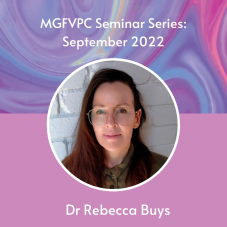
7 September, 9:00am - 10:00am
Engaging with political processes addressing family violence: Trying to create social change through public inquiries.
Speaker: Dr Rebecca Buys
Public inquiries are increasingly employed for addressing some of Australia’s most pervasive social problems, including family violence, but little is known about how they operate or how to engage with them to best bring about social change. This seminar considers these issues and how inquiries impact work to address family violence. It begins this conversation by exploring the perspectives of women engaging with the Victorian Royal Commission into Family Violence and in the early implementation of the subsequent reform process, before offering new ways of thinking about inquiries through ideas of relationality and non-linear conceptions of power and time. To build a deeper understanding of these processes together, reflections on inquiry processes, their exclusions and inclusions, and possibilities for social change are warmly welcomed.
Recording now available.
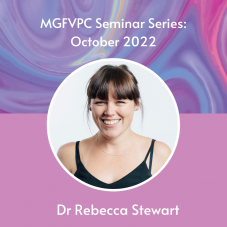
5 October, 9:00am - 10:00am
Exploring the help-seeking behaviours in education settings of young people experiencing family violence in Australia
Speaker: Dr Rebecca Stewart
There is a growing demand for family violence prevention and response efforts to centre children and young people not simply as witnesses to violence, but as victim-survivors in their own right. To this end, the Victorian Governments Family Violence Reform Agenda Rolling Action Plan 2020-2023 outlines the need for increased efforts to support children and young people and ensure their voices are heard. Despite research linking adverse childhood experiences and future use and victimisation of violence, this is an area that remains underexplored in academia, policy and practice.
Drawing on a larger data set looking at the prevalence and nature of adolescent family violence in Australia, this presentation will begin by exploring the educational impacts experienced by children and young people in their own words, who have experienced violence indirectly (i.e. between other family members), directly (at the hands of a family member) and those who have experience both indirect and direct violence in the home. It will then examine their help-seeking behaviours in the school setting (e.g. disclosures to teachers and school counsellors), in light of the recognition that the school environment is a contributing factor to resilience in children and one of the key settings they spend time in outside the family home. I will finish by outlining the intended next steps in this project for determining how to build capacity in schools and amongst school staff to support their students experiencing family violence.
Recording now available.
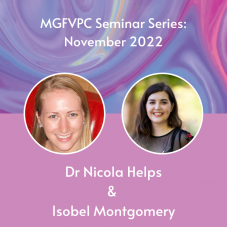
9 November, 9:00am - 10:00am
Let's talk about sex: exploring practitioners' views on discussing intimate partner sexual violence in DFV perpetrator interventions.
Speakers: Dr Nicola Helps and Isobel Montgomery
The Victorian Royal Commission into Family Violence identified sexual assault as a common and under-reported form of domestic and family violence (DFV) and an indicator for heightened DFV risk. Despite recognition of the intersection between sexual violence and DFV, responses are often siloed. In this webinar we explore how DFV perpetrator interventions, such as men’s behaviour change programs, respond to intimate partner sexual violence (IPSV). Drawing on a survey of practitioners’ working in Australia we identify enablers and barriers as they relate to practitioners training, screening and risk assessment practices and intervention practice. This work contributes to our understanding of how perpetrator interventions work with regards to IPSV. This is critical for the development of a diverse suite of interventions that tackle all forms of DFV, including IPSV. This work was conducted in partnership with No to Violence.
Register now.
Accessible Cloud Recordings of Seminars
We are working towards bringing an integrated version of our seminar recordings that enable closed captions and live audio transcription that can be embedded into our website. However, in the meantime, please find the links to the Zoom Cloud recordings.
If there are any issues with accessing these cloud recordings, please contact Jasmine Mead via email: jasmine.mead@monash.edu
October 2022 Seminar: 'Exploring the help-seeking behaviours in education settings of young people experiencing family violence in Australia' by Rebecca Stewart
Click here for the Zoom link. | Passcode: ZQqqkc0*