
Harnessing hope through education: Monash GPS’s Parisa Sekandari leads educational initiatives for young Afghan women and girls
Since the Taliban seized control of Afghanistan in August 2021, Afghan communities have endured immense hardships in what has become a prolonged humanitarian crisis. Afghan women and girls have been subjected to extensive violations of their rights under Taliban rule, including the curtailing of their access to education.
In response to these ongoing challenges, the Monash Global Peace and Security Centre (Monash GPS) has launched two projects to help mitigate the educational void imposed by the Taliban: Broken Dreams: The Psychosocial Impact on Afghan Girls, and the Afghan Girls Training Project.
Both projects are led by Monash GPS Fellow, Parisa Sekandari, who is uniquely placed to facilitate the projects owing to her lived experience and insights into the daily struggles that Afghan women encounter under the current regime.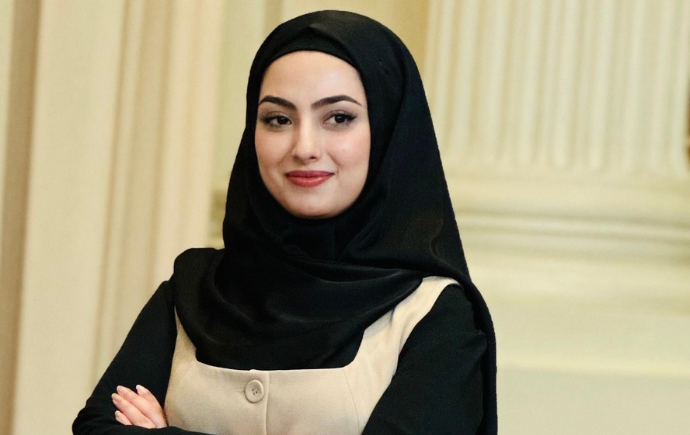
The first initiative, Broken Dreams: The Psychosocial Impact on Afghan Girls, comprises an essay collection. Through writing workshops facilitated by Monash GPS, nine young women living in Afghanistan produced first-hand accounts of living under Taliban rule. The collection documents the women's harsh realities, whilst simultaneously highlighting their resilience and courage. The essays represent a departure from top-down narratives and address the overlooked issue of psychosocial harms that often accompanies political insecurities and systemic oppressions. The collection will be published in the coming months.
The second initiative, Afghan Girls Training Project, is an online education program for young women currently living in Afghanistan. The one-month intensive program is designed to provide Afghan girls with vital research and writing capabilities.
“The training will equip Afghan girls with essential skills and a platform to voice their experiences, fostering resilience and empowerment in a supportive community,” explains Parisa.
To be launched in July, the program will re-engage young Afghan women in learning environments to extend knowledge, build confidence, and respond to their passion for education. Parisa will lead the training with an approach that prioritises the psychological safety of students through intentional community building and reflective practice.
Alongside Parisa, training will also be delivered by members of Monash GPS, including GPS Director, Dr Eleanor Gordon and Dr Samanthi Gunawardana. Scholars from other Monash Faculties, including Dr Bill Flanik (Course Director, MA of International Relations) and Dr Michael Phillips (Director of Monash Virtual School) will contribute to the training, in addition to Ms Saajeda Samaa from Asylum Seeker Resource Centre.
Parisa asserts that Afghanistan’s dire circumstances demand innovative initiatives to break through oppressive barriers to restore education access for women and girls.
“Education empowers Afghan women,” says Parisa. “It opens doors to economic independence and societal influence, and enables them to advocate for their rights and uplift their communities.”
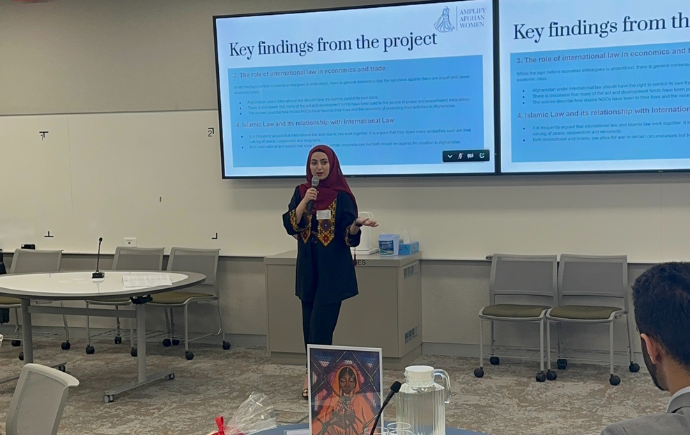
Reflecting on the personal empowerment that was cultivated through her own educational experiences, Parisa says that expanding education access for Afghan girls is critical owing to the capacity for education to trigger social change.
“My education has been instrumental in shaping my ability to advocate effectively. It has provided me with the tools and confidence to champion causes I believe in, and to strive for systemic change.”
"I am eager to begin this program and support these incredible women in accessing their educational rights. Witnessing their growth and seeing them harness their newfound skills to make impactful changes is always truly inspiring."
The Afghan Girls Training Project will commence in July, and is taking further applications from students that are residing in Afghanistan. If you know any young women based in Afghanistan that may benefit from this opportunity, please request that they apply here by 21st June or get in touch with enquiries at globalpeaceandsecurity@monash.edu.