
Navigating Displacement and Belonging: Comparative Perspectives on Refugee Integration in Greece and Australia
On First of September 2025, Monash University’s Global Peace and Security (GPS), in partnership with Advocates for Dignity (AFD), hosted an engaging and timely panel discussion titled Navigating Displacement and Belonging: Comparative Perspectives on Refugee Integration in Greece and Australia. The event brought together international scholars and advocates to explore the legal, political, and cultural dimensions of refugee integration across two contrasting contexts — Greece and Australia.
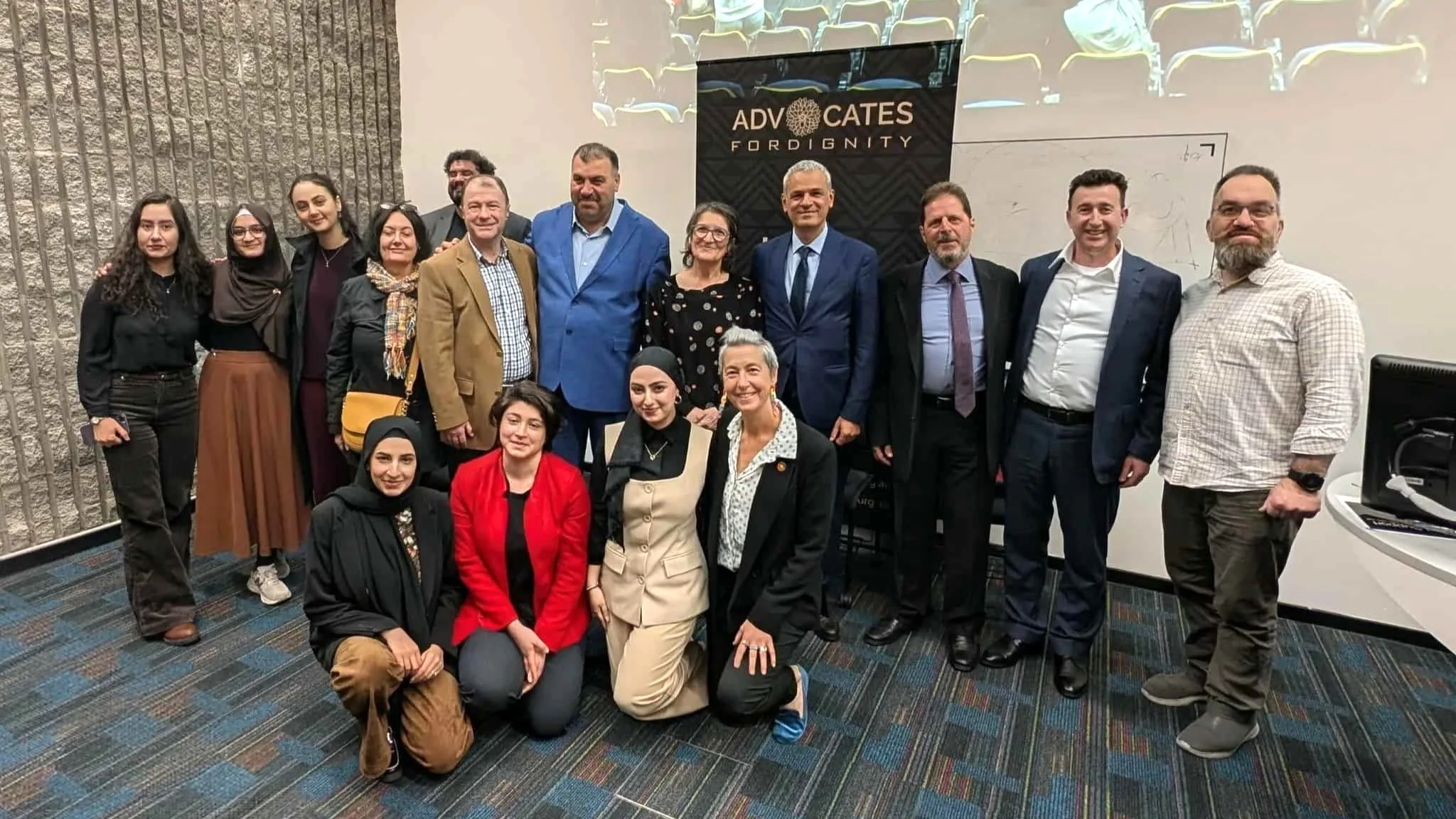
The program was opened by Parisa Sekandari, Project Coordinator at Monash GPS, who warmly welcomed attendees and highlighted the importance of fostering cross-national dialogue on migration, displacement, and belonging. In her opening address, she underscored the role of academic and community partnerships in advancing inclusive and evidence-based responses to global displacement.
Following her remarks, Mr. Abdulcelil Gelim, Executive Director of Advocates for Dignity, extended his welcome to all participants and guests. He spoke about the shared vision between AFD and Monash GPS to promote human dignity, rule of law, and social cohesion, noting the critical importance of collaborative engagement between researchers, practitioners, and civil society leaders in addressing forced migration.
Panel Discussion
The main panel was moderated by Dr. Eleanor Gordon, Director of Monash GPS, whose research focuses on inclusive approaches to peacebuilding and post-conflict justice. Dr. Gordon guided an insightful discussion that brought together diverse academic and advocacy perspectives on refugee integration.
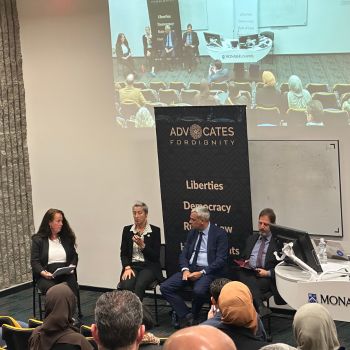
The panel featured:
- Professor Dr. Sotirios S. Livas (Ionian University, Greece), a leading expert in international law and Middle Eastern geopolitics, who analysed Greece’s position as a frontline state in Europe’s migration landscape and reflected on how legal frameworks shape refugee experiences.
- Associate Professor Emmanuel (Manos) Karagiannis (King’s College London), whose work spans political Islam, radicalisation, and Black Sea security, discussed how displacement intersects with regional stability, migration governance, and global security narratives.
- Jana Favero (Asylum Seeker Resource Centre, Australia), a long-time advocate for refugee rights and inclusion, who reflected on Australia’s managed migration model and the transformative impact of civil society advocacy in shaping policy and public perception.
Key Themes
The discussion unpacked comparative experiences of refugee integration, revealing both parallels and divergences between Greece and Australia. Key themes included:
- Lived experiences of refugees, including the everyday realities of adaptation, resilience, and belonging.
- The vital role of civil society in providing humanitarian support, advocacy, and pathways for participation.
- Narratives of national identity, examining how public discourse and government policies shape perceptions of inclusion and exclusion.
Panellists collectively emphasised the need for inclusive, rights-based, and long-term approaches to displacement that move beyond emergency response models and centre the voices of displaced people themselves.
Program Highlights
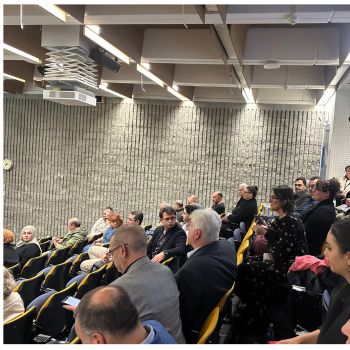
The evening commenced with networking and refreshments at Monash University’s Caulfield Campus, followed by the formal panel session and an engaging Q&A discussion with the audience. Participants raised critical questions on regional cooperation, education’s role in integration, and the challenges of balancing security with humanitarian responsibility. The program concluded with a symbolic exchange of appreciation gifts and group photographs, celebrating the spirit of collaboration and mutual learning.
Looking Ahead
The event reaffirmed Monash GPS’s commitment to bridging research, policy, and advocacy to address global displacement challenges. By facilitating conversations that connect diverse perspectives, from frontline practitioners and policymakers to academics and community advocates, GPS continues to advance its mission to promote inclusive governance, social justice, and human dignity.
Through initiatives like this, Monash GPS remains at the forefront of shaping informed, empathetic, and actionable responses to forced migration, locally, regionally, and globally.