
Who Cares in Peacebuilding?
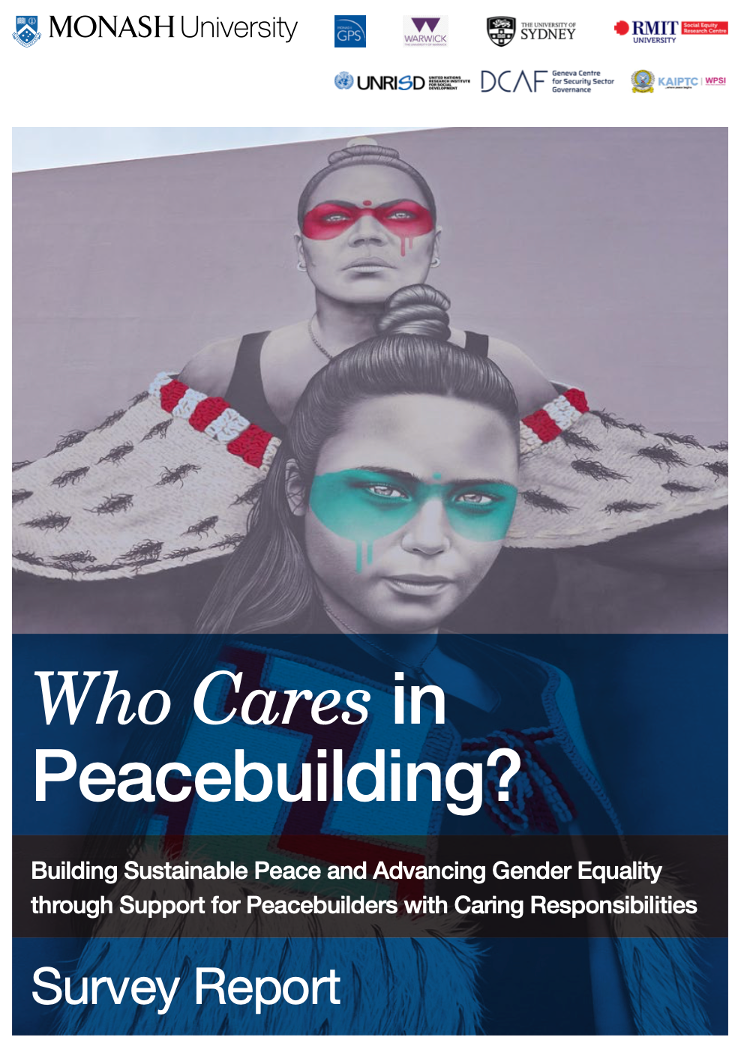
On International Day of Care and Support (29 October), Monash GPS and partners launch the report ‘Who Cares in Peacebuilding? Building Sustainable Peace and Advancing Gender Equality through Support for Peacebuilders with Caring Responsibilities’ in English , French and Spanish.
The United Nations (UN) Research Institute for Social Development (UNRISD), Geneva Centre for Security Sector Governance (DCAF) and the Kofi Annan International Peacekeeping Training Centre (KAIPTC) together with the universities of Warwick, Sydney, RMIT and Monash launch the Report to raise awareness of the importance of supporting peacebuilders with caring responsibilities. The collaboration also included leaders across academia, government and other international organisations engaged in peacebuilding, including the University of Queensland, Australia’s Department of Foreign Affairs and Trade (DFAT), UN Department of Peace Operations (UNDPO), UN Women, International Peace Institute (IPI), Saferworld and Swisspeace.
The Report analyses the results of a global survey with 146 peacebuilders across 81 countries, launched in a Concept Note on the inaugural International Day of Care and Support (29 October 2023). The Concept Note was issued as a call to action to improve support for peacebuilding practitioners with caring responsibilities and raise awareness of the adverse impact lack of support can have on efforts to advance gender equality and improve peacebuilding.
The Report reveals the barriers to the recruitment, retention and advancement of people with caring responsibilities in the sector, particularly women with children. The survey reveals they often find it difficult to remain within or return to the sector, have equal access to training and promotion opportunities, and feel valued by management and colleagues.
- 78% had to leave or change their work in the peacebuilding sector (a further 9% said “no, but I have considered it”)
- 89% said their career progression had been impacted
- 70% said training opportunities had been impacted
- 80% said networking opportunities had been impacted
- 88% said deployment opportunities or where they could work had been impacted
- 61% said it is difficult for people with caring responsibilities to work in the sector
These difficulties are most likely to be faced by women because of the gendered nature of unpaid care work, maternal bias and gendered assumptions about peacebuilders and peacebuilding. While women are most likely to face these difficulties, men and people of diverse gender identities also suffer due to their caring responsibilities not being recognised or supported.
The Report also highlights the adverse impact on peacebuilding, particularly when peacebuilders with caring responsibilities leave the sector. This is because of the impact on the meaningful participation of women, organisational diversity, as well as workplace cultures and staff well-being.
The Report also identifies that improved support for peacebuilders with caring responsibilities can help address the many practical, organisational, work culture and normative challenges they face, and includes a range of recommendations, many with limited resource implications.
Funder: Monash University’s Deputy Vice-Chancellor (Research) and the Research Talent Accelerator (RTA) programme
Report Cover image: Artist - Fin DAC - Te Marae o Hine / Daughter of Peace. Photo: Geoff McKay 2020
Report Design: Flinch Designs