
This month in history: Encounter at Keppel Bay, 1802
222 years ago this month, a dramatic encounter transpired on Australia's east coast.
When we are looking into the histories of encounters between First Nations Peoples and those who came from the sea, we often only have vague and singular traces - a brief line in a shipboard journal, a painting on rock, or an oral account passed down the generations. More often than not these are from one perspective only.
Sometimes, though, we have richly observed accounts from multiple parties which, despite all coming from a European perspective, nonetheless give an insight into Indigenous peoples’ responses to the intruders on their land. Such is the case with the Keppel Bay Incident of 1802.
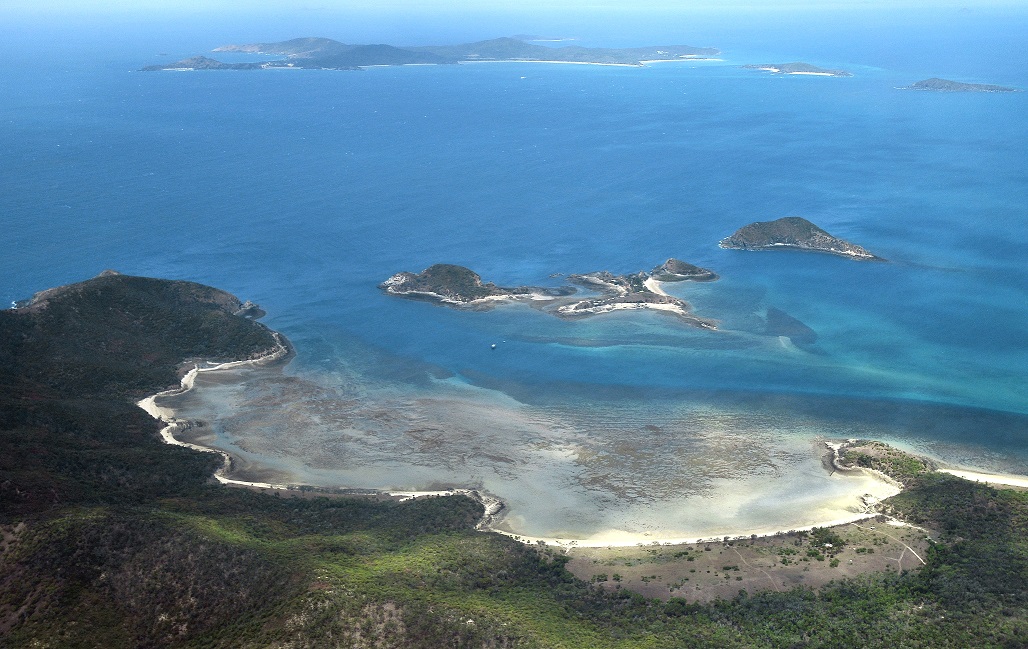 Figure 1 Keppel Bay, Queensland, Wikimedia Commons
The event itself was relatively minor – a couple of men did not return to the ship after being part of an away mission. A sleepless night ensued as their crewmates and superiors worried about them. In the morning, they returned, having been rescued from a predicament and treated kindly by the very people feared to have abducted them. The Europeans sailed away. Everyone was happy.
What makes this particular event noteworthy is that it was recorded by at least five of the European interlopers. Undoubtedly the First Nations peoples involved, the Darumbal, also shared the story, as it contained classic elements of the silly outsiders getting themselves into a jam trope. Regrettably, we have no record of this. But we can imagine.
The saga began on Sunday 15 August 1802. Two ships were anchored in what they called Keppel Bay, part of Darumbal Country, off the Queensland Coast near contemporary Rockhampton.[1] The ships – the Investigator[2] and the Lady Nelson – were undertaking the first European circumnavigation of the Australian continent. Passengers in the Investigator included landscape artist William Westall, naturalist Robert Brown, botanical artist Ferdinand Bauer, and gardener Peter Good.

Figure 2 Geoffrey Ingleton 1937, HM Sloop Investigator, Wikimedia Commons
They had been idling for days, keeping a watchful eye out for Darumbal warriors who were a cause for concern, due to a previous confrontation at nearby Port Curtis[3]. Matthew Flinders, in charge of the Investigator, wrote,
No natives having been seen in the neighbourhood of the ship now for a week, I thought there was no danger in indulging the seamen with a walk on the shore.[4]
However, while the crews of the Investigator and the Lady Nelson had not seen Indigenous peoples on the shore, they were certainly, themselves, being watched by the Darumbal. A party was assembled and went ashore for a spot of hunting. Ship’s gardener Peter Good wrote,
...a party went Shooting towards Cape Keppel & saw several Emoos & having two fine Dogs which pursued them & got among them but at this instant a number of Natives made their appearance in a hostile manner.[5]
Flinders described a group of at least twenty Darumbal men making a sudden appearance, “having spears in their hands which they kept in a threatening attitude.”[6] While we have no written record of what the warriors were thinking, we can imagine that what they saw – a party of Europeans, with dogs, armed and hunting – would have necessitated a response. They could probably only tolerate the incursion so far. Perhaps the hunting party was getting close to where women, children and the elderly were likely waiting. Perhaps they were scaring away the Darumbal’s own prey.
In any event, it was the Europeans who were surprised. The men of the Investigator and the Lady Nelson panicked and scattered: Good remarked that the surprise “caused them to neglect the Dogs & Emoos & attend to their own safety.”[7] Some form of communication eventually ensued – “a considerable parley” according to Good — and as Flinders wrote,
Finding their new visitors peaceable and inclined to be friendly they were induced to lay their spears aside.[8]
Gifts were exchanged, and the Darumbal “accompanied our seamen nearly as far as the ship in a good natured manner” (Flinders).
On board the Lady Nelson, Lieutenant John Murray watched the scene as the large group of warriors and the away party came back to the beach, and decided to get involved. Murray, along with Lieutenant Fowler and “some of the gentlemen of the Investigator”, went ashore to meet the Darumbal. These gentlemen included naturalist Robert Brown and, in all likelihood, landscape artist William Westall. Yet their presence – or perhaps the arms which they were undoubtedly carrying – was not welcomed. Murray wrote, “on seeing us they began to run”. The gentleman persisted, and Murray describes how the Darumbal suffered Robert Brown “to go near enough to reach them” with gifts of “a few red night-caps and a tomahawk.”[9] They then, according to Good, and “went away satisfied.”[10]
But two of the crew did not make it back. Petty officer Thomas Evans[11] and an unnamed seaman were missing. It is unclear whether they were lost in those fearful moments when the shore party was confronted with the Darumbal, or whether they wandered away later, when more amicable relations had been achieved. Peter Good wrote that
their absence as night approached caused considerable uneasiness.[12]
Lieutenant Fowler and the gentlemen waited on the beach until darkness fell, then a midshipman waited for some hours in a boat for the missing men.[13]
If the Europeans on the Investigator and Lady Nelson were nervous, then the two men who were lost must have been even more so. They had wandered into mangrove swamps and had spent the greater part of the night, according to Good, wading through mud. At dawn, “still bewildered with Mangroves & Swamps” and missing their shoes and pants which had been lost to the mud, they were found by a “large party” (we might assume at least twenty) Darumbal warriors.
We can almost imagine the conversations and amusement the men’s predicament must have inspired – look at these two! How did they get themselves into this mess?
One man stepped forward and offered the stricken sailors a bough of a tree, and signalled for him to imitate the gesture as a sign of friendship. This achieved, the sailors – hungry, thirsty and undoubtedly highly stressed – were welcomed into the camp. They feasted on some freshly caught ducks, and then Evans signalled his thirst by motioning to drink salt water. The Darumbal, according to Good,
made a dolefull noise very expressive of sorrow & immediately led him to fresh water which was very near.[14]
Again, we might imagine what the Darumbal were perhaps thinking – seriously, how silly are they?
Out on the water, as 16 August dawned, Flinders and his officers now feared the worst for their missing men. On board the Lady Nelson, Murray observed, “In the morning two guns were fired from the Investigator as signals and we saw two boats go to shore we supposed to search for those missing.”[15] Just as an armed party was being assembled, which may well have caused a diplomatic incident and possible bloodshed, the missing men appeared on the beach.
They had been brought back to their ships by their rescuers, the Darumbal warriors. Peter Good describes how
Several Trifles were given them as presents such as looking Glasses, Hatchets, red night Caps — they were much surprised at the looking Glasses — Started suddenly on perceiving the reflexion of themselves & could not be brought to look at it steadily.[16]
This invokes stereotypes of gullible Indigenous peoples being placated with trinkets, but in fact, hatchets were a highly prized commodity, and the mirrors were likewise useful, when refashioned as points or scrapers.
The Darumbal seemed still wary of the Europeans, but not hostile or cowed. In one aspect their displeasure was clear on the beach that morning: John Murray described how the Europeans tried to entertain them –
We had a drum, fife and fiddle on shore with us but on playing and beating they signified their displeasure and some of them ran off but on our ceasing returned.[17]
They also took the gifts offered but “would give nothing in return”. We can imagine that their rescue and generosity towards the missing seamen fulfilled their side of the social contract.
William Westall executed some sketches of Darumbal men, and later that day, of the coastline as the Investigator and Lady Nelson sailed out of the bay.[18]
![Keppel Bay, Broad Mount [picture] / [William Westall]](https://www.monash.edu/arts/monash-indigenous-studies/global-encounters-and-first-nations-peoples/news-and-blog/encounter-at-keppel-bay,-1802/Westall-Keppel-Bay-1802.jpg)
Figure 3 William Westall 1802. Keppel Bay, Broad Mount, National Library of Australia
They were heading northward on their continuing journey. In their journals, the Europeans all remarked on how physically impressive the Darumbal were. Murray wrote, “These natives are a much stouter class of people than any I have yet seen.” Peter Good recorded
They were the strongest made Native we had Seen in New Holland painted with a great variety of figures & colours wore necklaces of reed & shells & had a great variety of features some were thought upwards of 6 feet high.
Flinders described “a stout muscular people…(who) seemed to understand bartering better than most or perhaps than any people we have before seen.”[19] Naturalist Robert Brown also called attention to the Darumbal’s physicality, noting “They were in general tall some of them computed at 6 feet, & a few uncommonly muscular.”[20]
This brief encounter at Keppel Bay is notable for the multiple viewpoints on record. The Europeans were demonstrably impressed by the Darumbal men[21], in regards to both their physical stature, and their qualities as warriors. We have no formal record of the Darumbal perspective, but their actions – recorded by the officers and gentlemen of the Investigator and Lady Nelson – show wariness, tolerance, kindness, and an eagerness to see the uninvited visitors leave.
Plus, a disdain for their drum and fiddle playing.
Leonie Stevens
[1] More information on Darumbal people and culture at https://darumbal.com.au/ and on Darumbal People Aboriginal Corporation RNTBC https://nativetitle.org.au/find/pbc/8405
[2] HM Sloop Investigator: etching by Geoffrey Ingleton, 1937 https://commons.wikimedia.org/wiki/File:Investigator.jpg
[3] On 5 August 1802, a group of “scientific gentlemen” from the Investigator were threatened by warriors – probably Gureng Gureng – at what the British called Port Curtis. Spears were thrown and warning shots were fired.
[4] Matthew Flinders journal, in Kenneth Morgan, 2015, Australia Circumnavigated: The Voyage of Matthew Flinders in HMS Investigator, 1801-1803, London: Hakluyt Society, 46.
[5] Peter Good, 1803 [1981], The Journal of Peter Good, Gardener on Matthew Flinders Voyage to Terra Australis 1801-03, Edited by Phyllis I. Edwards, Bulletin of the British Museum (Natural History), Historical Series Vol 9, London: British Museum, 85.
[6] Flinders journal, 46.
[7] Good, 86.
[8] Flinders, 46.
[9] Lt John Murray, 16 August 1803, in Ida Lee (editor) 1915, The Logbooks Of The Lady Nelson, With The Journal Of Her First Commander Lieutenant James Grant, R.N., London: Grafton & Co. https://gutenberg.net.au/ebooks/e00066.html#LN-15
[10] Good, 86.
[11] Estensen, The Life of Matthew Flinders, p. 227
[12] Good, 86.
[13] Lt John Murray, 16 August 1803, in Ida Lee (editor) 1915, The Logbooks Of The Lady Nelson, With The Journal Of Her First Commander Lieutenant James Grant, R.N., London: Grafton & Co. https://gutenberg.net.au/ebooks/e00066.html#LN-15
[14] Good, 86.
[15] Murray.
[16] Good, 86.
[17] Murray.
[18] The Westall collection at the National Library of Australia comprises 140 sketches and watercolours done during his trip on the Investigator and other ships. Westall, William 1802. Keppel Bay, Broad Mount, http://nla.gov.au/nla.obj-138882574
[19] Flinders, 47.
[20] Robert Brown quoted in Vallance, Moore and Groves, eds. 2001, Nature's Investigator: the diary of Robert Brown in Australia, 1801-1805, Canberra: Australian Biological Resources Study, 248.
[21] In this series of encounters there is no mention of women or children being seen by Europeans.