
Q & A with Harrison Croft
In this blog post we’d like to introduce one of our new recruits to the Global Encounters program, Harrison Croft.
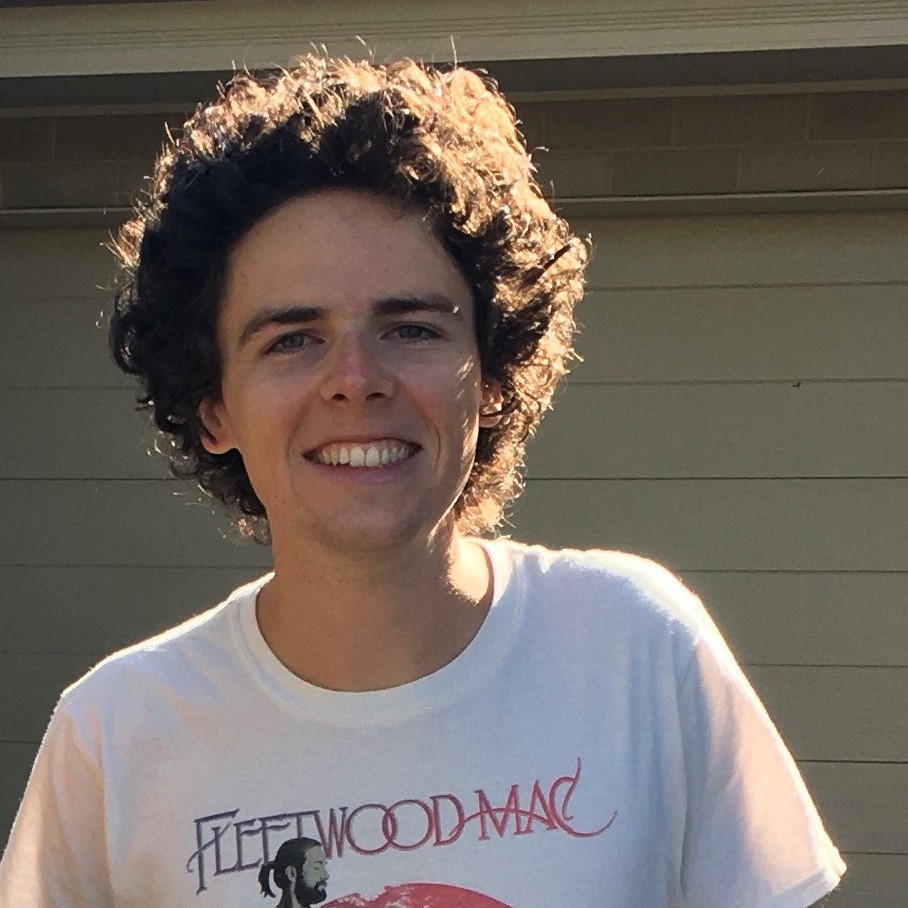
Q. Lynette Russell
Hi Harrison, the team is excited that you’ve joined us as one of our postgraduate students. Can you tell us a bit about yourself?
A. Harrison Croft
Last year I undertook my Honours in History at La Trobe University, researching the officer class of Britain’s eighteenth-century Royal Navy. My research also explored some of the Navy’s encounters with the Eora and Kuring-gai peoples of the NSW central coast. During that time – and thanks largely to the brilliant coursework lecturers – I came to appreciate the important role historians can play in times of crisis: that historians do not just write history; but make history, too. Outside of my research endeavours, I am also a registered teacher, and I work in Melbourne’s inner west.
Q. LR
Can you tell us what attracted you to the Global Encounters program?
A. HC
I was first drawn to the Global Encounters program after learning of the impressive scope of the project. There is no question that the program’s goals are closely aligned with my own research interests, and the potential to shift the narrative around encounters and interactions is vitally important. The program affords a unique opportunity to work in an interdisciplinary environment, and the opportunity to be a part of a team with such broad specialisations – whether in archaeology, linguistics, or biology – and to see how these different skills and perspectives can be synthesised, is an exhilarating prospect.
Q. LR
What are your plans for the Masters?
A. HC
My research is centred on Birrarung/Yarra River in Melbourne. By considering environmental and more-than-human perspectives of the river’s history, I hope to produce a narrative that is at once novel and also sensitive to mounting concerns regarding anthropogenic climate change. Freshwater rivers like Birrarung were of central importance to visiting mariners, and are often locations in which encounters and cultural exchanges took place. Sifting through the histories of the river, its people, and its imagined possibilities over time may reveal some important and evolving perspectives.
Q. LR
Tell us something about your interests outside of academia.
A. HC
I love adventures. Cycling, sailing, kayaking, hiking, bouldering, camping, and skiing are all endlessly exciting to me. Whether I am squished into a two-person tent beside a quaint waterfall in Warburton, or spread out in an overpriced hotel in central Europe, exploring the world is a great source of joy. I also love to learn. I suppose this is an important facet of being an effective teacher, and I take delight in immersing myself in new learning environments whenever I can.
Q. LR
Finally, as I might have mentioned I am a big Star Trek fan (some might say nerd). I have asked all of the team to choose a Star Trek character. Leonie is Riker, Lily is Deanna Troi, Leigh is Worf, Jacinta is Guinan, and David is Data. I, of course, am Picard. Who will you be?
A. HC
Star Wars is my space opera of choice. So wholly did it capture my childhood imagination that I never once sought to supplement the philosophy of the Force with even an infinitesimal dose of the Star Trek franchise. So in response to this question I had to obtain the expert opinion of a Trekkie friend who assures me that Saru is a good choice. I shall take his word for this.